
Quick answer: Solar panels usually produce less power than expected because of shading, dirt, cloudy weather, high temperatures, an inverter problem, or a faulty panel or connection. Check your monitoring app or inverter display at midday on a sunny day: if output is far below what the system produced in its first months, work through the eight reasons below. Several can be fixed by the homeowner; the rest need a qualified technician.
Table of Contents
- How Much Power Should Your Panels Produce?
- First Checks: Before You Look for Faults
- Reason 1: Shading from Trees, Chimneys or Buildings
- Reason 2: Dirt, Dust and Bird Droppings
- Reason 3: Cloudy Weather and the Seasons
- Reason 4: Heat — Hot Panels Produce Less Power
- Reason 5: Inverter Problems
- Reason 6: Loose or Damaged Wiring and Connectors
- Reason 7: A Faulty Panel, Bypass Diode or Microinverter
- Reason 8: Your Expectations — or Your Usage — Have Changed
- When to Call a Professional
- FAQs
How Much Power Should Your Panels Produce?
A panel’s rated wattage — for example 400 watts — is measured in laboratory conditions: bright sun on a cool panel. On a real roof, output is almost always lower and changes through the day. As a rough guide, a healthy system in full sun around midday typically produces 70 to 85 percent of its rated capacity, depending on sun angle, temperature and system age. Morning, evening and winter output are all much lower.
The most useful comparison is your own system’s history, not the panel label. Compare today’s output with a similar sunny day last month or last year at the same time. If the system produced noticeably more under the same conditions a year ago, something has changed.
First Checks: Before You Look for Faults
- Time and weather: compare output at midday on a clear day, not in the morning or under cloud — haze can cut output even when it looks bright.
- Inverter display: it should show a positive power reading and no fault code or red light. If it shows a fault, read our guide to understanding your inverter’s error codes first.
- Breakers and isolators: make sure the AC breaker and DC isolator are both on — a tripped breaker is a common cause of very low output.
- Monitoring app: confirm the system is reporting. If the app is offline, the panels may be producing fine while the app shows nothing.
- Compare strings or panels: if monitoring shows output per panel or string, look for one far below the rest — that points to a local problem, not a whole-system fault.
Reason 1: Shading from Trees, Chimneys or Buildings
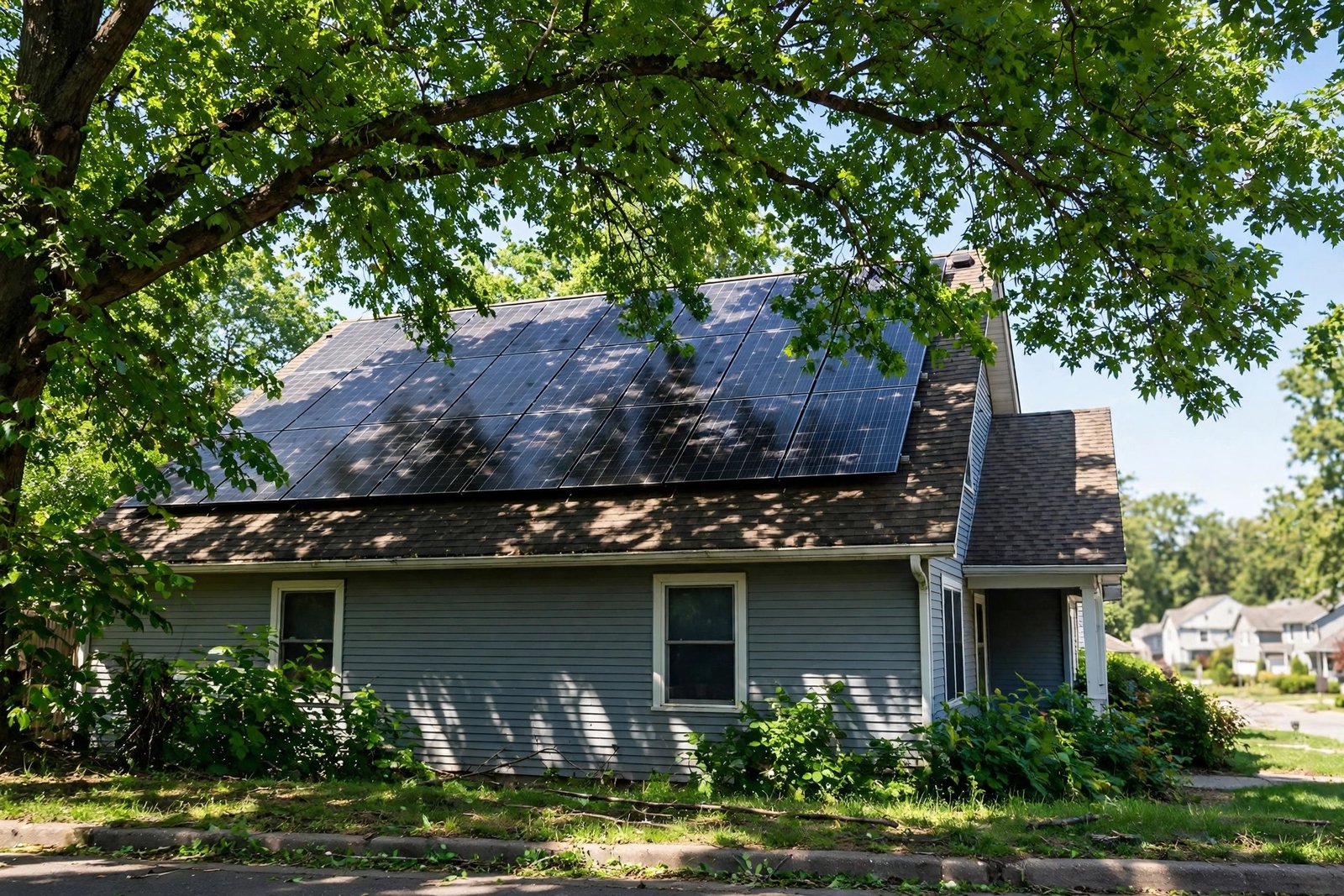
Shade is the most common cause of disappointing solar output. Trees grow, neighbours build extensions, and a new chimney, dormer or satellite dish can cast a shadow that was not there when the system was installed. In a traditional string system, where panels are wired in series, a shadow across even a small part of one panel can reduce the output of the whole string, because the current is limited by the weakest panel.
What to do: watch the array through the day and note when shadows fall on it — an hour of morning shade matters far less than shade at midday. Trim overhanging branches safely from the ground, or hire a tree surgeon; never climb onto a roof near panels. If a chimney or other fixed object is the cause, ask an installer about moving the affected panels or adding power optimisers or microinverters.
Reason 2: Dirt, Dust and Bird Droppings
A layer of dust, pollen, leaves or bird droppings blocks sunlight from reaching the cells. Rain washes most panels reasonably clean, but homes near busy roads, farms or construction sites can build up a film that quietly eats into output — and a single bird dropping can have an outsized effect on a string system, just like shade.
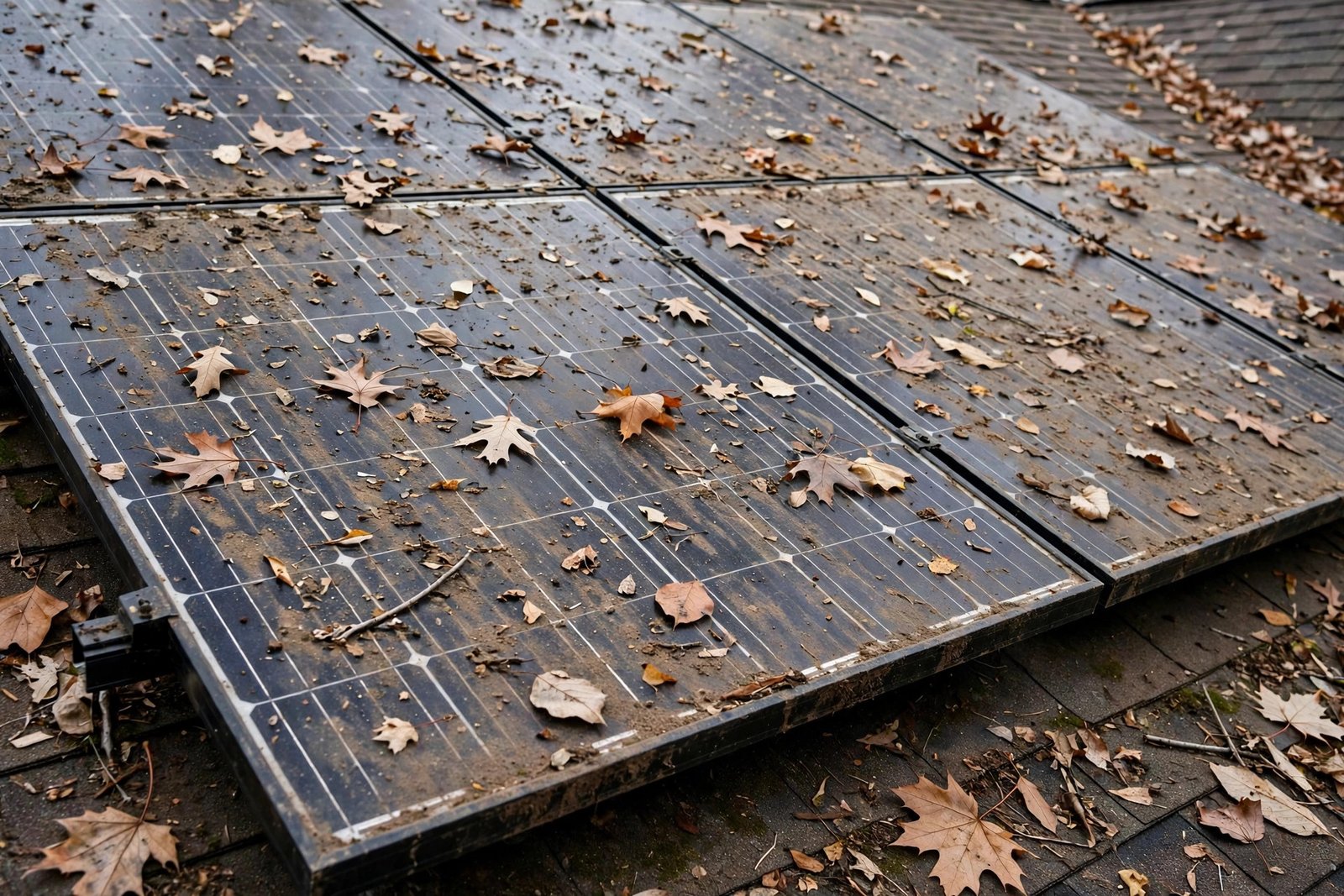
What to do: look at the panels from the ground with binoculars. If the glass looks dull or streaked, clean only from the ground with a long soft brush and clean water, or hire a professional. Never climb onto a wet roof, use a pressure washer, or use abrasive pads or harsh chemicals — scratched glass permanently reduces output. Clean when the panels are cool, since cold water on hot glass can crack it.
Reason 3: Cloudy Weather and the Seasons
Solar panels still generate electricity on cloudy days, but much less than in direct sun. Thick cloud can cut output to a small fraction of a sunny-day reading, and a week of overcast weather will show up in your monthly totals. This is normal, not a fault.
Seasons matter too: in the UK, a system typically produces several times more energy in June than in December. Compare this month with the same month last year, not with last summer. A single bad day means nothing; a whole month well below last year means something.
Reason 4: Heat — Hot Panels Produce Less Power
Solar panels are less efficient when they are hot: output falls as temperature rises, so on a scorching summer afternoon a panel can produce less than on a cooler, bright spring day, even though the sun is stronger. This is normal, not a defect.
What to do: do not worry about a modest dip on the hottest days — it is expected. Compare a hot day’s output with a hot day last year, not with a mild spring day. Keep clear airflow around the inverter and its vents free of dust, and never cover an inverter or enclose it in a sealed box. If it shuts down repeatedly in hot weather or feels extremely hot, call a technician.
Reason 5: Inverter Problems
Your panels can be in perfect condition and still produce nothing if the inverter is not working properly — it is the most common single point of failure in a home solar system. Warning signs include zero output on a sunny day, repeated fault codes, a red light, or an inverter that keeps restarting.
What to do: note any fault code exactly as shown, with the date and time. If the inverter will not turn on at all, work through the checks in that guide. For a one-off fault after a storm or grid outage, you can safely reset your solar inverter using the correct switch-off and switch-on order; do not reset repeatedly for the same fault. If the fault returns, or the inverter is very hot, buzzing, or smells of burning, switch it off from a safe distance and call a professional.
Reason 6: Loose or Damaged Wiring and Connectors
Between the panels and the inverter are cables and MC4 connectors. Over years of sun, wind and temperature changes, connections can loosen or corrode, and animals can chew cables. A loose or corroded connector increases resistance, which shows up as lower output — and in the worst case as heat or a fire risk.
What to do: from the ground, look for cables hanging loose under the panels or damage to conduit. A buzzing sound or burning smell near the inverter or breaker box is a warning sign — switch the system off from a safe distance and call a professional immediately. Never touch or unplug DC connectors yourself while the system is live: panels produce voltage whenever there is daylight on them, and connectors must only be handled by a qualified person with the system properly isolated.
Reason 7: A Faulty Panel, Bypass Diode or Microinverter
Individual panels can fail — a cracked cell or damaged backsheet after hail or a falling branch, a failed bypass diode, moisture inside the panel, or, on microinverter systems, one failed microinverter taking its panel offline. A single dead panel drags the whole string down, so the loss can look much larger than one panel’s share.
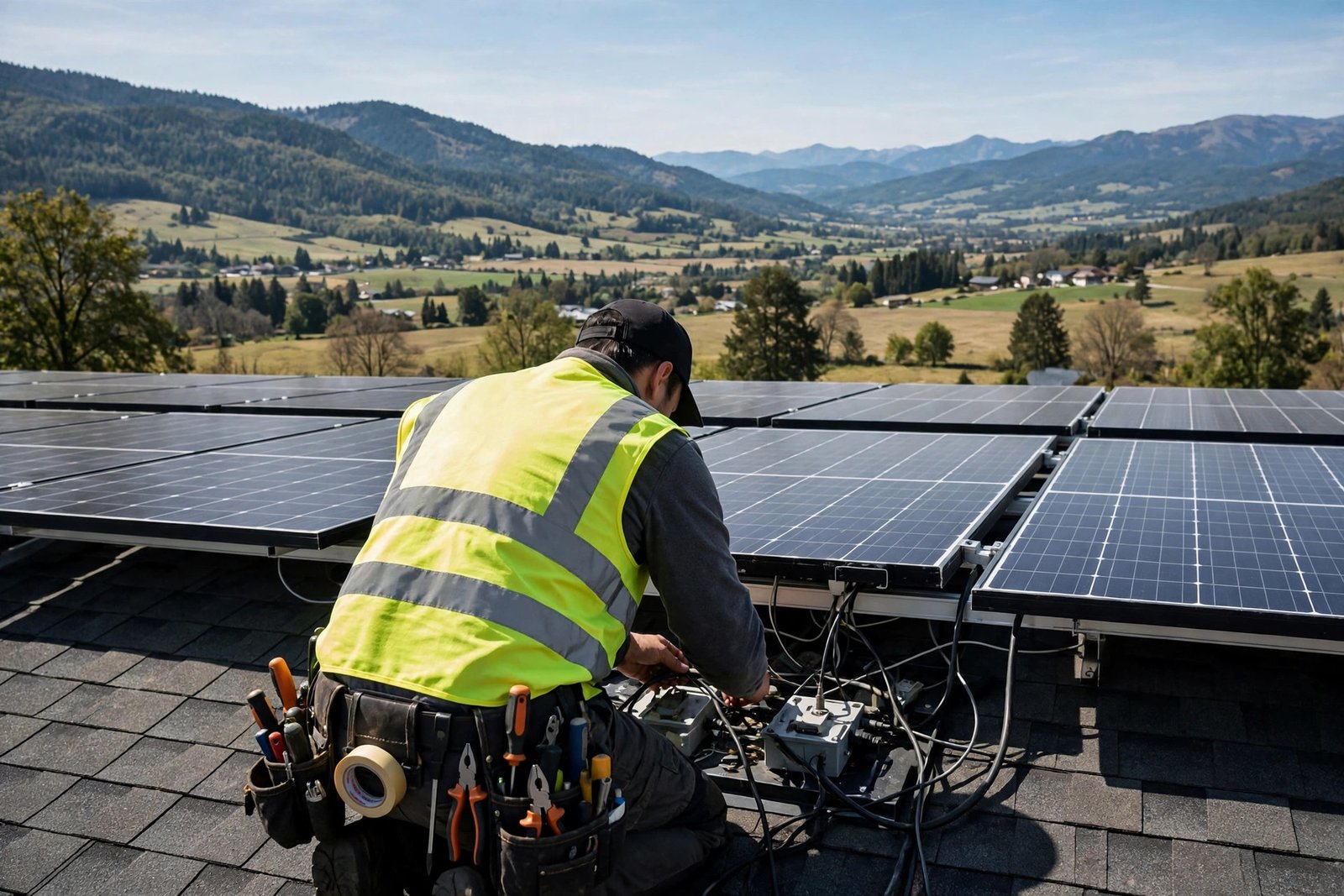
What to do: check your monitoring app for per-panel data — one panel reading zero, or far below its neighbours, is a strong clue. Look for visible damage from the ground: cracks, discolouration or brown patches. Do not climb on the roof or open a panel junction box — testing needs specialist equipment and a safe isolation procedure. If a panel is under warranty, contact the installer with the serial number and monitoring records showing when output dropped.
Reason 8: Your Expectations — or Your Usage — Have Changed
Sometimes the system is fine and the problem is the comparison. Panels degrade slowly — a typical panel loses a small fraction of a percent of output per year, so after ten years a healthy system may produce a few percent less than when new. That gradual decline is normal and covered by the performance warranty, not a fault.
The other side is usage: a new electric vehicle, heat pump or appliance means your home uses more electricity, so the same solar output covers less of your bill — the system can feel like it is underperforming even though it is producing exactly what it always did.
What to do: compare generation figures (kilowatt-hours produced), not your electricity bill. For a system over ten years old, a small gradual decline is expected. A sudden large drop is not, and points back to reasons 1 to 7.
When to Call a Professional
Call a qualified solar technician or electrician if output dropped suddenly without an obvious cause, if one panel or string reads zero or far below the rest, if an inverter fault returns after a reset, if you see cracked or damaged panels, a burning smell, buzzing or heat damage, or if wiring looks loose, chewed or corroded. If the system is still under warranty, unauthorised work can void it.
Before the visit, gather evidence: screenshots of your monitoring data showing the drop, the dates it started, any fault codes, and photos of the array taken from the ground. This helps the technician diagnose the fault faster and supports a warranty claim.

Conclusion
Low solar output usually has an ordinary explanation: shade, dirt, cloud, heat, or a simple inverter or breaker issue. Work through the checks in order, compare like with like, and let your monitoring history — not a single cloudy afternoon — tell you whether there is a real problem. When the cause is electrical, step back and call a professional: a quick, honest diagnosis protects both your system and your warranty.
FAQs
Why are my solar panels producing less power than expected?
Shading, dirt, cloudy weather, heat, an inverter fault, loose wiring, or one faulty panel dragging down a string. Check your monitoring app and inverter display first, then work through each cause in turn.
How much power should my solar panels produce on a sunny day?
Typically 70 to 85 percent of rated capacity at midday in full sun, depending on sun angle, temperature and age. Compare with your own system’s history on a similar day, not the panel label.
Does shade on one solar panel affect the whole system?
Yes, in a traditional string system — panels are wired in series, so a shadow on one panel can cut the whole string’s output. Systems with microinverters or power optimisers are much less affected, since each panel works independently.
Can dirty solar panels really reduce power output?
Yes — dust, pollen, leaves or a single bird dropping block sunlight and can have an outsized effect on a string system. Clean from the ground with water and a soft brush, or hire a professional.
When should I call a professional about low solar output?
If output dropped suddenly without an obvious cause, if one panel or string reads zero or far below the rest, if an inverter fault returns after a reset, or if you see damaged panels or wiring, or smell burning.
Pingback: How Shading Affects Solar Panel Output (And How to Minimize Power Loss) – Solar Fixing Guide
Pingback: Solar System Producing Zero Watts During Sunny Days: Diagnostic Checklist – Solar Fixing Guide
Pingback: How to Test Solar Panel Voltage and Amperage with a Multimeter – Solar Fixing Guide
Pingback: Fixing Loose or Corroded Solar Wiring: A Step-by-Step Safety Guide - Solar Fixing Guide
Pingback: How to Protect Solar Panel Wires from Squirrels, Birds, and Rodents - Solar Fixing Guide
Pingback: Best Cleaning Solutions and Tools for Dirty Solar Panels (What to Avoid) - Solar Fixing Guide
Pingback: How Often Should You Clean Solar Panels? Seasonal Maintenance Schedule - Solar Fixing Guide
Pingback: Winterizing Your Solar System: Snow Removal and Cold Weather Tips - Solar Fixing Guide
Pingback: Summer Heat and Solar Efficiency: How to Keep Your Inverter from Overheating - Solar Fixing Guide