
Quick answer: The best cleaning solution for dirty solar panels is plain clean water, with a small amount of mild, pH-neutral soap only if the dirt is stubborn. The best tools are a soft-bristled brush or a soft sponge on a long handle, plus a squeegee for a streak-free finish. Avoid pressure washers, abrasive pads, wire brushes, and harsh chemicals such as bleach, ammonia, solvents, and abrasive powders — they can scratch the glass, damage the anti-reflective coating, or leave a film that cuts power output. Always rinse first to remove loose grit, clean when the panels are cool, and rinse thoroughly so nothing dries on the glass.
Table of Contents
- Why the Right Cleaning Solution Matters
- Cleaning Solutions That Are Safe for Solar Panels
- The Best Cleaning Tools (and What to Avoid)
- Solutions and Tools to Avoid
- What to Use for Stubborn Dirt and Stains
- Tap Water vs. Deionized Water: Does It Matter?
- Are Store-Bought Solar Panel Cleaners Worth It?
- Step-by-Step: Cleaning with the Right Tools
- Common Mistakes That Damage Solar Panels
- When to Call a Professional
- FAQs
Why the Right Cleaning Solution Matters
Solar panels are tougher than they look, but their glass surface is not indestructible. The top layer of a panel is tempered glass with a thin anti-reflective coating that helps more sunlight reach the cells underneath. The wrong cleaner or the wrong tool can scratch that glass, wear down the coating, or leave a residue that blocks light just as effectively as the dirt you were trying to remove.
That matters because dirty panels produce less power. A layer of dust, pollen, bird droppings, or road grime can cut output noticeably, and a heavily soiled patch can drag down a whole string of cells — the same effect as shading. If your solar panels are not producing enough power and there is no obvious fault, cleaning is one of the first things to check. But cleaning with the wrong product can leave you worse off than before: a scratched or filmed panel loses output permanently, while dirt washes off.
The good news is that the safest approach is also the simplest and cheapest. Plain water and a soft tool will handle most cleaning jobs, and the products you should avoid are the ones most people reach for first — the strong household cleaners under the kitchen sink. This guide explains exactly what to use, what to avoid, and why.
Cleaning Solutions That Are Safe for Solar Panels
Start with the gentlest option and only move up if the dirt demands it. In almost every case, one of these three will do the job.
1. Plain clean water
Water alone is the safest and most recommended cleaning solution for solar panels, and it is what most panel manufacturers suggest first. It removes dust, pollen, light grime, and fresh bird droppings without any risk to the glass or the coating. Use a garden hose with a gentle spray or a bucket and a soft brush — never a high-pressure jet. If your tap water is very hard, rinse well and dry the panel with a squeegee so mineral deposits do not dry on the glass.
2. Mild, pH-neutral soap
When water alone is not enough, add a small amount of mild, pH-neutral soap — the kind sold as gentle dish soap or a dedicated solar panel cleaner. Use only a few drops in a bucket of water. It helps lift greasy grime, sticky pollen, and dried droppings without harming the glass or the frame seals. Rinse thoroughly afterwards: soap left to dry on the glass leaves a hazy film that blocks sunlight and attracts more dirt.
Check the label before you use any soap. It should say pH-neutral or mild, and it should contain no abrasives, no bleach, and no ammonia. If the product is marketed for ovens, bathrooms, or floors, do not use it on your panels.
3. Deionized or distilled water (for the final rinse)
Deionized or distilled water contains almost no dissolved minerals, so it dries without leaving white spots or streaks. It is the water professional solar cleaners use for the final rinse, especially in hard-water areas. You do not need it for the whole wash — plain water does the cleaning — but a final rinse with deionized water gives a spot-free finish and is worth it if your tap water leaves limescale marks. You can buy it cheaply at hardware stores and supermarkets, or make small amounts with a home deionizer.
The Best Cleaning Tools (and What to Avoid)
The tool matters as much as the solution. A soft tool glides over the glass; a hard or gritty one scratches it. Here is what works, and what does not.
| Tool | Safe to use? | Notes |
|---|---|---|
| Soft-bristled brush (long handle) | Yes — best choice | Reaches roof panels from the ground or a ladder; soft bristles will not scratch glass. |
| Soft sponge or microfibre cloth | Yes | Good for ground-mounted panels and stubborn spots; keep it clean so trapped grit cannot scratch. |
| Squeegee | Yes | Removes water after rinsing and prevents spots and streaks; use a rubber blade, not metal. |
| Water-fed pole brush | Yes | Feeds clean water through the brush head; the professional standard for large arrays. |
| Garden hose (gentle spray) | Yes | Use a low-pressure spray nozzle for rinsing, never a jet setting. |
| Pressure washer | No | High pressure can crack glass, force water into seals, and damage the frame. |
| Abrasive pads and scouring sponges | No | Scratch the glass and the anti-reflective coating permanently. |
| Wire brushes and metal scrapers | No | Will scratch and can chip the glass edge; never use them on panels. |
| Stiff brooms and yard brushes | No | Too hard and often carry grit; they scratch just like an abrasive pad. |
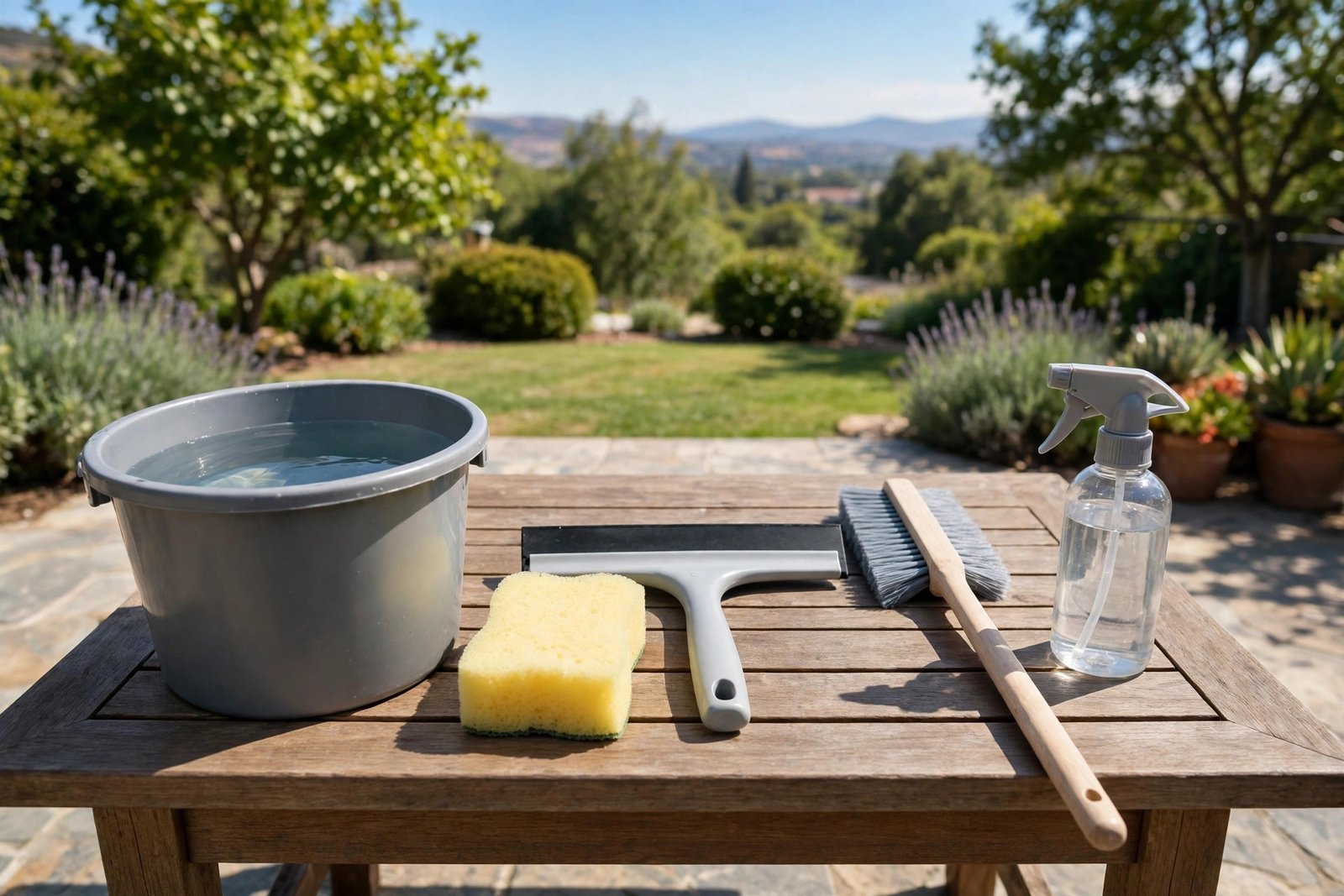
A long-handled soft brush is the single most useful tool for most homeowners. It lets you clean roof panels without climbing onto the roof, and the soft bristles are gentle enough for the glass. Pair it with a bucket of clean water and a squeegee, and you have everything you need. If you have a large array or ground-mounted panels, a water-fed pole brush is worth the investment — it is the same tool professional cleaners use.
Whatever tool you choose, keep it clean. A sponge or brush that has picked up sand or grit becomes an abrasive tool. Rinse your brush and sponge in clean water before each use, and replace them when the bristles or fibres wear down.
Solutions and Tools to Avoid
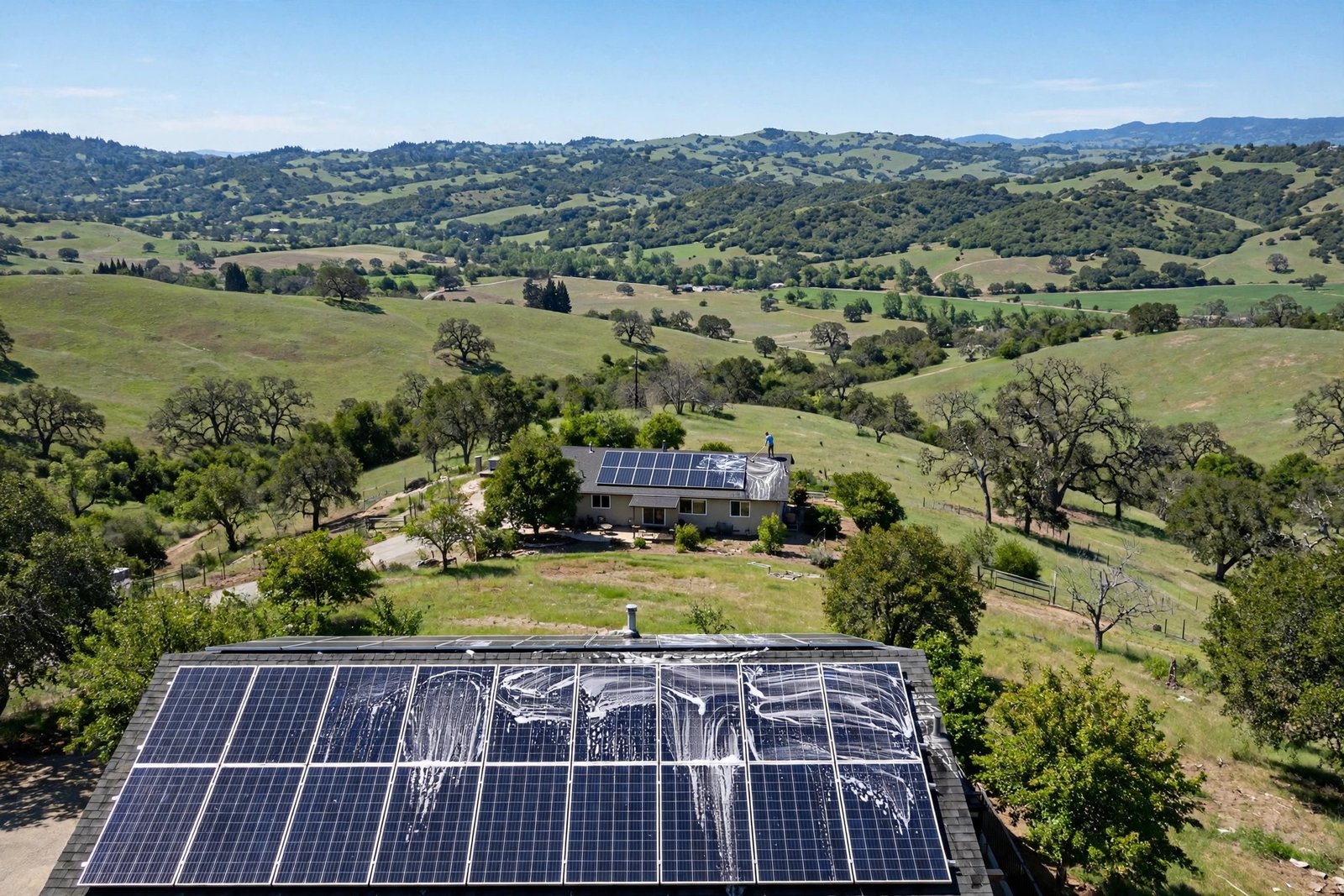
Many household cleaners are designed for ceramic, metal, or bathroom tile — surfaces far harder than solar panel glass and its coating. Using them on a panel can cause damage that no amount of rinsing will undo. Do not use any of the following:
- Bleach and chlorine-based cleaners — can damage the frame seals and the anti-reflective coating, and can corrode metal parts of the mounting system.
- Ammonia-based glass cleaners — ammonia can attack the coating on the glass and leave a film that reduces light transmission.
- Abrasive powders and creams — scouring powders, cream cleansers, and anything labelled “abrasive” will scratch the glass permanently.
- Solvents — acetone, thinners, petrol, and alcohol-based solvents can damage the coating, the frame seals, and the plastic junction box.
- Vinegar (undiluted) — vinegar is acidic. A heavily diluted solution may be safe for some panels, but undiluted vinegar can etch the coating over time, and many manufacturers advise against it. Plain water is safer.
- Detergents with wax or polish — car wax, furniture polish, and “wash and wax” products leave a film on the glass that blocks light and attracts dust.
- Hot water on hot panels — pouring cold water on a very hot panel, or hot water on a cold one, can cause thermal shock and crack the glass. Clean when the panels are cool, and use water at a similar temperature.
If you are unsure about a product, check your panel manufacturer’s cleaning guidance first. Most manufacturers publish a short list of approved and prohibited cleaners. Using a prohibited cleaner can also void your warranty, so it is worth the two minutes it takes to check.
What to Use for Stubborn Dirt and Stains
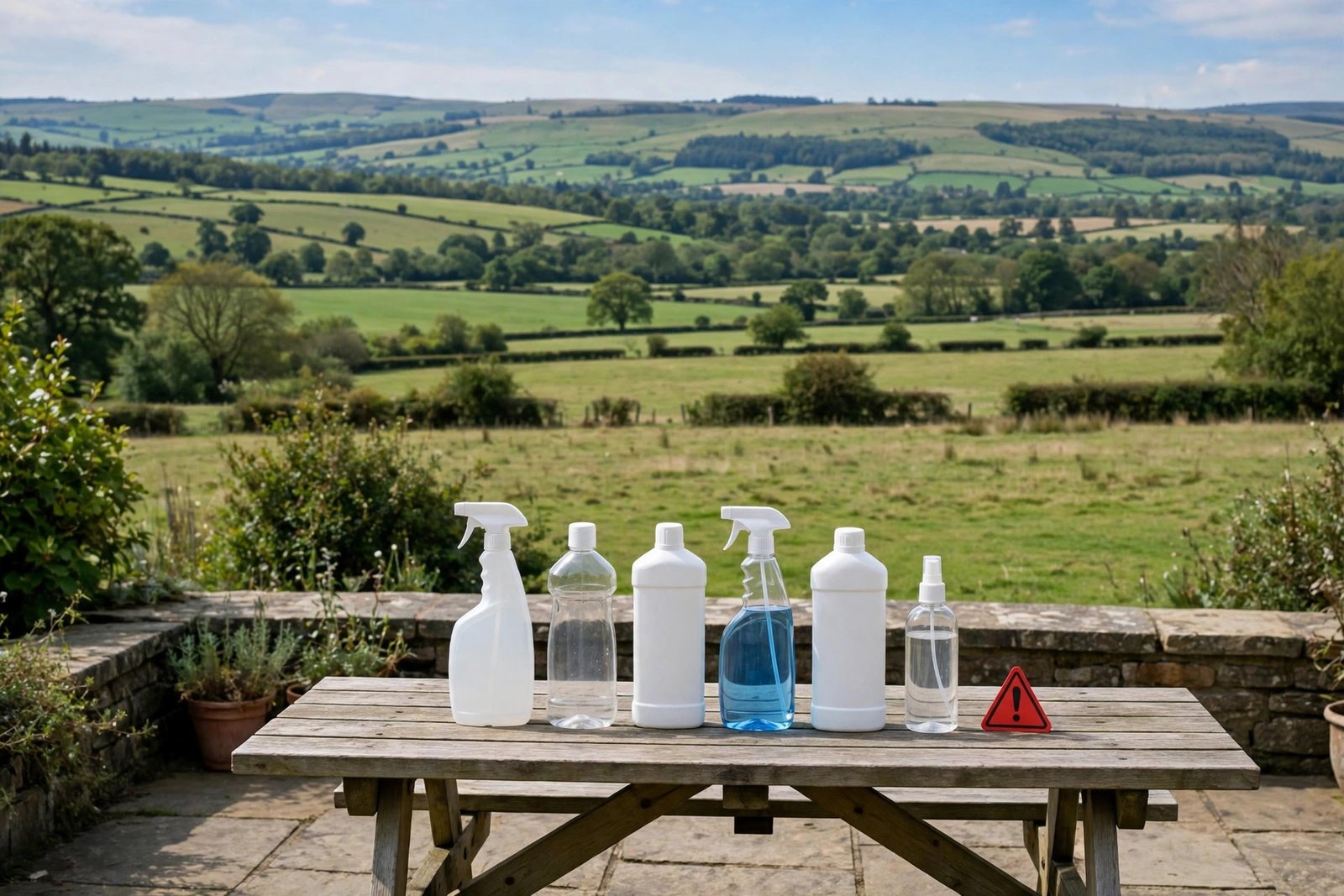
Some dirt does not come off with water and a soft brush. The trick is patience, not force. Soak the spot, let the water do the work, and repeat rather than scrubbing harder.
- Bird droppings: soak with a wet cloth or a damp sponge for several minutes, then wipe gently. Dried droppings are acidic and can stain the glass if left for weeks, so clean them as soon as you notice them.
- Tree sap: soften it with warm (not hot) soapy water and a soft cloth. Do not scrape it off with a blade or a hard tool — that is how glass gets scratched.
- Hard water stains: these white mineral marks come from tap water drying on the glass. A final rinse with deionized water prevents them; existing marks often fade after a few gentle washes. Avoid acidic descalers unless your panel manufacturer approves them.
- Lichen and algae: common in damp, shaded areas. A mild soap solution and a soft brush will usually remove them. If growth keeps returning, the cause may be shade or poor drainage — the same shading affects solar panel output and encourages damp growth.
For a deeper guide to these stains, see our article on how to clean solar panels safely. If a stain will not shift after two or three gentle attempts, stop and call a professional cleaner. Aggressive scrubbing will damage the glass long before it removes the stain, and a stain that resists cleaning may be a sign of a deeper problem such as delamination and yellowing or a cracked solar panel.
Tap Water vs. Deionized Water: Does It Matter?
For most homeowners, tap water is fine for cleaning — the important thing is to rinse well and not let it dry in puddles on the glass. The problem with tap water is mineral content. In hard-water areas, tap water contains dissolved calcium and magnesium. When the water evaporates, those minerals stay behind as white spots and streaks. A few spots are cosmetic, but a heavy build-up over years can reduce light reaching the cells.
Deionized water solves this because the minerals have been removed. It dries spot-free, which is why professional cleaners use it. You do not need to wash with it — use tap water for the cleaning itself, then finish with a deionized rinse if you live in a hard-water area or you have noticed white marks after previous cleans. A five-litre bottle from a hardware store is enough for a typical home array, and it costs very little.
If you use a garden hose, check the water first. If your area has very hard water, consider a simple inline hose filter, which reduces mineral content enough to prevent most spotting. Never use water from a water butt or a pond: it can carry grit and organic matter that scratch the glass or leave a biofilm.
Are Store-Bought Solar Panel Cleaners Worth It?
Dedicated solar panel cleaning products do exist, and some are genuinely useful. A good one is pH-neutral, biodegradable, and designed not to leave a film on glass. They can be worth buying if your panels get greasy grime — for example, near a busy road or under trees that drop sticky sap — and plain soapy water is not cutting it.
But most homeowners do not need them. Plain water plus a drop of mild soap does the same job for almost nothing, and many store-bought products are simply repackaged mild detergent sold at a premium. Before you buy, read the label: if it contains ammonia, bleach, solvents, or abrasives, do not use it — no matter what the packaging claims. A product that says “safe for solar panels” should still list its ingredients or state that it is pH-neutral.
One product category worth avoiding entirely is “self-cleaning” sprays and coatings that promise to keep panels clean for months. Some leave a film that reduces light transmission, and some are not approved by panel manufacturers. If a product promises a coating or a long-lasting effect, check with your panel manufacturer before applying anything to the glass.
Step-by-Step: Cleaning with the Right Tools
Here is the method that works with the solutions and tools above. It takes about 20 to 30 minutes for a typical home array.
- Pick the right time. Clean early in the morning or late in the evening, when the panels are cool and out of direct sun. Never clean in the middle of a hot day — water dries too fast and leaves spots, and cold water on hot glass risks thermal shock.
- Turn off the system if you can reach the isolator safely. Switching the inverter off removes the risk of electric shock while you work around the panels. If you are unsure how to do this, skip the step and stay off the roof.
- Rinse first. Use a garden hose on a gentle spray to wash off loose dust, leaves, and grit. This is the most important step: grit left on the glass is what causes scratches when you start brushing.
- Wash gently. Dip a soft brush or sponge in clean water — with a few drops of mild soap if needed — and wash in straight lines, not circles. Let the brush do the work; do not press hard.
- Deal with stubborn spots. Soak bird droppings, sap, and stains with a damp cloth for a few minutes, then wipe gently. Do not scrape or scrub.
- Rinse thoroughly. Hose the panels down with clean water until no soap remains. Soap residue dries into a haze that blocks sunlight.
- Squeegee dry. Pull a rubber squeegee across the glass to remove standing water. In hard-water areas, finish with a deionized water rinse so no mineral spots form.
- Check your work. Look at the panels from the ground. If any area still looks dirty, repeat the wash — do not scrub harder. While you are there, look for cracks, loose clamps, or solar panel hotspots that need a technician’s attention.
Common Mistakes That Damage Solar Panels
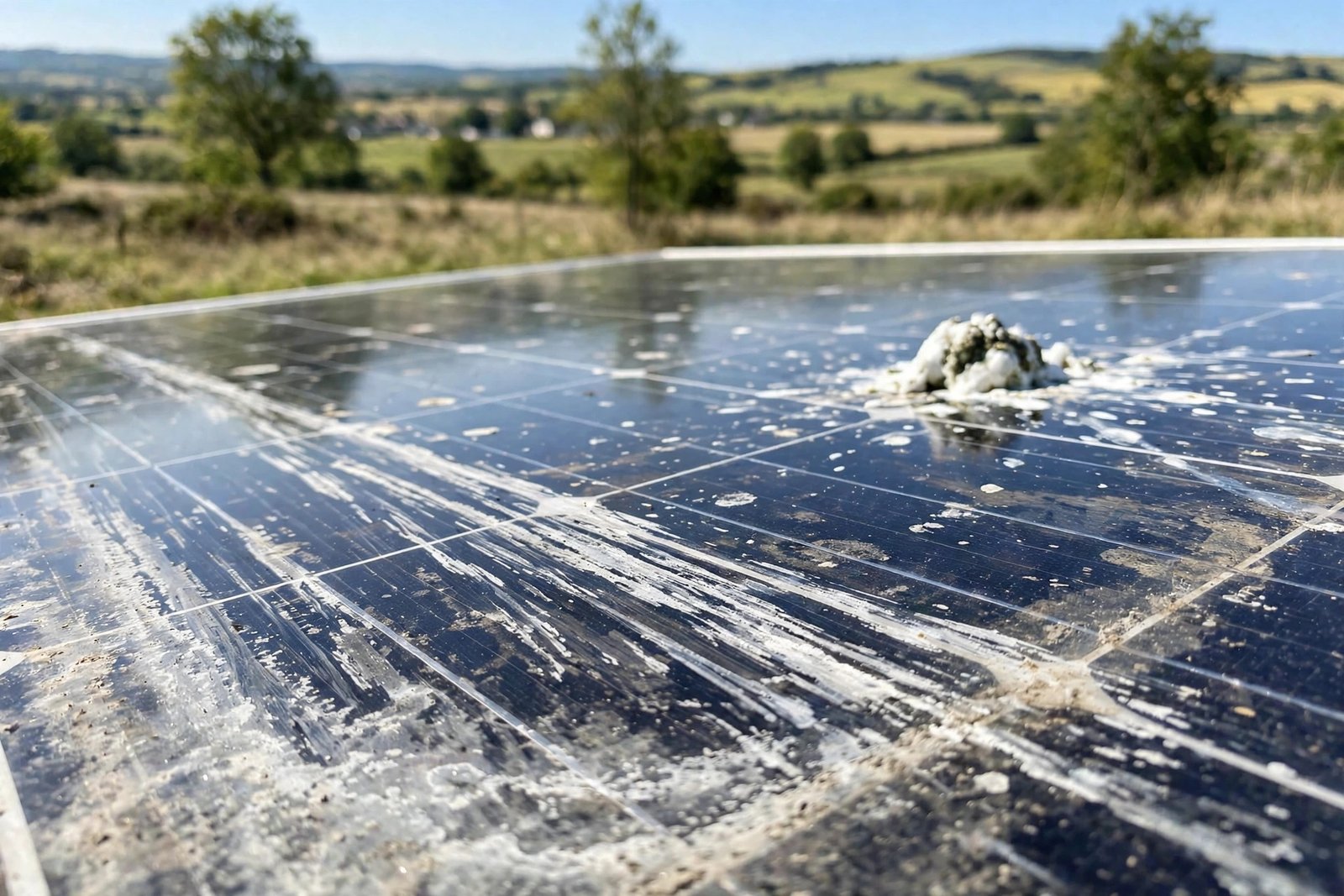
Most panel damage during cleaning comes from a handful of avoidable mistakes. Watch out for these:
- Cleaning dry panels. Brushing a dry, dusty panel grinds grit into the glass. Always rinse first.
- Using a dirty sponge or brush. A sponge that has picked up sand is an abrasive pad. Rinse tools before every use.
- Walking on the panels. Panels are not designed to be walked on. Your weight can crack cells and damage the frame, even if the glass looks fine afterwards. Work from a ladder or from the ground with a long-handled brush.
- Cleaning in hot sun. Water evaporates before you can rinse it off, leaving soap and mineral deposits baked onto the glass.
- Using a pressure washer. Even a “low” setting can force water past the seals and into the junction box, and it can crack the glass.
- Scrubbing in circles. Circular scrubbing spreads grit across the glass. Straight, light strokes are safer.
- Ignoring the manufacturer’s guidance. Some panels have specific cleaning instructions, and ignoring them can void the warranty.
When to Call a Professional
Some cleaning jobs are not DIY jobs. Call a professional solar cleaner or technician if:
- Your panels are on a steep, high, or slippery roof, or you would need to climb onto the roof to reach them.
- The dirt will not come off after two or three gentle cleaning attempts.
- You can see cracks, discolouration, or burn marks on the glass or the backsheet.
- Output has not improved after cleaning, which may point to a fault rather than dirt — a technician can test the system properly.
- You are not comfortable working at height or near electrical equipment.
Professional cleaners use deionized water and water-fed pole brushes, and they are insured for roof work. The cost of a professional clean is far less than the cost of replacing a scratched or cracked panel, or of a fall from a roof. Never open live electrical equipment, touch exposed wiring, or attempt to repair a damaged panel yourself — that is a job for a qualified solar technician or electrician.
FAQs
Can I use dish soap to clean my solar panels?
Yes, a small amount of mild, pH-neutral dish soap is safe, as long as it contains no bleach, ammonia, or abrasives. Use only a few drops in a bucket of water and rinse thoroughly so no soap film dries on the glass.
Is vinegar safe to use on solar panels?
Undiluted vinegar is not recommended — it is acidic and can damage the anti-reflective coating over time. Some manufacturers allow a heavily diluted solution, but plain water or mild soap is safer and works just as well.
Can I use a pressure washer on solar panels?
No. A pressure washer can crack the glass, force water into the seals and junction box, and damage the frame. Use a garden hose on a gentle spray setting instead.
What is the best water to clean solar panels with?
Plain tap water is fine for washing. For the final rinse, deionized or distilled water is best in hard-water areas because it dries without leaving white mineral spots.
Do I need a special solar panel cleaning product?
Usually not. Plain water and a drop of mild soap handle almost every cleaning job. A dedicated solar panel cleaner can help with greasy grime, but check the label — it must be pH-neutral and free of ammonia, bleach, solvents, and abrasives.
What kind of brush is safe for solar panel glass?
A soft-bristled brush, ideally on a long handle so you can reach roof panels from the ground or a ladder. Avoid wire brushes, stiff brooms, and abrasive pads, which scratch the glass and its coating.
Conclusion
Cleaning solar panels is a simple job, and the safest way to do it is also the easiest: plain water, a little mild soap if needed, and a soft brush or sponge. The expensive products and powerful tools are the ones most likely to cause damage. Avoid pressure washers, abrasive pads, bleach, ammonia, and solvents, and never scrub a dry panel or walk on the glass. Rinse first, wash gently, rinse again, and finish with a squeegee — or a deionized rinse in hard-water areas.
Done the right way, cleaning is one of the cheapest ways to keep your system producing at its best. If you clean regularly and use the right tools, your panels will stay clear, your output will stay healthy, and the glass will last for the full life of the system. And if the dirt will not shift, or the panels are hard to reach safely, a professional cleaner is always the right call.