
Quick answer: Delamination is when the layers inside a solar panel start to separate — the glass, the plastic encapsulant sealing the cells, and the backsheet on the rear come apart. Yellowing, or browning, is the visible sign of the same breakdown: the encapsulant changes colour after years of heat and sunlight, letting less light through to the cells. In most cases a delaminated or yellowed panel is still safe to keep using for now, but it is a warning sign. Output usually falls, moisture can get in, and badly affected panels can develop hotspots. The right response is to photograph the damage, check the panel’s output against its neighbours, and contact your installer or the manufacturer about a warranty claim — especially if the panel is still within its product warranty.
Table of Contents
- What Is Solar Panel Delamination?
- What Is Yellowing (Browning) on a Solar Panel?
- What Causes Delamination and Yellowing?
- Is a Delaminated or Yellowed Panel Still Safe to Use?
- How Much Power Do You Lose?
- How to Spot Delamination and Yellowing
- What to Do If Your Panel Is Delaminating
- Can Delamination Be Repaired?
- How to Prevent Delamination and Yellowing
- When to Call a Professional
- FAQs
What Is Solar Panel Delamination?
A solar panel is not a single solid slab. It is a sandwich of layers pressed and sealed together: a sheet of tempered glass on top, a layer of clear plastic called the encapsulant (usually EVA, or ethylene vinyl acetate) that seals the silicon cells in place, the cells themselves, another layer of encapsulant, and a protective backsheet on the rear. Around the edge, an aluminium frame and a seal hold the whole sandwich together.
Delamination happens when those layers stop sticking to each other and start to separate. The most common forms are:
- Glass separating from the encapsulant. Air pockets or bubbles appear under the glass, sometimes with a milky or cloudy look. You may see the separation spreading in from the edges or around the corners.
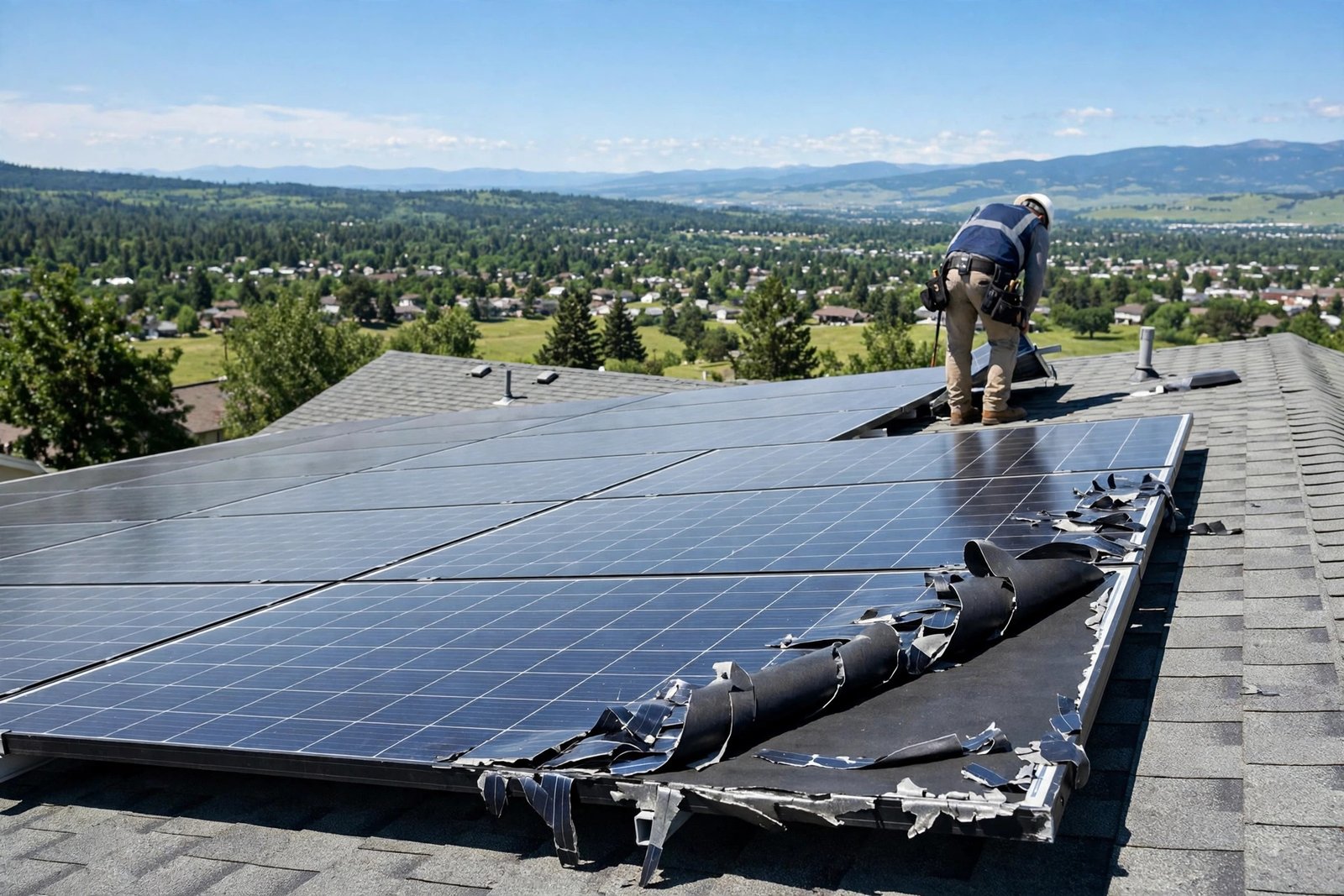
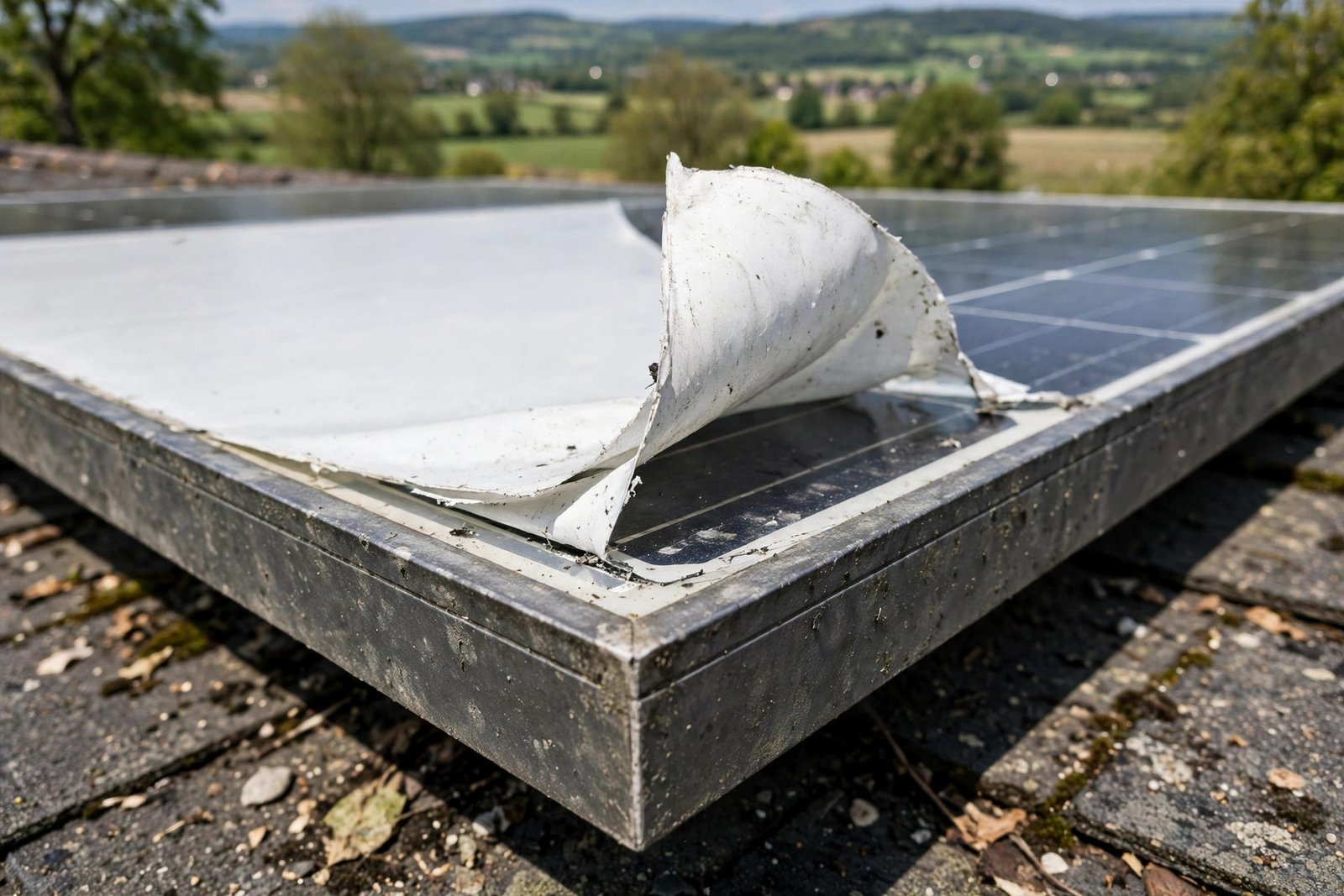
- Backsheet peeling away. The white or black sheet on the back of the panel lifts, cracks, or peels at the edges, exposing the layers underneath to air and moisture.
- Encapsulant pulling away from the cells. This is harder to see from the outside, but it often shows up as cloudy patches or a loss of adhesion around individual cells.
Delamination is a structural failure of the panel’s seal. Once the seal is broken, the inside of the panel is no longer protected from the weather, and the damage tends to get worse over time rather than stabilising.
What Is Yellowing (Browning) on a Solar Panel?
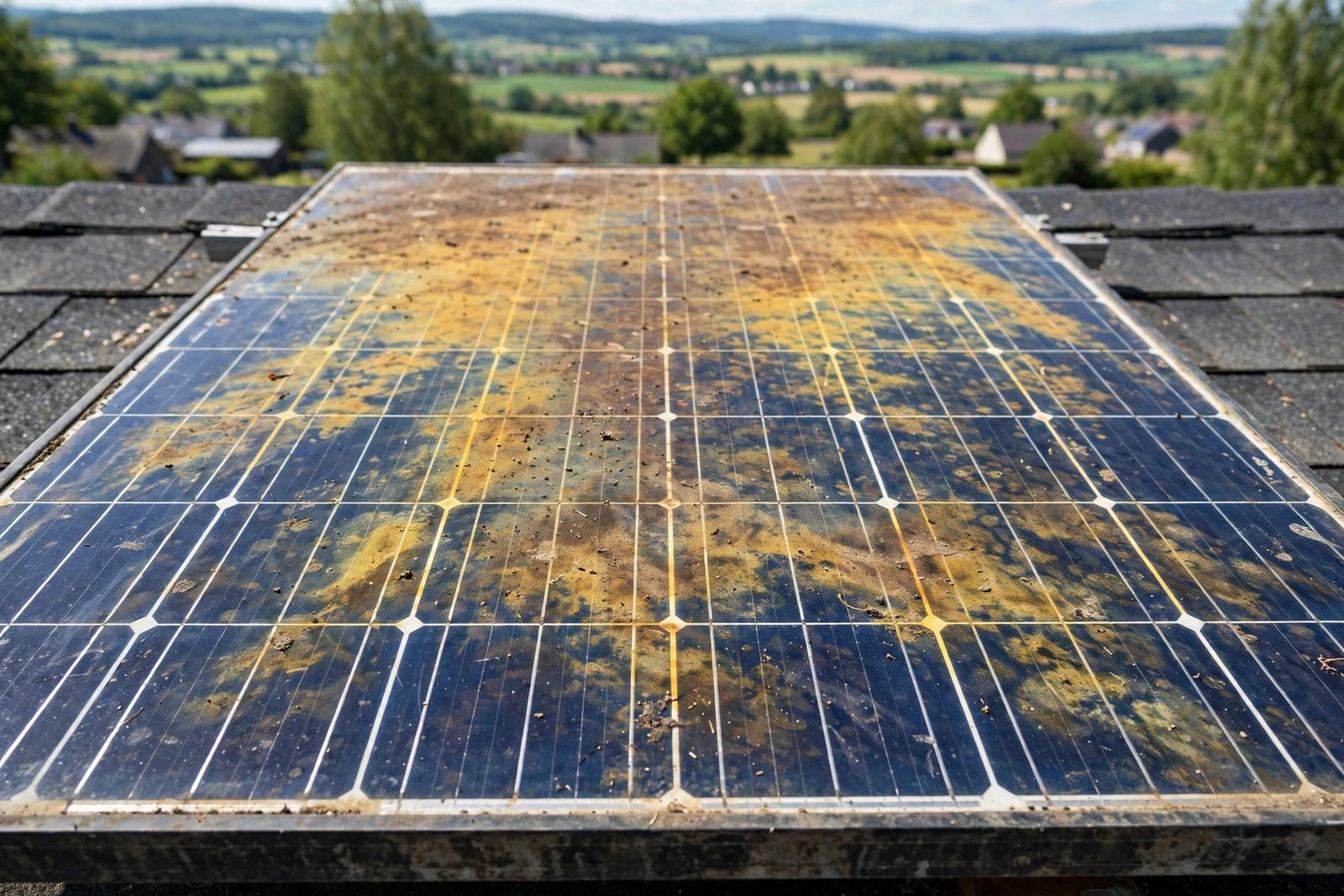
Yellowing is a colour change in the encapsulant layer — the clear plastic that sits between the glass and the cells. When it is new, EVA is almost perfectly transparent. After years of exposure to ultraviolet light and heat, it can turn yellow, amber, or even brown, usually starting at the edges or in the areas between cells, and spreading across the panel over time.
Yellowing and delamination are closely related, and they often appear together:
- Yellowing on its own is mainly a cosmetic and performance issue. The discoloured plastic absorbs some of the sunlight that should be reaching the cells, so output drops gradually.
- Yellowing with delamination is more serious. When the encapsulant has degraded enough to change colour, its adhesive bond is usually weakening too, so the layers may already be starting to separate.
Yellowing is mainly a problem on older panels, particularly those made before about 2015, when some encapsulant formulations were less resistant to UV. Modern panels use improved materials, so severe yellowing is much less common on newer installations — but it can still appear after enough years of heat and sunlight.
What Causes Delamination and Yellowing?
Delamination and yellowing share most of their causes. The main ones are:
Heat and ultraviolet light
Sunlight is both the fuel and the enemy of a solar panel. The UV in sunlight slowly breaks down the chemical bonds in the encapsulant, and high temperatures speed that process up. Panels on dark roofs in hot climates run hotter, and panels mounted flat against a roof with little airflow behind them run hotter still. Over 10, 15, or 20 years, that constant heat and UV exposure degrades the plastic until it discolours and loses its grip.
Moisture getting in
Once even a tiny gap opens at the edge of a panel — a failed edge seal or a damaged backsheet — moisture can creep in. Water speeds up the chemical breakdown of the encapsulant and corrodes the metal contacts on the cells. In cold climates, moisture that gets in can freeze and expand, pushing the layers further apart with each freeze-thaw cycle.
Manufacturing problems
Some panels leave the factory with a weak bond between layers, because the lamination process — the heat and pressure step that fuses the sandwich together — was not done correctly, or because the encapsulant or backsheet material was of poor quality. Panels made with cheaper materials during the solar boom of the early 2010s are more prone to this. A panel that delaminates within its first few years is almost always a manufacturing defect, and it is exactly what the product warranty is for.
Poor installation and handling
Over-tightened clamps can stress the frame and the edge seal, and panels that were flexed, dropped, or stacked badly during installation can have weakened seals that fail years later. Mounting a panel with no ventilation gap behind it also traps heat and accelerates the breakdown of the encapsulant.
Is a Delaminated or Yellowed Panel Still Safe to Use?
For most homeowners, the short answer is: usually yes, for now — but treat it as a problem that needs attention, not something to ignore.
A yellowed panel with no separation is generally safe. The discolouration reduces light reaching the cells, so the panel produces less power, but it does not make the panel dangerous.
Delamination is a bigger concern, because it breaks the panel’s weather seal. The risks are:
- Moisture and corrosion. Once the seal is open, rain and humidity reach the cells and their metal contacts. Corrosion spreads slowly, and output falls faster than it would from yellowing alone.
- Hotspots. If delamination isolates part of a cell or corrodes a connection, that area can overheat and become a hotspot. A hotspot can scorch the cell, blister the backsheet, or in rare cases crack the glass.
- Electrical safety. A panel with a peeling backsheet or exposed internal layers is no longer properly insulated. The cells carry DC voltage whenever there is light on them, so a badly delaminated panel should be treated with more caution than a healthy one. Never touch the exposed layers or the back of a damaged panel.
- Fire risk. The risk is low, but it is not zero. A delaminated panel with a hotspot and a damaged backsheet is the combination solar safety guidance warns about, because the backsheet is part of the panel’s fire protection.
The practical test is simple: if the panel is yellowed but still sealed, with normal output and no hot areas, it is safe to keep using while you arrange a warranty claim. If layers are peeling, the backsheet is cracked or open, or you can see burn marks, treat it as urgent and call a professional — and do not touch the panel yourself.
How Much Power Do You Lose?
The power loss depends on how far the damage has gone:
- Light yellowing typically costs very little — often less than 2–3% of the panel’s output. Many owners never notice it, because it develops so gradually.
- Moderate yellowing or browning across a large part of the panel can cost 5–10%, because the discoloured encapsulant is absorbing a real share of the sunlight before it reaches the cells.
- Severe browning, where the panel looks dark amber across most of its surface, can cost 15% or more. At that point the panel is a shadow of what it was, and replacement usually makes financial sense even if the panel still works.
- Delamination with moisture damage is harder to predict. The loss can be small at first and then accelerate as corrosion spreads, or it can jump suddenly if a connection fails and a whole section of the panel stops contributing.
The best way to measure the loss is to compare the affected panel with its neighbours. If your monitoring system shows per-panel output, look for one panel consistently producing less than identical panels on the same roof. A panel that is 5% or more below its neighbours on sunny days deserves a closer look.
How to Spot Delamination and Yellowing
Visual inspection from a safe place
Look for a yellow, amber, or brown tint across the panel, strongest between the cells and around the edges, and for milky patches or bubbles under the glass where a layer has lifted. Do this from the ground with binoculars, or from a neighbouring window. Never climb onto the roof to inspect a panel up close unless you are trained and equipped to work at height safely, and never walk on the panels.
Check your monitoring data
Compare each panel’s output over time. Yellowing and delamination cause a slow, steady decline, not a sudden drop, so look at the trend over months rather than a single day. If one panel’s output is falling relative to the others, and the panel also shows discolouration, the two are almost certainly connected.
Thermal imaging
A thermal camera can reveal hotspots caused by delaminated or corroded cells, showing up as bright warm patches on an otherwise even panel. Some solar maintenance companies offer drone thermal surveys that can scan a whole rooftop array in one visit. This is a useful check if output has dropped and you cannot see an obvious cause from the ground.
Professional inspection
A technician can check for delamination that is not yet visible, test the panel’s insulation resistance, and measure its actual output against its rated output. If you are making a warranty claim, the manufacturer will usually want a professional report and dated photos, so an inspection is worth doing early.
What to Do If Your Panel Is Delaminating
Finding delamination or heavy yellowing is not a reason to switch your system off in a panic. But it is a reason to work through these steps:
1. Photograph the damage
Take clear, dated photos of every affected panel, from the best angle you can manage safely. Photograph the whole panel and close-ups of the worst areas. These photos are essential evidence for a warranty claim, and they let you compare the damage over time to see whether it is spreading.
2. Check the panel’s output
Use your monitoring app or inverter display to compare the affected panel with its neighbours. If you do not have per-panel monitoring, test the panel with a multimeter — or ask a technician to do it — to see whether its voltage and current are in the expected range. Write the numbers down; they will be useful for the warranty claim.
3. Check your warranty
Most panels come with two warranties: a product warranty (typically 10–25 years) covering manufacturing defects, and a performance warranty (typically 25 years) guaranteeing a minimum output level. Delamination caused by a manufacturing defect is usually covered under the product warranty, and heavy yellowing that pushes output below the guaranteed level can be covered under the performance warranty. Keep your purchase invoice, installation certificate, and inspection reports — you will need them.
4. Contact your installer or the manufacturer
Start with the company that installed your system, if it is still in business. They can inspect the panel, advise whether it is safe to keep using, and handle the warranty claim. If the installer has closed down, contact the manufacturer directly with your photos, output records, and the panel’s serial number, printed on the label on the back of the panel.
5. Keep monitoring while you wait
Warranty claims can take weeks or months. While you wait, keep an eye on the panel: check the photos against the current state every month or so, and watch its output. If the damage spreads quickly, if you see burn marks, or if the backsheet opens up, call a professional sooner rather than later.
Can Delamination Be Repaired?
The honest answer is no — not in any way that restores the panel properly.
There are products sold online that claim to fix delamination: sealants, adhesives, and coatings to glue a peeling backsheet back down or seal a gap at the edge. These may slow moisture getting in for a while, but they do not restore the factory lamination, they do not reverse yellowing, and they do not reconnect corroded cell contacts. Worse, applying a sealant or coating to a panel can void the warranty.
The practical options are:
- Keep using the panel if the damage is mild, the output is acceptable, and the panel is sealed enough to be safe. This is reasonable for light yellowing on an old panel that is out of warranty.
- Replace the panel under warranty if the panel is still covered and the damage is a manufacturing defect. This is the best outcome, and it is why documenting the damage early matters.
- Replace the panel at your own cost if it is out of warranty and the output loss is large enough to matter, or if the panel is no longer safe. A single panel replacement is straightforward for a professional, but the replacement needs to match the existing panels’ voltage and current reasonably closely. Our guide on repairing a cracked panel explains the replacement decision in more detail.
Never try to take a panel apart, re-laminate it, or peel the backsheet off yourself. The panel is a sealed unit, and opening it exposes you to live DC voltage and destroys any remaining warranty.
How to Prevent Delamination and Yellowing
You cannot stop a panel from ageing, but you can slow the process a lot:
- Buy panels from established manufacturers. Better materials and tighter quality control in the lamination process mean a stronger bond and a more UV-resistant encapsulant. Check independent reviews and the length of the product warranty before you buy.
- Choose a reputable installer. Ask how the installation team handles panels and how they set the clamp torque. Over-tightened clamps stress the frame and edge seal; panels carried flat and lifted properly arrive on the roof undamaged.
- Leave airflow behind the panels. A gap of a few inches between the panel and the roof lets air circulate and keeps the panels cooler. Cooler panels degrade more slowly, and the same gap helps with output on hot days.
- Inspect regularly. A quick visual check every few months — plus a look at your monitoring data — catches yellowing and edge separation early, when a warranty claim is easiest to make and before moisture has done its worst.
- Trim overhanging branches and clear debris. Leaves and dirt trapped against a panel hold moisture against the edge seal and the backsheet, which speeds up degradation.
When to Call a Professional
Call a qualified solar technician if any of the following apply:
- Layers are visibly peeling, the backsheet is cracked or open, or you can see bubbles spreading under the glass.
- You can see a brown burn mark, a blistered backsheet, or a patch on the panel that feels hot — this may be a hotspot and needs urgent attention.
- One panel’s output is consistently well below its neighbours and you have ruled out shading and dirt.
- You want a professional report and output test to support a warranty claim.
- A panel needs replacing — matching a new panel to an existing string, and working safely on a live DC array, is a job for a professional.
Never try to open a sealed panel, peel back the backsheet, or glue delaminated layers back together yourself. The cells carry DC voltage whenever there is light on them, and a damaged panel can be more dangerous than a healthy one. A professional inspection is also the fastest route to a warranty decision, because manufacturers trust reports from certified technicians.
FAQs
What is solar panel delamination?
Delamination is when the layers inside a solar panel — the glass, the encapsulant that seals the cells, and the backsheet — start to separate from each other. It breaks the panel’s weather seal, lets moisture in, and usually gets worse over time. It is most often caused by heat, UV exposure, moisture, or a manufacturing defect.
Why do solar panels turn yellow?
Solar panels turn yellow because the encapsulant layer — the clear plastic between the glass and the cells — breaks down after years of ultraviolet light and heat. The discoloured plastic absorbs sunlight that should reach the cells, so output falls gradually. It is most common on older panels made before improved encapsulant materials became standard.
Is a delaminated solar panel safe to use?
A mildly yellowed panel that is still sealed is generally safe to keep using. A panel with layers peeling apart, a cracked or open backsheet, or visible burn marks is a bigger concern: moisture can corrode the cells, hotspots can form, and the panel’s insulation is compromised. If you see peeling layers or burn marks, get it inspected promptly and do not touch the damaged areas.
Can delamination in a solar panel be repaired?
No. Delamination cannot be properly repaired — sealants and coatings sold for the purpose do not restore the factory lamination, do not reverse yellowing, and can void the warranty. The practical options are to keep using a mildly affected panel, replace it under warranty if it is covered, or replace it at your own cost if the output loss or safety risk justifies it.
Does yellowing affect solar panel output?
Yes, gradually. Light yellowing typically costs less than 2–3% of output. Moderate browning can cost 5–10%, and severe browning across most of the panel can cost 15% or more. Comparing the affected panel’s output with its neighbours in your monitoring app is the best way to measure the loss.
Is delamination covered by solar panel warranty?
Often, yes. Delamination caused by a manufacturing defect is usually covered under the product warranty, which typically runs 10–25 years, and heavy yellowing that pushes output below the guaranteed level can be covered under the 25-year performance warranty. Keep dated photos, output records, your purchase invoice, and the installation certificate to support the claim.
Conclusion
Delamination and yellowing are signs that a solar panel’s materials are breaking down after years of heat, sunlight, and weather. The yellow or brown tint is the encapsulant ageing; the peeling layers are the panel’s seal failing. In many cases — especially light yellowing on an older panel — the panel keeps working safely with only a small loss of output, and the right move is to photograph it, watch its output, and check it again in a few months.
What matters is not ignoring the signs. Compare the panel against its neighbours, get a professional inspection if the output is falling or layers are peeling, and use your warranty while it is still valid. And if you are buying a new system, the best prevention costs nothing extra: a reputable manufacturer, a careful installer, good airflow behind the panels, and a long product warranty.