
Quick answer: Most homeowners should clean their solar panels 2 to 4 times a year. Twice a year is enough in a clean, rainy area; four times a year is better near dusty roads, farms, construction sites, trees, or the coast. Clean in spring and autumn at a minimum, add a summer clean if dust builds up, and clear snow and debris in winter. Check your panels visually every month and watch your monitoring app — a steady drop in output on sunny days is often the first sign they need a clean. Regular rain helps, but it does not replace cleaning.
Table of Contents
- Why Cleaning Frequency Matters
- The General Rule: 2 to 4 Times a Year
- What Changes How Often You Need to Clean
- Your Seasonal Maintenance Schedule
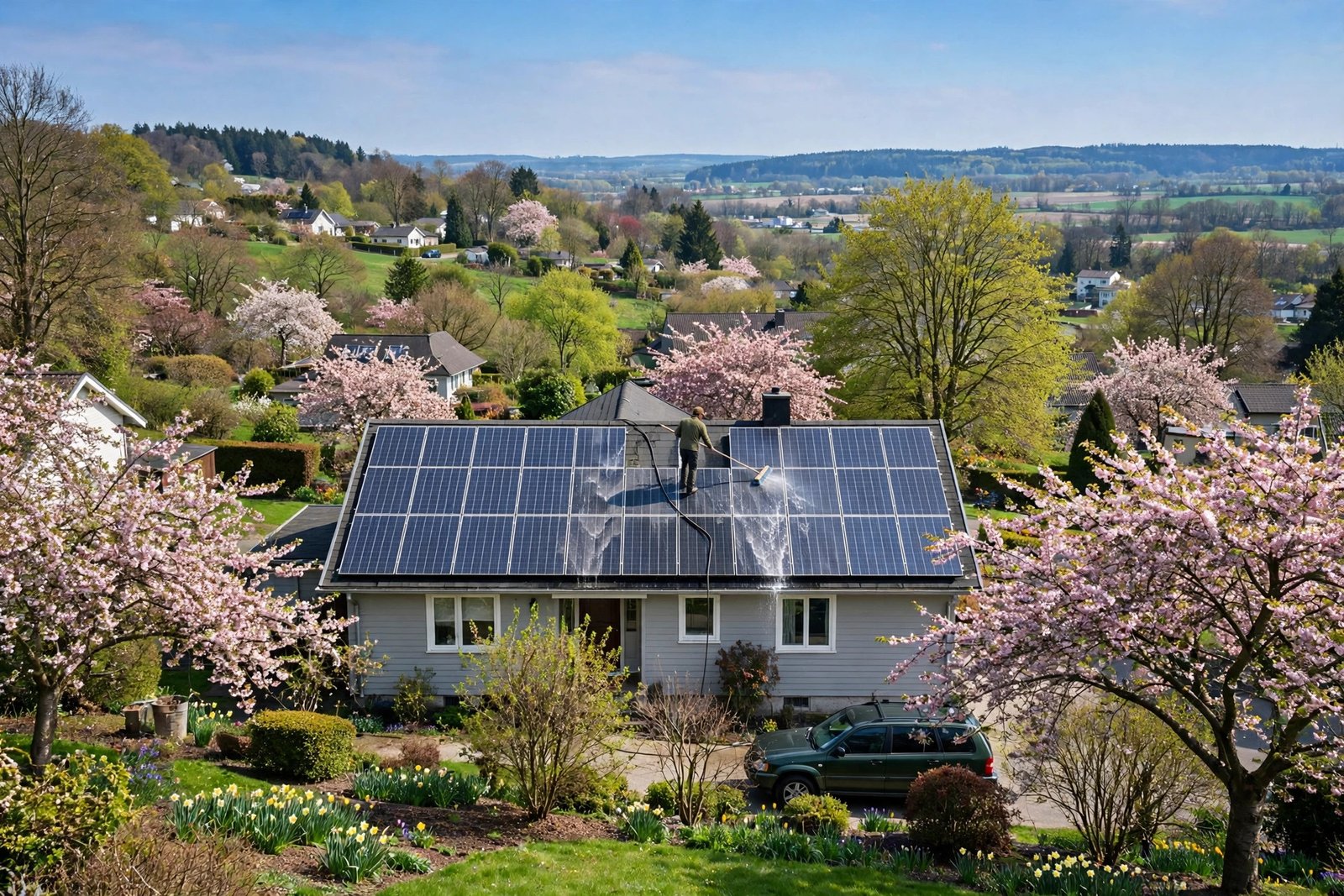
- Spring: The Most Important Clean of the Year
- Summer: Dust, Pollen and Bird Droppings
- Autumn: Leaves and Falling Debris
- Winter: Snow, Frost and Short Days
- Signs Your Panels Need Cleaning Now
- How to Check Whether Cleaning Is Needed
- Does Rain Clean Solar Panels?
- DIY Cleaning vs. Professional Cleaning
- Common Mistakes That Waste Time or Cause Damage
- When to Call a Professional
- FAQs
Why Cleaning Frequency Matters
Solar panels only make electricity from the sunlight that reaches their cells. Anything sitting on the glass — dust, pollen, bird droppings, leaves, soot, salt spray, or a film of grime — blocks some of that light. A thin layer may only cost a small amount of output, but a heavy build-up, or a single stubborn bird dropping over a few cells, can cut production noticeably. The effect is similar to partial shading: one dirty patch can drag down the output of the cells around it, and in a string of panels the weakest panel can limit the whole string.
That is why cleaning frequency is worth thinking about rather than leaving to chance. Clean too rarely and you lose power for months without noticing, because the drop is gradual. Clean too often and you waste time, water, and money — and every unnecessary trip onto the roof adds risk. The right schedule is the one that matches your location, your roof, and your seasons, and this guide gives you exactly that.
If your solar panels are not producing enough power and there is no obvious fault, dirt is one of the first things to check. Before you plan a cleaning schedule, it helps to know how to clean safely — our guide on how to clean solar panels safely explains the method, and the guide to the best cleaning solutions and tools covers what to use and what to avoid.
The General Rule: 2 to 4 Times a Year
For most homes, cleaning solar panels 2 to 4 times a year keeps output close to its best. That range covers the majority of situations:
- Twice a year is enough if you live in a clean area with regular rainfall, your roof is not under trees, and there is no nearby construction, farming, or heavy traffic.
- Three times a year suits most homes: a spring clean, a summer clean, and an autumn clean, with winter handled only when snow or debris appears.
- Four times a year is sensible near dusty roads, farms, building sites, industrial areas, or the coast, and on roofs shaded by trees that drop leaves, sap, or bird droppings.
There is no single number that fits every home, because the dirt your panels collect depends on where you live, not on the panels themselves. A system in a rainy suburb may stay clean for months, while an identical system a few miles away next to a ploughed field can look dusty within weeks. Treat the 2-to-4 figure as a starting point, then adjust it using the signs and checks later in this guide.
One thing to avoid is cleaning on a fixed calendar date regardless of condition. A panel that is already clean gains nothing from another wash, and a panel that is heavily soiled in a dry spell should not wait for its scheduled date. The schedule below gives you the rhythm; the checks tell you when to bring a clean forward or skip one.
What Changes How Often You Need to Clean
Several factors decide how fast dirt builds up on your panels. Knowing which ones apply to your home tells you whether you are a twice-a-year or a four-times-a-year household.
Your location and surroundings
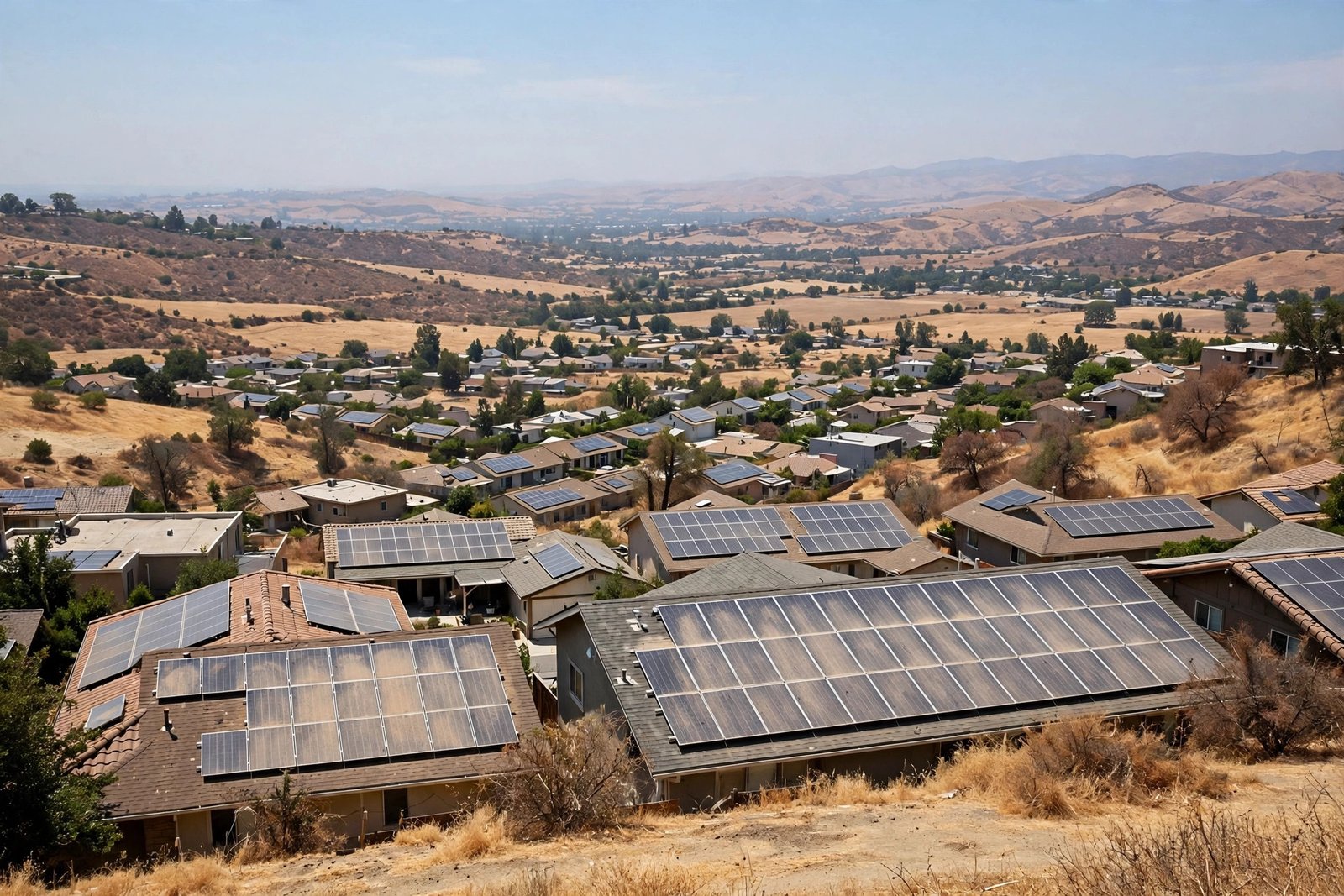
Dust is the biggest factor. Homes near unpaved roads, farms, quarries, building sites, or busy roads collect dust and grit far faster than homes in clean residential areas. Coastal homes get salt spray, which dries into a hazy film that rain alone does not fully remove. Homes near the sea or in industrial areas often need an extra clean each year.
Trees and wildlife
Trees overhanging or near the roof drop leaves, sap, seeds, and pollen onto the panels, and birds perching above the array leave droppings. A single bird dropping is small, but it is sticky, opaque, and hard — and it stays put until you remove it. If birds are a regular problem, consider bird-proofing mesh around the array, and check the panels after nesting season. Our guide to solar panel hotspots explains why a stubborn dirty patch can do more than cut output: it can heat the cells underneath.
Roof angle and tilt
Panels tilted at a steeper angle shed dust and rainwater more easily than panels lying almost flat. Flat or low-tilt arrays — common on flat roofs and in some ground-mounted systems — hold water, dust, and leaves longer, so they usually need cleaning more often. If your panels are nearly flat, add at least one extra clean a year.
Rainfall and climate
Regular, heavy rain washes away loose dust and keeps panels reasonably clean. Long dry spells do the opposite: dust settles, bakes on in the sun, and becomes harder to remove. In a dry, dusty climate, expect to clean more often than in a wet one. Pollen season in spring can also coat panels in a fine yellow film that looks harmless but blocks light.
Pollution and soot
Homes near factories, wood-burning stoves, or heavy traffic can get a greasy soot film that rain will not shift. If your panels look dull or grey even after rain, soot or pollution is likely the cause, and a proper wash with mild soap is needed rather than a rinse.
Your Seasonal Maintenance Schedule
The simplest reliable schedule is one clean per season, with winter treated differently from the rest. Here is the schedule at a glance, with the detail for each season below.
| Season | Main task | Who should do it |
|---|---|---|
| Spring | Full clean: remove winter grime, pollen, and bird droppings; inspect panels and mounting | Every home — the most important clean of the year |
| Summer | Clean off dust and pollen; remove bird droppings promptly; check output on hot days | Every home; essential in dry or dusty areas |
| Autumn | Clear leaves and debris; full clean before winter; check gutters and drainage | Every home, especially under trees |
| Winter | Clear snow and heavy debris only; no routine washing in freezing weather | Only when snow or debris is blocking the panels |
On top of this seasonal rhythm, do a quick visual check every month. Stand where you can see the panels — from the ground with binoculars if needed — and look for visible dirt, leaves, droppings, or anything covering part of a panel. A monthly look takes two minutes and catches problems long before they cost you much power.
Spring: The Most Important Clean of the Year
Spring is the single most valuable clean in the calendar. Over winter, panels collect months of grime: soot, road salt spray, dust, and the residue of damp weather. Pollen season then adds a fine yellow coating just as the days get longer and sunnier. Cleaning in spring means your panels enter the brightest months of the year at their best, which is when a clean panel earns you the most.
Do the spring clean once the worst of the cold weather has passed and pollen season is underway or just ending, depending on your area. While you are cleaning, take the opportunity to look over the whole array: check for cracked glass, loose frames, damaged cables, or anything that moved over winter. A cracked solar panel needs a decision about repair or replacement, not just a wash, so spotting it early matters.
Spring is also the right time to check that your monitoring app is showing sensible output. If output looks low after a clean on a sunny day, the problem is not dirt — work through the checks in our guide to solar panels not producing enough power before assuming anything else.
Summer: Dust, Pollen and Bird Droppings
Summer is when dust builds up fastest. Dry weather, long sunny days, and still air let a fine layer settle on the glass, and in hot, dry spells it can bake on. Pollen continues into early summer in many areas, and birds are most active, so droppings appear more often. If you live in a dry or dusty area, a summer clean is essential; in a clean, rainy area you may be able to skip it if the panels still look clear.
Clean early in the morning or in the evening, never in the middle of a hot day. Panels get very hot in summer sun, and cold water on hot glass can cause thermal shock — and the water will dry before you can rinse it, leaving spots. Our cleaning guide explains the timing and method in detail; the short version is cool panels, clean water, a soft brush, and a thorough rinse.
Watch for bird droppings in summer and remove them promptly rather than waiting for the next scheduled clean. They are one of the few things that can cause a real, localised loss, and they do not wash off in light rain. If droppings keep appearing in the same spot, a bird is probably perching above the array — bird-proofing mesh around the edges of the panels is a lasting fix worth considering.
Autumn: Leaves and Falling Debris
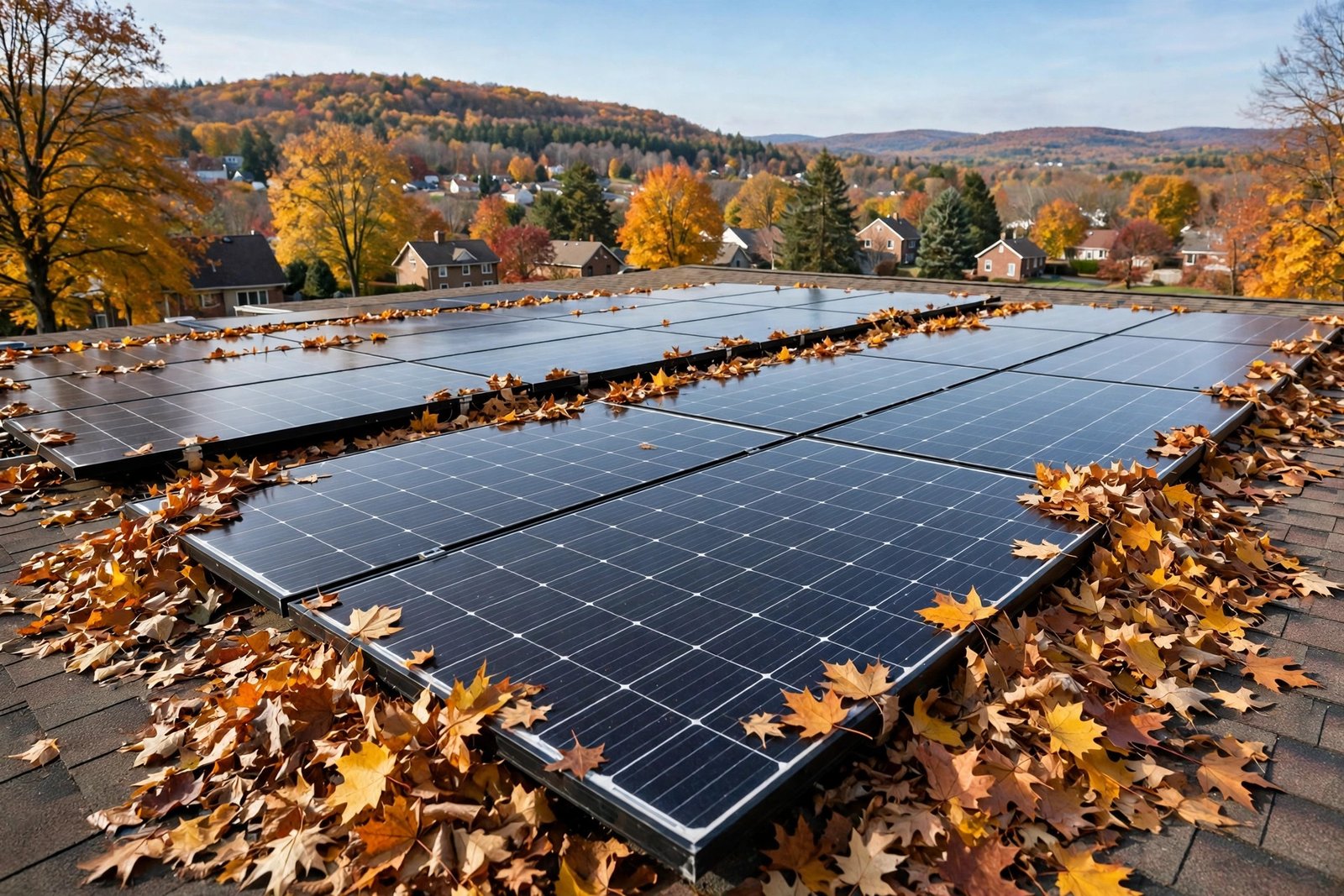
Autumn brings leaves, seeds, and twigs. A single leaf stuck to a panel blocks light from the cells underneath it, and a pile of wet leaves can sit there for weeks, holding moisture against the glass and frame. If your roof is under or near trees, check the panels weekly through autumn and clear leaves as they land — you do not need a full wash each time, just remove what is sitting on the glass.
Do a full clean in late autumn, before winter sets in. This removes the autumn build-up and leaves the panels as clean as possible going into the darkest months, when every bit of light counts. While you are up there, check that gutters and drainage around the roof are clear — blocked gutters can splash dirty water back onto the lower panels.
Autumn is also a good time to check the mounting and flashing after a summer of heat expansion, and to look for any damage from summer storms. If you find anything loose or damaged, get it looked at before winter storms arrive.
Winter: Snow, Frost and Short Days
Winter is the one season when routine washing is usually a bad idea. Water can freeze on the glass, on the roof, and on your ladder, and wet, icy conditions make roof work dangerous. In most cases, leave the panels alone in winter unless snow or heavy debris is actually covering them.
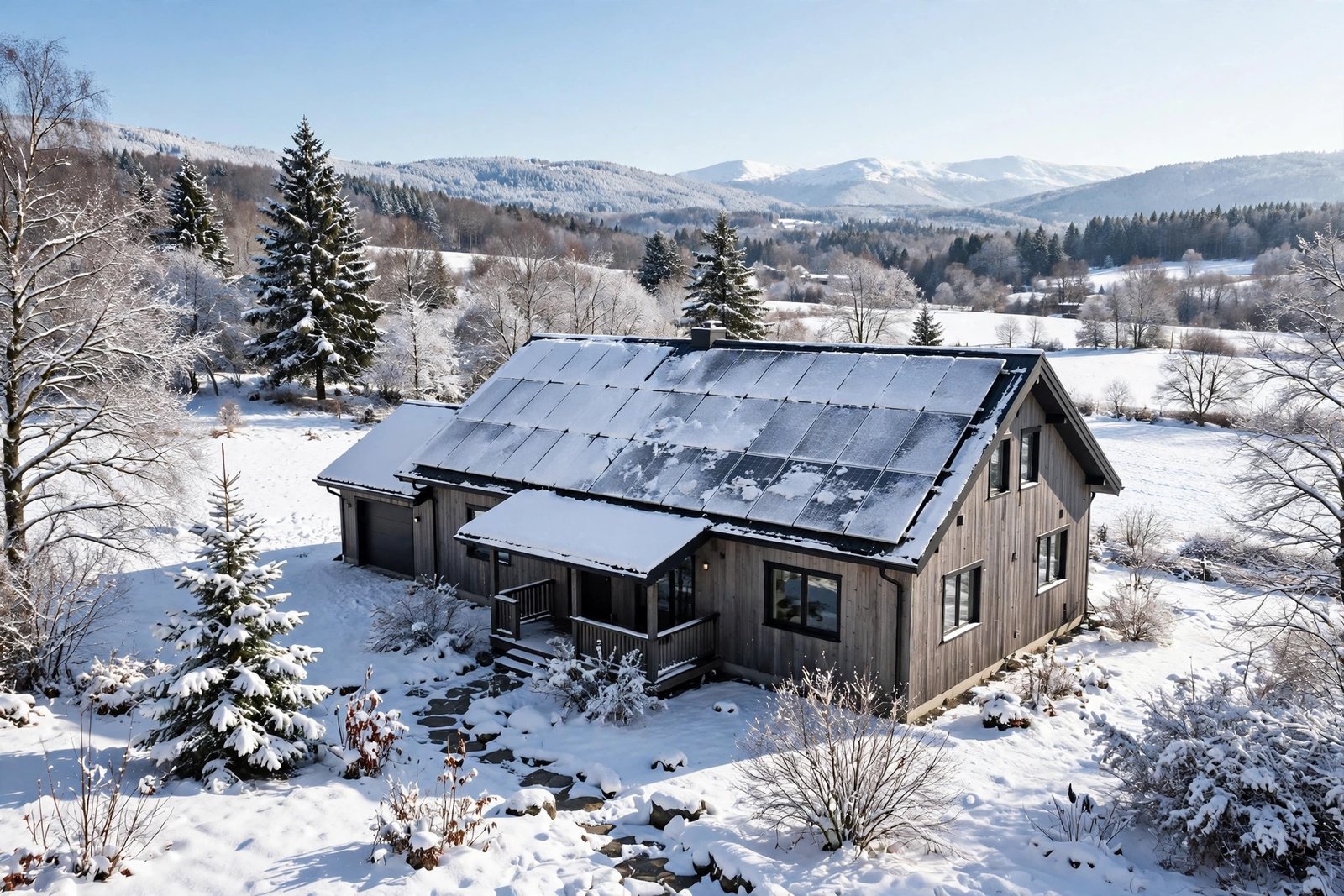
Snow is the main winter problem. A layer of snow blocks all light, so output drops to near zero until it clears. Light snow often slides off tilted panels on its own as the sun warms them, especially if the panels are tilted steeply. Heavy, wet snow sticks. If you need to clear it, use a long-handled soft roof rake or a soft brush from the ground — never a metal shovel, a hard scraper, or hot water, all of which can scratch or crack the glass. Never climb onto a snowy or icy roof.
Frost is less of a problem: a light frost usually melts quickly once the sun hits the panels, and it rarely needs any action. In very cold weather, do not wash panels at all — the water can freeze on the surface and in the frame, and the risk of slipping outweighs any small gain in output.
One reassuring point about winter: panels actually work efficiently in cold, bright weather, so a clean, snow-free panel on a crisp winter day can produce surprisingly well. The low output in winter is mostly because the days are short and the sun is low, not because the panels are dirty.
Signs Your Panels Need Cleaning Now
Do not wait for the calendar if any of these appear:
- Visible dirt or film: the glass looks dull, dusty, or streaked when you look at it from the ground, or you can see droppings, leaves, or debris sitting on a panel.
- A steady drop in output: your monitoring app shows lower production on sunny days than you would expect for the season, with no change in weather or shading. Compare similar sunny days, not a sunny day with a cloudy one.
- One panel underperforming: if your system shows per-panel output, one panel producing much less than its neighbours is often dirty, shaded, or damaged — a visual check will usually tell you which.
- After a specific event: a dust storm, nearby construction, a pollen surge, a storm that blew debris onto the roof, or a flock of birds roosting above the array.
- Stains that survive rain: if the panels still look dirty after heavy rain, the dirt is stuck on — bird droppings, sap, soot, or hard water marks — and needs a proper wash.
How to Check Whether Cleaning Is Needed
You do not need to climb onto the roof to decide. Use these three checks, in order:
1. Look at the panels
Stand back and look at the array in good light. Clean glass looks dark and reflective; dirty glass looks dull, grey, or patchy. Binoculars help if the roof is high. Look for droppings, leaves, sap, and any panel that looks different from the rest.
2. Check your monitoring data
Open your monitoring app and compare production on recent sunny days with similar days earlier in the year, allowing for the season. A gradual slide over several weeks, with no change in weather, points to dirt. A sudden drop points to something else — a fault, new shading, or damage — and cleaning alone will not fix it. If you are unsure what your data is telling you, our guide to how shading affects solar panel output explains how partial cover on a panel affects the whole system.
3. Compare with a clean test
If you are unsure whether cleaning will help, clean one panel (or one small section) and compare its output with the panels next to it over the next few sunny days. If the cleaned panel produces noticeably more, the rest need cleaning too. If there is no difference, the problem lies elsewhere.
Does Rain Clean Solar Panels?
Partly — but not enough to rely on. Rain washes away loose dust and light dirt, and in areas with frequent heavy rain, panels can stay reasonably clean for months. But rain does not remove sticky dirt: bird droppings, tree sap, pollen that has baked on, soot, salt film, or hard water marks all survive rain. In fact, light rain can make things worse by wetting dust and letting it dry into a thin, even film.
Think of rain as a free rinse, not a wash. It helps between cleans and it means you can stretch the gap in a wet climate, but it does not replace a proper clean. If your panels look dirty after rain, they need washing.
DIY Cleaning vs. Professional Cleaning
Most homeowners can clean ground-mounted panels and low, easily reached roof panels themselves, using a long-handled soft brush and a hose from the ground. The method matters more than the effort: cool panels, clean water, a soft tool, no pressure washer, no harsh chemicals, and a thorough rinse. Full details are in our safe cleaning guide.
Consider hiring a professional if your roof is steep, high, or hard to reach; if you are not comfortable working at height; if the panels are heavily soiled with soot, sap, or hard water stains; or if you want the array inspected at the same time. A professional clean typically costs somewhere in the range of a modest service call — prices vary widely by area and system size, so get a local quote rather than relying on a national average. Many companies offer an annual or twice-yearly plan, which can be good value if you would otherwise forget.
Whatever you choose, never let anyone clean your panels with a pressure washer or abrasive tools. If a cleaner proposes it, find another cleaner — the damage to the glass and the anti-reflective coating can be permanent.
Common Mistakes That Waste Time or Cause Damage
- Cleaning in hot midday sun: water dries before you rinse, leaving spots, and cold water on hot glass risks thermal shock. Clean early or late in the day.
- Using a pressure washer: it can force water under the frame seals and damage the glass coating. Never use one on solar panels.
- Using harsh chemicals: bleach, ammonia, solvents, and abrasive cleaners can damage the coating and leave a film. Plain water and mild, pH-neutral soap are enough.
- Cleaning too often: washing panels that are already clean wastes time and water and adds unnecessary wear. Check first, clean when needed.
- Ignoring one dirty panel: a single soiled panel can limit the output of the string it sits in. Treat one bad panel as a job in itself.
- Climbing on the roof in bad conditions: wet, icy, or windy roofs are dangerous. If you cannot reach the panels safely from the ground or a stable ladder, hire a professional.
- Forgetting the check: the schedule only works if you look at the panels regularly. A two-minute monthly look is the cheapest maintenance you will ever do.
When to Call a Professional
Call a qualified solar technician or professional cleaner if:
- Your roof is steep, high, or you cannot reach the panels safely from the ground.
- Output stays low after a proper clean — the problem is likely a fault, not dirt.
- You find cracked glass, a loose frame, damaged cables, or signs of burning or discolouration while cleaning.
- The panels are heavily stained with soot, sap, or hard water marks that will not shift with soap and water.
- You need to work near the inverter, wiring, or electrical connections — never open live electrical equipment yourself.
Safety warning: solar panels produce electricity whenever light falls on them, even when the system is switched off at the inverter. Never touch exposed wiring, never open the junction box, and never work on the roof in wet, icy, or windy conditions. If anything looks damaged or you are unsure, stop and call a professional.
FAQs
How often should you clean solar panels?
Most homes need 2 to 4 cleans a year. Twice a year is enough in a clean, rainy area; four times a year is better near dusty roads, farms, construction, trees, or the coast. Clean in spring and autumn at a minimum, and check the panels visually every month.
Does rain clean solar panels enough?
Rain helps by washing away loose dust, but it does not remove bird droppings, sap, soot, salt film, or baked-on pollen. Treat rain as a free rinse between cleans, not a replacement for cleaning.
Do solar panels need cleaning in winter?
Not as a routine wash — water can freeze on the glass and the roof, making the job dangerous. In winter, only clear snow or heavy debris, gently, from the ground, and leave routine washing until spring.
How do I know if my solar panels need cleaning?
Look at them: dirty glass looks dull or patchy instead of dark and reflective. Then check your monitoring app — a gradual drop in output on sunny days with no change in weather usually means dirt. Cleaning one panel and comparing its output with its neighbours is a reliable test.
How much does professional solar panel cleaning cost?
Prices vary widely by area, system size, and how easy the roof is to reach, so get a local quote. Many companies offer a twice-yearly plan, which can be good value and means the job does not get forgotten.
Can dirty solar panels damage the system?
Dirt itself rarely damages a panel, but a stubborn patch — especially a bird dropping — can heat the cells underneath and create a hotspot, which over time can damage the panel. That is one more reason to remove droppings promptly rather than waiting for the next scheduled clean.
Conclusion
How often you should clean your solar panels comes down to where you live and what lands on them: 2 to 4 times a year covers almost every home, with a spring clean and an autumn clean as the non-negotiable minimum. Add a summer clean in dry or dusty areas, clear leaves through autumn, and clear snow gently in winter — but do not wash panels in freezing weather.
The schedule only works if you check. A two-minute look at the panels each month, plus a glance at your monitoring app on sunny days, will tell you when to bring a clean forward and when to skip one. Keep the method gentle — cool panels, clean water, a soft brush, no pressure washer, no harsh chemicals — and your panels will spend the bright months of the year working at their best.