
Quick answer: Hard water stains, bird droppings, and tree sap are the three stubborn stains that rain will not wash off solar panels — and all three block sunlight and cut output. Soften each one first, then remove it gently: soak hard water stains with a diluted white vinegar solution, soften bird droppings with plain water and a damp cloth, and dissolve tree sap with a little isopropyl alcohol or a mild soap solution. Always use a soft cloth or soft brush, never anything abrasive, and rinse thoroughly with clean water. Never use a pressure washer, bleach, or a scraper on panel glass. If a stain will not shift, or the panel underneath looks damaged, call a professional.
Table of Contents
- Why Stubborn Stains Matter More Than Dust
- Identify the Stain First
- Hard Water Stains: What They Are and How to Remove Them
- Bird Droppings: Remove Them Promptly
- Tree Sap: The Sticky Problem
- Step-by-Step: Cleaning Stubborn Stains Safely
- What You Should Never Use on Solar Panels
- When a Stain Will Not Shift
- Preventing Stains from Coming Back
- Checking Your Output After Cleaning
- When to Call a Professional
- FAQs

Why Stubborn Stains Matter More Than Dust
Loose dust is easy: a rinse or a gentle wash takes it off, and in rainy areas it may never build up at all. Hard water stains, bird droppings, and tree sap are different. All three bond to the glass, resist rain, and stay put for months if nobody removes them. Worse, all three are opaque or nearly opaque, so they block sunlight from the cells underneath far more effectively than a thin layer of dust.
A single bird dropping over a few cells can cut the output of that part of the panel noticeably, and because panels in a string work together, one badly soiled panel can drag down the output of the panels connected to it — the same effect as partial shading. Our guide to solar panel hotspots explains the deeper risk: a stubborn patch that blocks light can heat the cells underneath it, and over time that heat can damage the panel permanently.
Hard water stains and tree sap cause a slower kind of harm. A mineral film or a layer of sap spreads across the glass and dims the whole panel, so output falls gradually and you may not notice until you compare your monitoring data with the same month last year. Sap can also attract dust and insects, building up into a grimy layer that is much harder to remove later than it would have been at first.
The good news is that all three stains are removable with gentle methods and ordinary household supplies. The key is patience: soften the stain first, then lift it off — never scrape, scrub hard, or reach for a harsh chemical.
Identify the Stain First
Before you clean anything, work out what you are dealing with. The right method depends on the stain, and using the wrong one wastes effort or risks damage.
Hard water stains
Hard water stains look like white, chalky spots, rings, or a hazy film on the glass. They appear where water has dried on the panel — after washing with tap water in a hard-water area, after sprinkler overspray, or after rain that carried minerals. If you run a finger over the glass, the stain feels slightly rough or gritty, and it does not wipe off with a dry cloth. In the UK and the USA, hard water is common in many regions, so these stains are a frequent problem for homeowners who wash their panels with a garden hose and let them air-dry.
Bird droppings
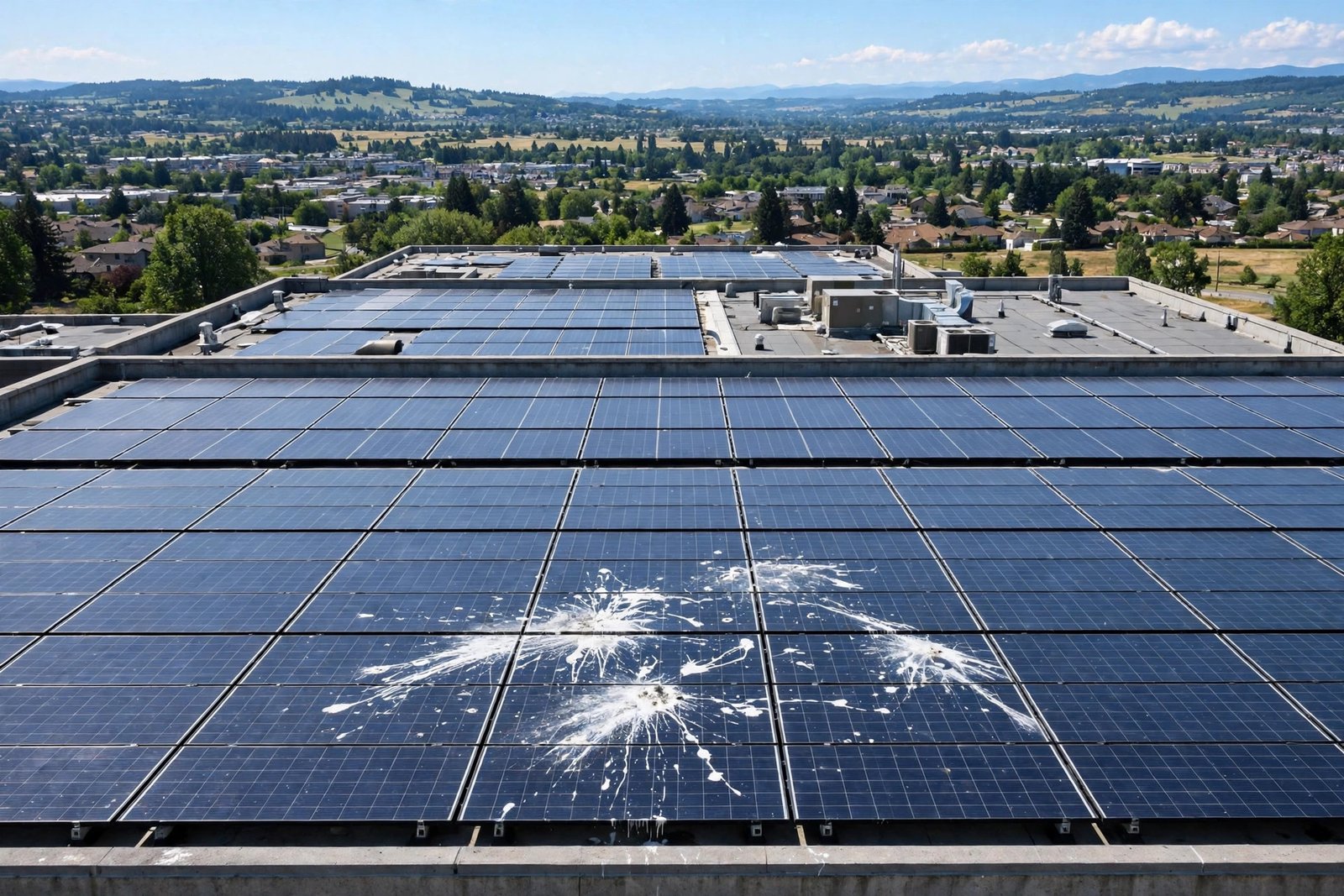
Bird droppings are unmistakable: white or grey splashes, sometimes with a dark centre, sitting on top of the glass. They are sticky when fresh and hard and crusty when dry. They usually appear in the same places again and again, because birds perch on the same spot above the array — often on the ridge, a nearby branch, or a TV aerial. Fresh droppings are soft and easy to remove; dried ones need soaking.
Tree sap
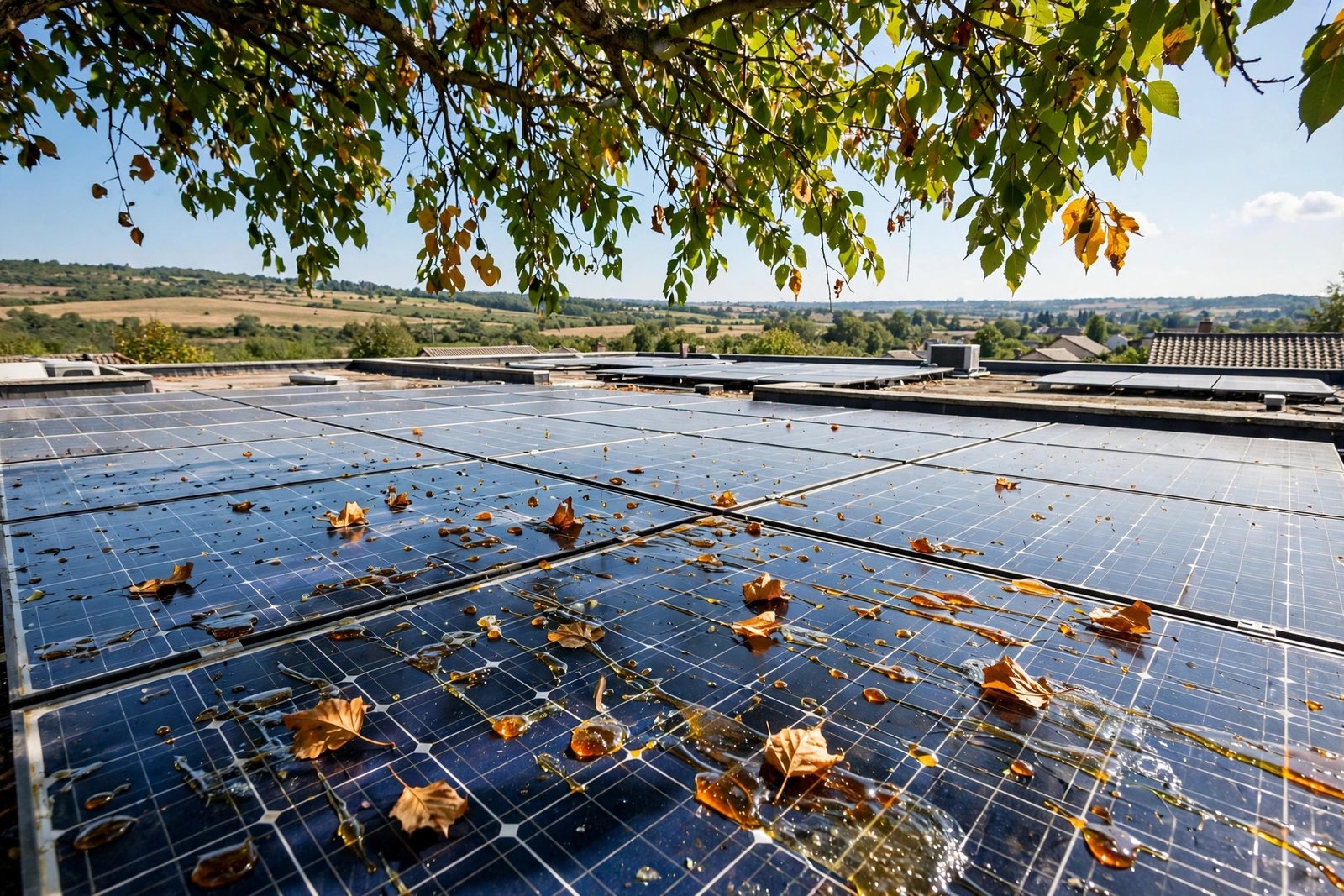
Tree sap looks like clear or amber-coloured sticky blobs, smears, or drips on the glass. It feels tacky to the touch and picks up dust, pollen, and insects, turning into dark, grimy patches over time. Sap appears on panels under or near trees, especially pines, maples, and other sappy species, and it is worst in spring and summer. It is the hardest of the three stains to remove, because it bonds strongly to glass and does not dissolve in water.
Other marks that look like stains
Not every mark on a panel is a stain. A cloudy or milky patch that seems to be inside the glass, brownish discolouration spreading from the edges, or a pattern of fine lines may be delamination, yellowing, or microcracks — damage to the panel itself, not dirt on the surface. If a mark does not change at all after a gentle wash, stop and read our guide on whether a cracked solar panel can be repaired, and get a professional to look at it. Scrubbing harder will not help and can make things worse.
Hard Water Stains: What They Are and How to Remove Them
Hard water contains dissolved minerals, mainly calcium and magnesium. When the water evaporates from the panel, the minerals stay behind as a white, chalky deposit. One drying cycle leaves a faint mark; repeated cycles — washing with hard tap water and letting the panels dry in the sun, or sprinklers hitting the array every day — build the deposit into a visible film that noticeably blocks light.
How to remove hard water stains
The mineral deposit is alkaline, so a mild acid dissolves it. White vinegar is the standard household answer, and it is safe for panel glass when used correctly:
- Wait for cool panels. Clean early in the morning or in the evening, when the panels are cool. Never apply any solution to hot glass in midday sun — it dries too fast and can leave new marks.
- Rinse first. Hose the panel down with clean water to remove loose dust and grit. Any grit left on the glass can scratch it when you wipe.
- Mix the solution. Mix equal parts white vinegar and clean water in a spray bottle or bucket. This is strong enough to dissolve mineral deposits without being harsh on the glass or the frame seals.
- Apply and wait. Spray or wipe the solution onto the stained area and leave it for 5 to 10 minutes. Do not let it dry on the glass — if it starts drying, spray a little more. The waiting is what does the work; the vinegar needs time to dissolve the minerals.
- Wipe gently. Wipe with a soft microfibre cloth or a soft sponge, using light, straight strokes. Do not scrub hard or use a circular motion with pressure — let the solution do the work.
- Rinse thoroughly. Rinse with plenty of clean water, ideally deionised or distilled water if you have it, so no new mineral deposits are left behind. If you only have tap water, rinse well and then dry the glass with a soft squeegee or a clean microfibre cloth so the water does not dry on the panel and leave fresh spots.
- Repeat if needed. Heavy deposits may need a second application. That is normal — repeat the soak and wipe rather than pressing harder.
For very heavy build-up, some homeowners use a dedicated limescale remover made for glass, but check first that it is safe for solar panels and contains no abrasives, ammonia, or hydrofluoric acid. When in doubt, stick with vinegar and patience — it works on all but the most extreme deposits.
Preventing hard water stains
Prevention is simple once you know the cause: the stains come from water drying on the glass. If you wash your panels, rinse with deionised or distilled water for the final rinse, or dry the panels with a squeegee so no water is left to evaporate. Move or redirect any garden sprinkler that sprays the array — sprinkler water is a common and completely avoidable cause. If your tap water is very hard, consider a simple inline deioniser for the hose you use on the panels; they are inexpensive and make a real difference.
For more on safe washing in general, see our guide on how to clean solar panels safely and the guide to the best cleaning solutions and tools.
Bird Droppings: Remove Them Promptly
Bird droppings are the most urgent of the three stains. They are thick, opaque, and sticky, and a single dropping can shade several cells. They also contain uric acid, which is mildly corrosive — left for months, droppings can etch or stain the glass coating, and they can attract more birds to the same spot. The rule is simple: remove droppings as soon as you notice them, rather than waiting for the next scheduled clean.
How to remove bird droppings
- Soften first. Never scrape a dry dropping off the glass — dried droppings are hard and gritty, and scraping can scratch the anti-reflective coating. Spray the dropping with plain clean water, or lay a damp cloth over it for 10 to 15 minutes until it softens.
- Lift, do not scrub. Once soft, lift the dropping off with a soft microfibre cloth or a soft sponge. Use gentle, straight strokes. If it resists, soak it again rather than pressing harder.
- Wash the area. Clean the spot with clean water and a drop of mild, pH-neutral soap, then rinse thoroughly. Droppings can leave a faint residue that is easy to miss but still blocks light.
- Check the cells underneath. Once the glass is clean, look at the cells below. If the glass looks clear but the cells underneath appear discoloured or browned, the dropping may have caused a hotspot. Watch that panel’s output over the next few days; if it stays low, get a professional to inspect it.
Stopping birds from coming back
If droppings keep appearing in the same place, a bird is perching above the array. The lasting fix is to remove the perch or block access: trim back overhanging branches, fit bird-proofing mesh around the edges of the array so birds cannot nest or roost underneath, and consider bird spikes on the ridge or nearby ledges where they sit. Mesh is the most effective option — it stops both perching above the panels and nesting underneath them, which also protects the wiring from pecking and nesting damage. Our guide to protecting solar panel wires from squirrels, birds, and rodents covers bird-proofing in more detail.
Do not use ultrasonic bird scarers or chemical repellents on or near the panels — they are unreliable, and some chemicals can damage the glass coating or the frame seals.
Tree Sap: The Sticky Problem
Tree sap is the toughest of the three stains. It is a sticky resin that bonds to glass, does not dissolve in water, and hardens in the sun. It also traps dust, pollen, and insects, so a small sap drip can grow into a dark, grimy patch that blocks a surprising amount of light. Sap is worst in spring and summer, when trees are actively producing it, and on panels under pines, maples, firs, and other resinous species.
How to remove tree sap
- Cool panels, rinse first. As always, work on cool panels and rinse away loose dust and grit first so nothing scratches the glass while you work.
- Soften with isopropyl alcohol. Dampen a soft microfibre cloth with isopropyl alcohol (rubbing alcohol) and hold it on the sap for a minute or two. The alcohol dissolves the resin. Work on one small patch at a time and keep the cloth damp — do not pour alcohol directly onto the panel.
- Wipe gently and repeat. Wipe the softened sap away with light strokes. Stubborn sap may need two or three applications. Be patient: repeated gentle applications beat one hard scrub.
- Alternative: mild soap and warm water. If you do not have isopropyl alcohol, a solution of warm water and mild, pH-neutral soap, left to soak on the sap for 10 to 15 minutes, will soften lighter sap deposits. It takes longer than alcohol, but it works on fresh sap.
- Wash and rinse. Once the sap is gone, wash the whole area with mild soap and water, then rinse thoroughly with clean water and dry with a soft cloth or squeegee so no residue or water spots remain.
What not to do with sap: never scrape it off with a blade, a scraper, or a credit card — the glass coating scratches easily, and a scratch is permanent. Never use petrol, white spirit, acetone, nail polish remover, or any solvent stronger than isopropyl alcohol; these can attack the frame seals, the backsheet, and the anti-reflective coating. Never use an abrasive pad or a scouring sponge, even a “non-scratch” one.
Stopping sap from coming back
The only lasting fix for sap is to remove the source: trim back branches that overhang the array, ideally before the spring sap season. If the tree belongs to a neighbour, talk to them first — in both the USA and the UK you generally have the right to trim branches that overhang your property, but the rules and the etiquette vary, so check local guidance before cutting. If trimming is not possible, add the panels under the tree to your monthly visual check, and clean sap off promptly while it is still fresh and soft — fresh sap comes off far more easily than sap that has baked on for a season.
Step-by-Step: Cleaning Stubborn Stains Safely
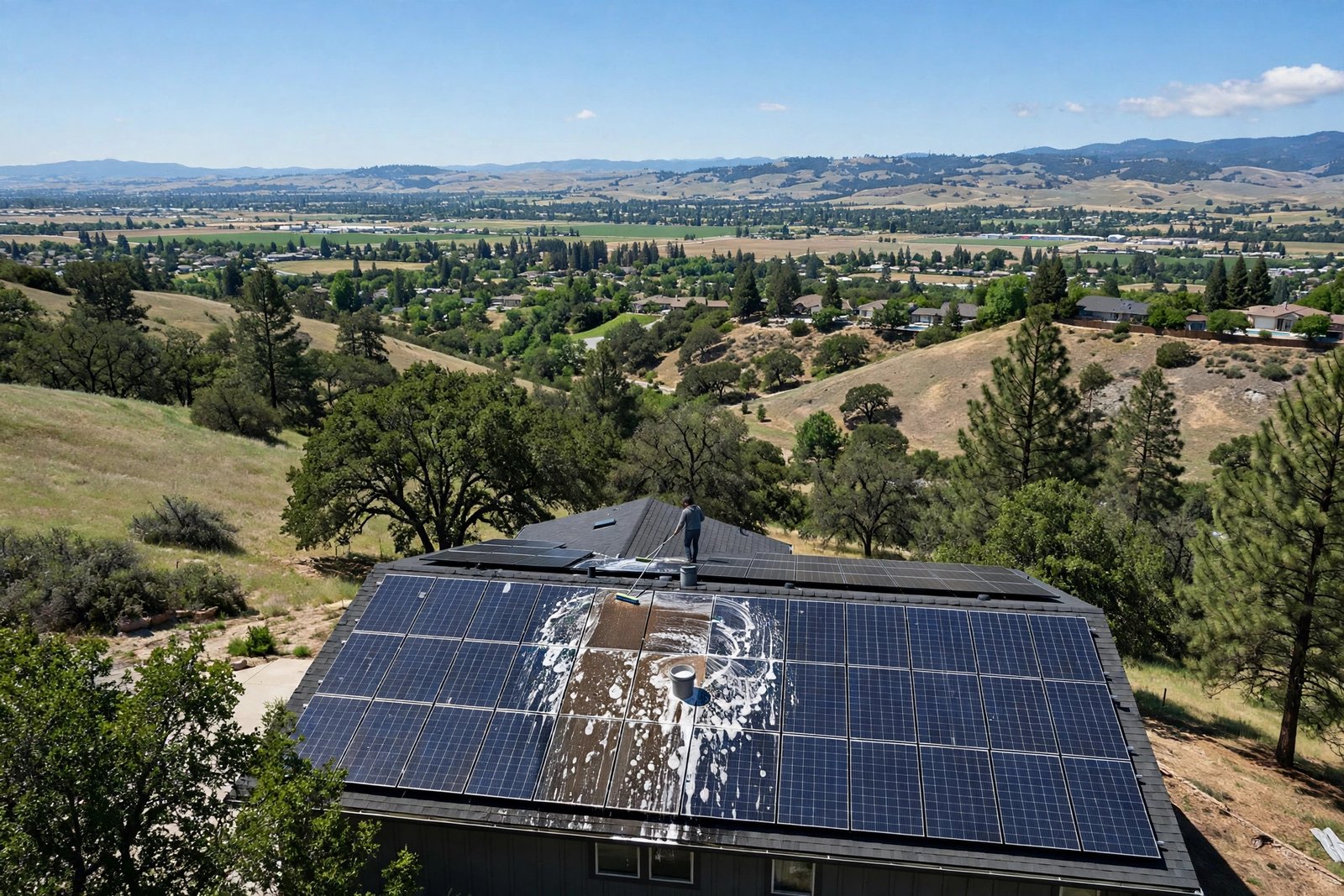
Whatever the stain, the same safe method applies. Follow these steps in order, and do not skip the safety checks at the start.
- Check the weather and the time. Clean on a cool, overcast morning or in the early evening. Never clean in the middle of a hot, sunny day, and never clean in wet, icy, or windy conditions.
- Work from the ground if you can. Use a long-handled soft brush or a telescopic pole with a soft cloth head. Only use a ladder if it is stable, the ground is dry and level, and you are comfortable at height. Never walk on the panels and never climb onto a wet or steep roof.
- Switch off the system at the inverter if you will be touching the panels. Solar panels produce electricity whenever light falls on them, even with the inverter off — so treat every panel as live, keep water away from wiring and the junction box, and never touch exposed cables.
- Rinse away loose dirt first. Hose the panels with clean water. This removes grit that could scratch the glass when you wipe.
- Identify the stain and soften it. Vinegar solution for hard water stains, plain water for bird droppings, isopropyl alcohol for tree sap. Give the softening step time — 5 to 15 minutes depending on the stain.
- Wipe gently with a soft tool. Microfibre cloth, soft sponge, or a soft brush. Light, straight strokes. No pressure, no scrubbing, no circular grinding.
- Rinse thoroughly and dry. Rinse with plenty of clean water, and dry with a squeegee or soft cloth so no water dries on the glass and leaves fresh marks.
- Inspect the result. Look at the glass from an angle in good light. If the stain is gone and the glass is clear, you are done. If a faint mark remains, repeat the soak — do not press harder.
What You Should Never Use on Solar Panels
Panel glass has a thin anti-reflective coating that is easy to damage and impossible to repair. These are the common mistakes that ruin it:
| Never use | Why not |
|---|---|
| Pressure washer | Forces water under the frame seals and can crack the glass or damage the coating. |
| Abrasive pads, scouring sponges, wire brushes | Scratch the glass and the anti-reflective coating permanently. |
| Scrapers, blades, or credit cards | Even a plastic scraper can scratch the coating; a metal blade certainly will. |
| Bleach, ammonia, or solvents (petrol, acetone, white spirit) | Attack the frame seals, the backsheet, and the coating; some are also a fire risk near electrics. |
| Harsh detergents or washing-up liquid with additives | Can leave a film that blocks light and attracts more dirt. Use only mild, pH-neutral soap. |
| Hard tap water left to dry | Leaves the very mineral deposits you are trying to remove. Rinse with deionised water or dry with a squeegee. |
| Hot water on cold panels, or cold water on hot panels | Thermal shock can crack the glass. Always clean cool panels with cool or lukewarm water. |
If a product label says “not suitable for glass”, “abrasive”, or “solvent-based”, do not use it on your panels. When in doubt, the safe list is short: clean water, white vinegar solution, mild pH-neutral soap, and isopropyl alcohol for sap. Anything else should be a product made specifically for solar panels, used exactly as its instructions say.
When a Stain Will Not Shift
Sometimes a mark survives everything gentle you try. Before you reach for something stronger, consider what the mark might actually be:
- Etched glass: bird droppings or mineral deposits left for a very long time can etch the coating, leaving a faint mark even after the deposit is gone. The deposit is removed, but the glass underneath is permanently dulled in that spot. It usually costs only a small amount of output, and there is no safe DIY fix — a professional may be able to assess whether the panel needs replacing.
- Delamination or yellowing: a cloudy patch that seems to be under the glass, or brownish discolouration spreading from the edges, is damage inside the panel, not a surface stain. No cleaning will remove it.
- Microcracks or snail trails: fine lines or brownish trails across the cells are internal damage. Cleaning will not help, and scrubbing can make it worse.
- Burn marks or hotspots: a dark or scorched patch on the glass or the cells underneath means the panel has overheated. Switch the system off at the inverter and call a professional — do not try to clean it.
If you are unsure whether a mark is a stain or damage, try the gentle method once. If nothing changes, stop. A mark that does not respond to a proper soak and a soft wipe is almost certainly not a surface stain, and further effort risks damaging a panel that may still be working.
Preventing Stains from Coming Back
Removing stains is satisfying, but stopping them is better. Most prevention is simple and cheap:
- Fix the water. Redirect sprinklers away from the array, and always finish a wash with a squeegee or a deionised-water rinse so no mineral deposits are left behind.
- Bird-proof the array. Mesh around the panel edges stops birds roosting and nesting, which removes both droppings and the wiring damage that nesting birds cause.
- Trim overhanging branches. This stops sap, leaves, and bird perches in one move, and it also reduces shading — a double win for output.
- Check monthly. A two-minute visual check each month catches droppings and sap while they are still fresh and easy to remove. Fresh stains take minutes; baked-on stains take much longer. Our guide to how often you should clean solar panels gives you a seasonal schedule to build this into.
- Clean after specific events. After a dust storm, a pollen surge, nearby construction, or a storm that blew debris onto the roof, check the panels within a day or two rather than waiting for the next scheduled clean.
Checking Your Output After Cleaning
After removing a stubborn stain, check that the fix actually worked. Open your monitoring app and compare production on sunny days after the clean with similar sunny days before it, allowing for the season and the weather. A panel that was badly stained should show a clear improvement within a few days of good weather.
If output does not improve after a proper clean, the stain was not the problem — or not the only problem. Work through the other checks in our guide to solar panels not producing enough power, and check whether shading, a faulty panel, or an inverter issue is involved. If one panel in particular stays low while its neighbours recover, that panel may have internal damage from a hotspot, and a professional inspection is the right next step.
When to Call a Professional
Call a qualified solar technician or professional cleaner if:
- The stain will not shift after two gentle attempts — it may be etching or internal damage, not a surface stain.
- You find cracked glass, a loose frame, damaged cables, burn marks, or discolouration while cleaning.
- Output stays low after a proper clean, or one panel keeps underperforming its neighbours.
- Your roof is steep, high, or you cannot reach the panels safely from the ground.
- The job involves working near the inverter, wiring, or electrical connections.
- You are dealing with a large commercial array rather than a home rooftop system.
Safety warning: solar panels produce electricity whenever light falls on them, even when the system is switched off at the inverter. Never touch exposed wiring, never open the junction box, and never work on the roof in wet, icy, or windy conditions. Treat every panel as live, keep water away from electrical connections, and if anything looks damaged or you are unsure, stop and call a professional.
FAQs
Can hard water stains damage solar panels?
Hard water stains themselves are mineral deposits sitting on the glass, and they mainly cost you output by blocking sunlight. Left for a very long time, they can etch the anti-reflective coating, leaving a permanent dull mark. Remove them with a diluted white vinegar solution and prevent them by rinsing with deionised water or drying the panels with a squeegee.
How do I remove bird droppings from solar panels?
Soak the dropping with plain water or a damp cloth for 10 to 15 minutes until it softens, then lift it off gently with a soft microfibre cloth. Never scrape a dry dropping off the glass — it is hard and gritty and can scratch the coating. Wash the spot with mild soap and water afterwards, and rinse well.
Does tree sap damage solar panels?
Sap itself does not damage the glass, but it blocks light, traps dust and insects, and hardens in the sun until it is very difficult to remove. Left for a season, it can leave a grimy layer that costs noticeable output. Remove it by softening it with isopropyl alcohol on a cloth, then wiping gently. Trim back overhanging branches to stop it coming back.
Can I use vinegar on solar panels?
Yes — a solution of equal parts white vinegar and clean water is safe for panel glass and effective on hard water stains, provided you use it on cool panels, leave it to soak for 5 to 10 minutes without letting it dry, wipe gently with a soft cloth, and rinse thoroughly afterwards. Do not use undiluted vinegar, and do not use it on hot glass.
What should I never use to clean solar panels?
Never use a pressure washer, abrasive pads, scouring sponges, scrapers or blades, bleach, ammonia, petrol, acetone, or white spirit. All of these can scratch the glass, damage the anti-reflective coating, or attack the frame seals. Stick to clean water, mild pH-neutral soap, white vinegar solution for mineral stains, and isopropyl alcohol for sap.
How do I stop stains coming back on solar panels?
Redirect sprinklers away from the array, finish washes with a squeegee or deionised-water rinse, fit bird-proofing mesh around the panel edges, and trim back branches that overhang the roof. Check the panels visually every month so droppings and sap are removed while they are still fresh and easy to clean.
Conclusion
Hard water stains, bird droppings, and tree sap are the stains that separate a quick rinse from a real clean — but none of them needs harsh treatment. Soften first, then lift gently: vinegar solution for mineral stains, plain water for droppings, isopropyl alcohol for sap, and a soft cloth or brush for all three. Rinse well, dry the glass, and check your output over the next few sunny days to confirm the fix worked.
The real secret is timing. A dropping removed the day you notice it takes two minutes; the same dropping left for a season takes a soak, a scrub, and possibly a professional. Build a monthly two-minute check into your routine, fix the causes — sprinklers, perching birds, overhanging branches — and stubborn stains stop being a recurring problem. And if a mark will not shift after two gentle tries, or the panel underneath looks damaged, stop and call a professional: a mark that resists cleaning is usually telling you something else is wrong.