
Quick answer: Squirrels, birds and rodents chew solar panel wires because the cables are warm, easy to reach and made of soft insulation — and a single chewed wire can shut down a whole string of panels or even start a fire. The fix has three parts: inspect your wiring for damage, repair or replace any chewed cables, then block access for good with a wire mesh critter guard around the panel edges and metal conduit over exposed cables. Never work on live solar wiring yourself — shut the system down first and call a qualified solar technician if any wire is damaged.
Table of Contents
- Why Squirrels, Birds and Rodents Target Solar Panels
- Signs Animals Have Damaged Your Solar Wiring
- What Kind of Damage Can Animals Cause?
- Safety First: Never Touch Damaged Wiring While Live
- How to Inspect Your Panels and Wiring for Animal Damage
- How to Repair Chewed or Damaged Wires
- How to Protect Your Solar Panel Wires for Good
- Removing Nests and Animals Safely
- Common Mistakes to Avoid
- When to Call a Professional
- FAQs
Why Squirrels, Birds and Rodents Target Solar Panels
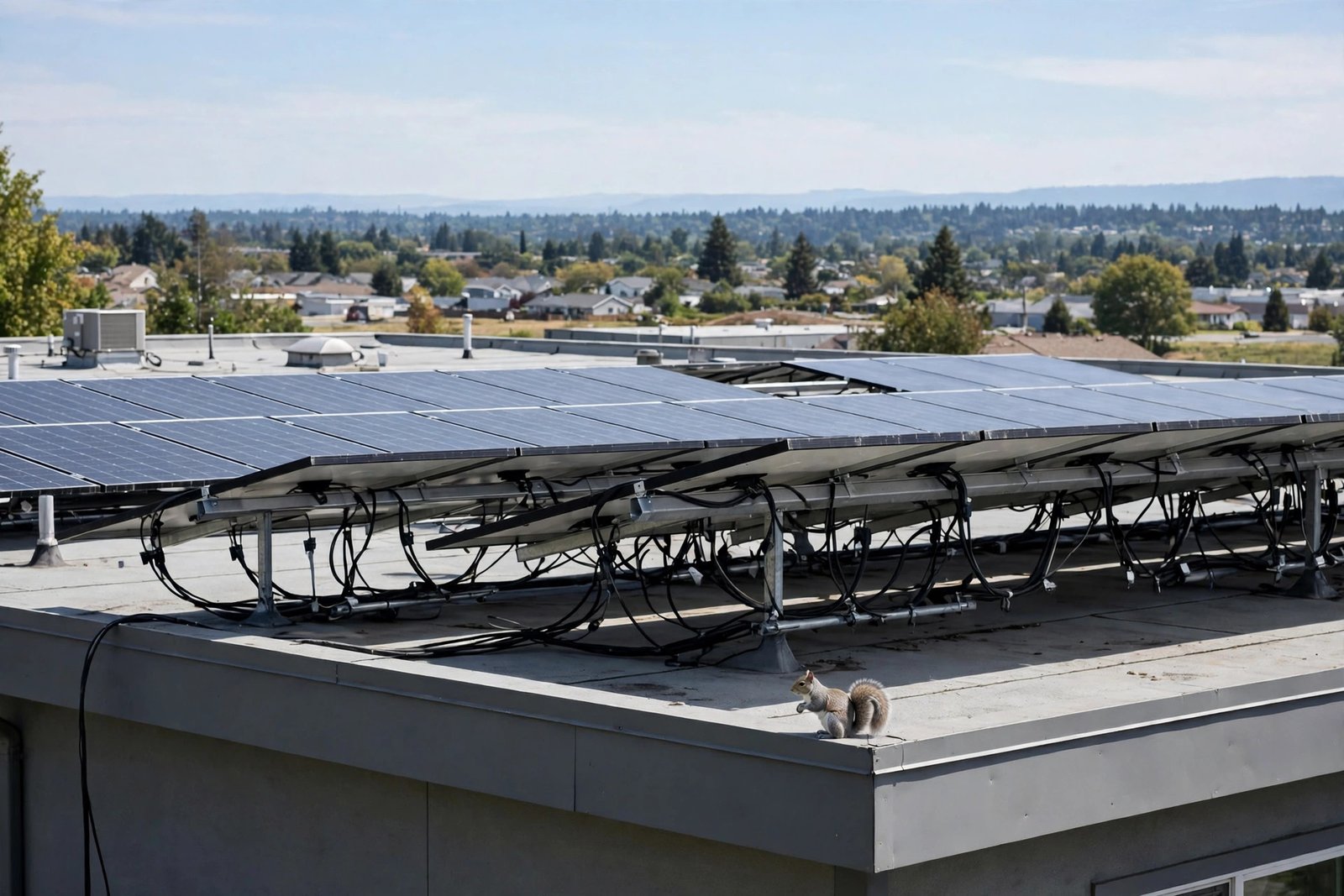
To a squirrel or a rat, the gap under a rooftop solar panel is almost perfect: it is dry, shaded, warm, and hidden from predators. Add soft plastic cable insulation, and you have both a home and a chew toy in one place. Understanding why animals move in is the first step to keeping them out.
- Shelter. The space between a panel and the roof is usually 10 to 15 centimetres high — just right for a squirrel, rat or bird to crawl under and build a nest. It stays dry in rain and cool in summer heat.
- Warmth. Panels and cables warm up in the sun. In cold weather, animals are drawn to that warmth, especially at night when the roof cools down more slowly than the surrounding air.
- Chewing instinct. Squirrels and rats must gnaw constantly because their front teeth keep growing. The soft rubber or plastic insulation on solar cables is an easy target, and they will chew it even when they are not hungry.
- Easy access. Overhanging tree branches, nearby fences, gutters and drainpipes give animals a simple route onto the roof. Once one animal finds the spot, others follow the scent trail.
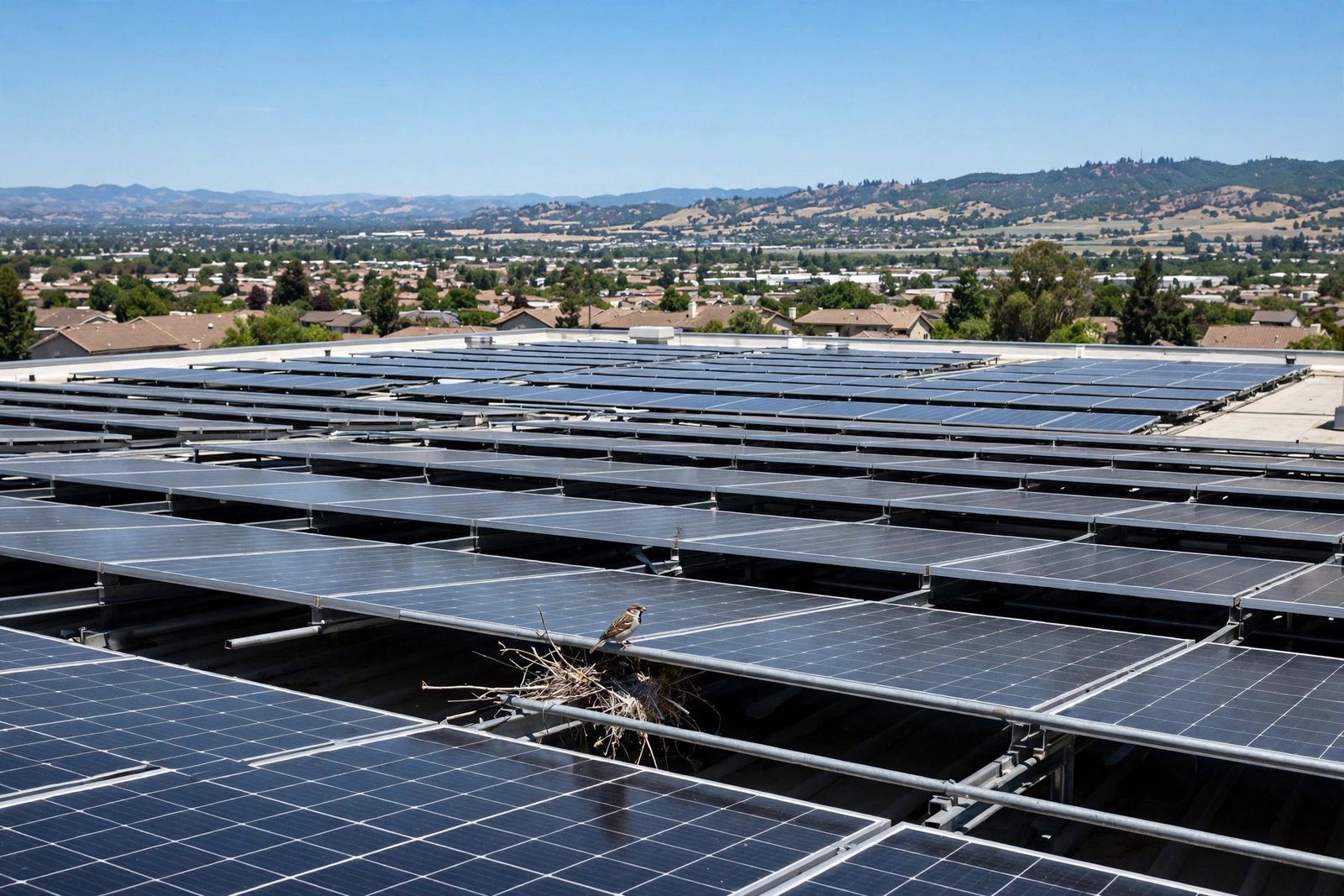
- Nesting material. Birds collect twigs, leaves and feathers under panels, and squirrels drag in insulation and leaves. A nest under a panel can block airflow, trap moisture and push against cables and connectors.
Squirrels are usually the worst offenders in suburban areas, while rats and mice are more common near farmland, food stores and older neighbourhoods. Pigeons and starlings are the birds most likely to nest under panels, and their droppings are acidic enough to damage roof materials over time.
Signs Animals Have Damaged Your Solar Wiring
Animal damage often starts silently — a small nick in a cable that slowly gets worse. Catch it early and the repair is usually simple. Leave it, and you can lose a whole string of panels. Watch for these warning signs:
- A sudden drop in power output. If your monitoring app shows one string producing far less than the others, or your daily output has fallen for no clear reason, a chewed wire is a likely cause. See our guide on panels not producing enough power for other possible causes.
- A string producing zero watts. A cable chewed right through breaks the circuit completely. Our checklist for zero watts on a sunny day includes animal damage as one of the first things to check.
- Inverter warnings or shutdowns. Damaged insulation can cause earth faults or isolation faults, which many inverters report as an error and then shut down to protect themselves.
- Visible chew marks or bare copper. From the ground with binoculars, or during a roof inspection, look for cables with rough, gnawed edges, missing insulation, or shiny copper showing through.
- Animals on the roof. Squirrels running across the panels, birds flying in and out from under the panel edges, or scratching and scrabbling sounds from the roof are all clear warnings.
- Nesting material and droppings. Twigs, leaves, feathers or droppings around the panel edges, in the gutters, or on the ground below the array mean animals are living up there.
- A burning smell or scorch marks. A damaged wire can arc. If you smell burning near the array or see blackened marks on cables or connectors, treat it as urgent — shut the system down and call a professional immediately.
What Kind of Damage Can Animals Cause?
Animal damage is not just a nuisance. It can be expensive, and in the worst cases dangerous.
Chewed cables and exposed conductors
This is the most common and most serious damage. A squirrel can strip the insulation off a DC cable in minutes. Once bare copper is exposed, the wire can short against the metal panel frame or the roof, arc, or corrode quickly in rain. DC arcs are especially dangerous because direct current does not switch off by itself the way household AC does — an arc can keep burning and start a fire.
Damaged connectors
Animals also chew MC4 connectors and junction boxes. A damaged connector lets water in, which leads to corrosion, high resistance and heat build-up. If a connector is chewed, do not try to tape it up — learn how to replace a damaged MC4 connector properly, or have a technician do it.
Nests blocking airflow and drainage
A nest packed under a panel traps heat and moisture. Panels run hotter, which reduces their output, and trapped water speeds up corrosion of cables, connectors and roof fixings. In heavy rain, a nest can even block water from draining off the roof, which can lead to leaks around the panel mounts.
Roof and panel damage
Squirrels and rats can chew through roof felt, flashing and even the rubber seals around panel mounts, creating a path for water into your home. Birds pecking at panel edges rarely damage the glass, but their droppings can stain and, over time, etch the panel surface if left in place.
Lost generation and repair bills
Even a small amount of damage can take a string of panels offline for days or weeks while you wait for a repair. And here is the painful part: most solar panel and inverter warranties do not cover animal damage. It is usually classed as an external cause, which means the repair comes out of your pocket unless your home insurance covers it.
Safety First: Never Touch Damaged Wiring While Live
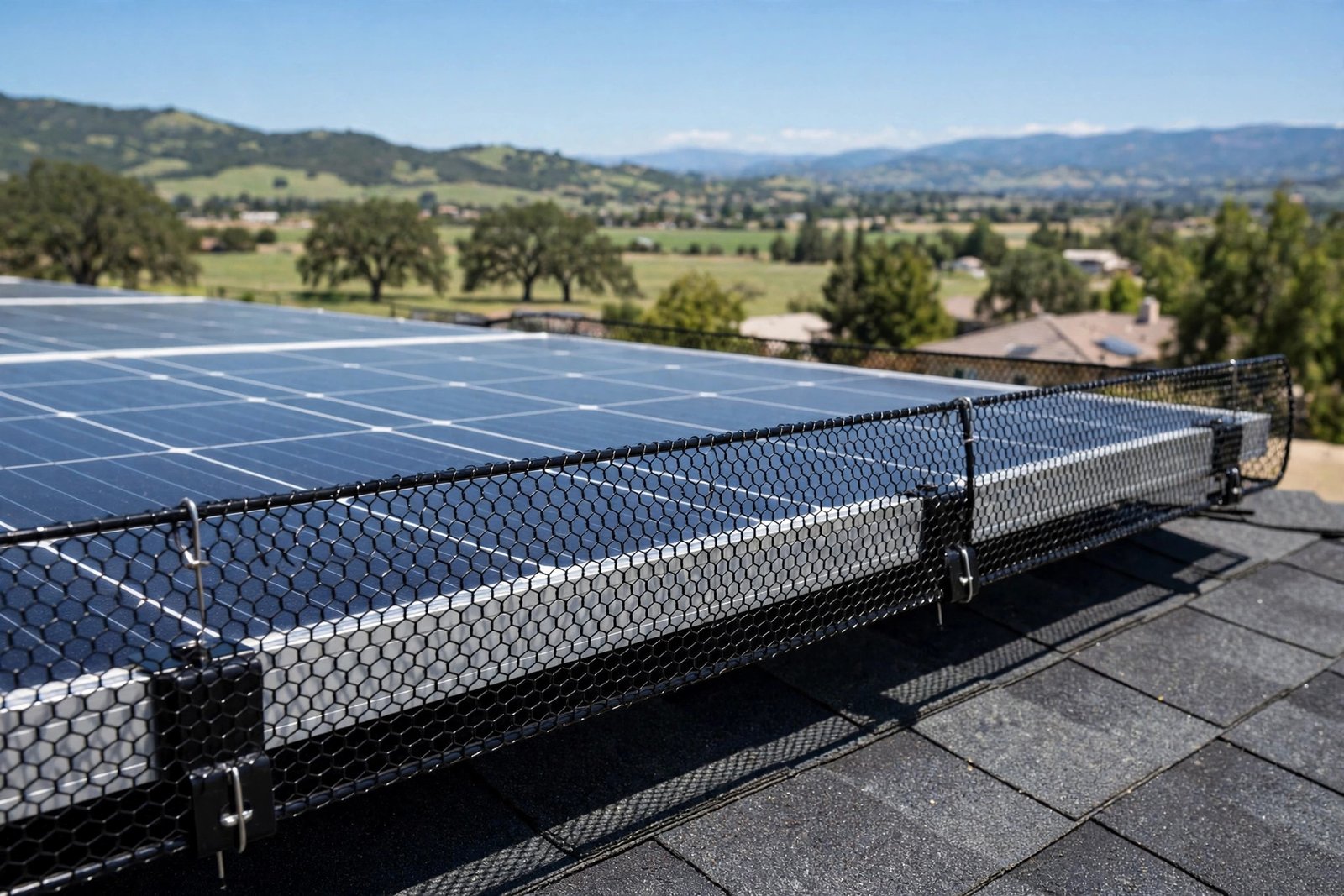
Solar panels produce electricity whenever light falls on them — you cannot switch off the panels themselves by flipping a breaker. A damaged cable can be live even on a cloudy day, and DC voltages in a typical home system are high enough to cause a serious or fatal shock. Follow these rules before you go anywhere near damaged wiring:
- Shut the system down first. Turn off the AC isolator at the inverter and the DC isolator, following your installer’s shutdown procedure. Our guide on how to safely reset your inverter explains the correct order.
- Verify the wires are dead. Use a multimeter rated for DC voltage to confirm there is no voltage on the cable before touching it. See our guide on how to test with a multimeter.
- Do not work on the roof alone. Roof work is dangerous even without electricity involved. Use a proper ladder, wear non-slip shoes, and have someone on the ground. If you are not comfortable on a roof, do not go up — hire a professional.
- Never touch a wire that is arcing, smoking or smells burnt. Keep clear, shut the system down from the ground if you safely can, and call a qualified solar technician or your installer immediately.
- Wear insulated gloves and eye protection whenever you handle cables, even after shutdown, in case a connector is still live from another string.
How to Inspect Your Panels and Wiring for Animal Damage
A regular inspection is the cheapest protection you can buy. Check at least twice a year — once in spring, when animals start nesting, and once in autumn, when they look for winter shelter — and after any period when your output has dropped unexpectedly.
Step 1: Check from the ground
Walk around your home and look up at the array with binoculars. Look for animals moving on the roof, nesting material sticking out from under the panels, droppings in the gutters, and any cables hanging loose below the panel edges.
Step 2: Check your monitoring data
Compare the output of each string. If one string is consistently lower than the others on clear sunny days, that string is the first place to look. A sudden step-change in output on a particular date often marks the day the damage happened.
Step 3: Inspect the roof safely
If you are confident working on a roof, go up with a helper on the ground. Look along the panel edges for chew marks on cables, damaged connectors, nests, droppings and gnawed roof felt. Photograph anything you find — photos are useful for your installer, your insurer and any warranty claim.
Step 4: Check the inverter and cabling indoors
Rats and mice often follow cables into the loft or garage. Check the cable runs inside the house too, especially where cables pass through walls or into the inverter. Look for droppings and gnawed insulation near the inverter and battery.
Step 5: Note what you find
Write down which strings are affected, what the damage looks like, and when you first noticed it. If you call a professional, this information saves them time — and saves you money.
How to Repair Chewed or Damaged Wires
How you repair the damage depends on how bad it is. The guiding rule is simple: if you are unsure, stop and call a professional.
Light damage: nicked insulation only
If only the outer insulation is scratched and the copper underneath is untouched, a technician may be able to protect the spot with proper UV-resistant electrical tape or heat-shrink sleeving. This is a temporary measure — the cable should still be monitored and replaced if the damage spreads.
Moderate damage: copper strands exposed or cut
If copper strands are exposed or some are cut, the damaged section must be cut out. The repair means fitting a new length of solar cable of the same type and rating, joined with proper MC4 connectors and a crimping tool. Ordinary household wire and twist-on connectors are not suitable — solar DC cable is specially rated for outdoor use and high voltage. Our guide to fixing loose or corroded solar wiring explains the same repair principles.
Severe damage: cable chewed through or burnt
If a cable is chewed right through, shows burn marks, or the connector is melted, the whole cable run should be replaced. Do not splice a burnt cable back together with tape. A qualified technician will replace the cable, check the connectors on both ends, and test the string before switching the system back on.
After any repair
Always test the string before returning the system to normal use: check the open-circuit voltage and the current with a multimeter, and confirm on your monitoring app that the string is producing the same output as the others. Then fit protection — a repair without protection is just an invitation for the same animal to come back.
How to Protect Your Solar Panel Wires for Good
Protection is cheaper than repair. Most of these measures can be fitted at any time, and they are far easier to install before animals move in than after a nest is already established.
1. Fit a critter guard around the panel edges
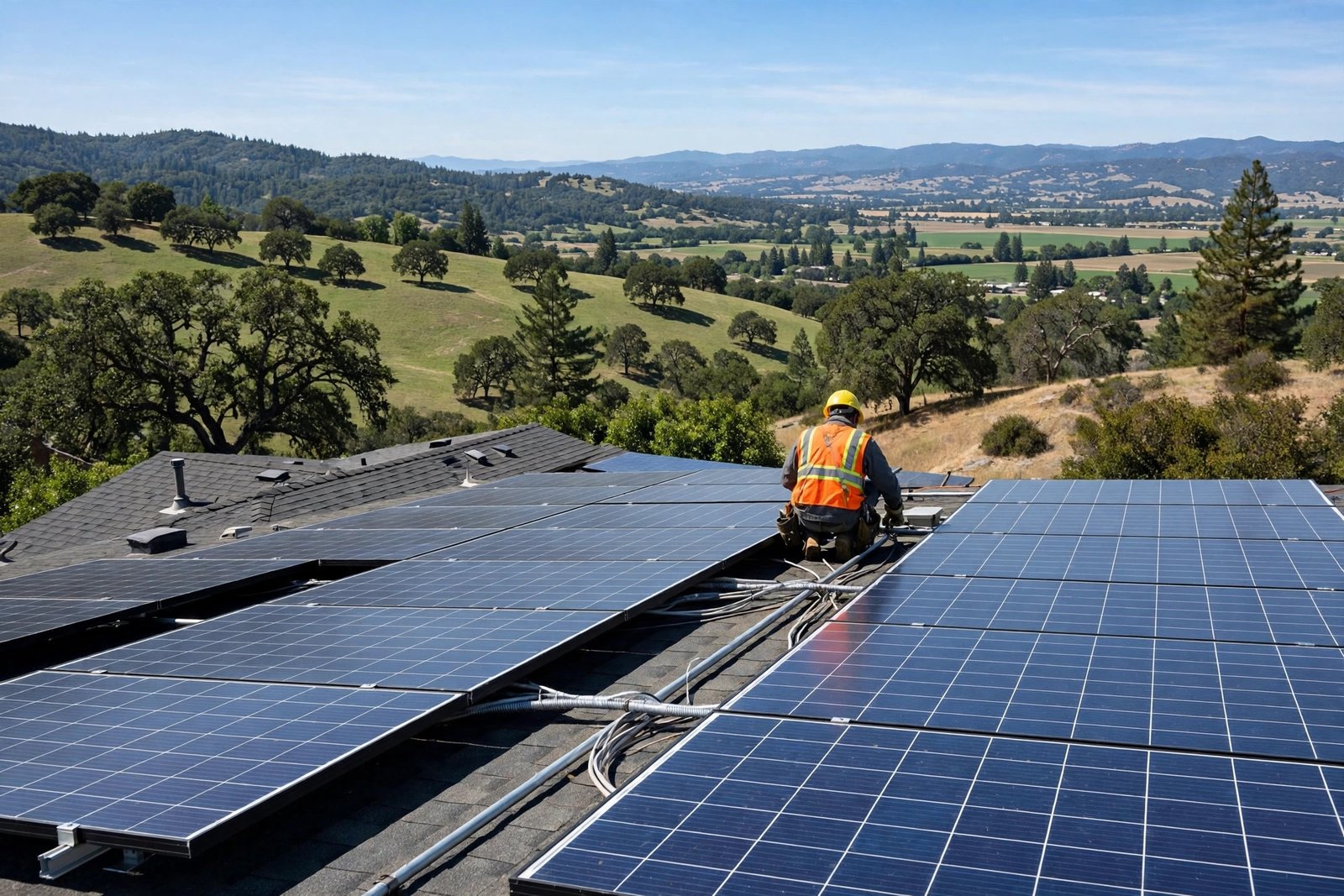
A critter guard is a strip of galvanised steel or aluminium mesh that closes the gap between the panel frame and the roof. It is clipped or screwed to the panel frame and runs all the way around the array. It keeps squirrels, rats and birds out while still letting air flow underneath the panels, which is important for cooling. Mesh guards are the single most effective protection, and most installers can fit one to an existing array in a few hours.
2. Run cables in metal conduit
Exposed cables are an open invitation. Where cables run across the roof or down a wall, put them inside metal conduit or armoured cable trunking. Plastic conduit is better than nothing, but squirrels and rats can chew through it — galvanised steel conduit is the reliable choice. Make sure the conduit is properly earthed and that cable entries are sealed against water.
3. Clip cables tight and keep them short
Loose cables that dangle or swing are easier for animals to reach and chew. Clip cables firmly to the panel frames or mounting rails, keep runs as short as possible, and tuck them up under the panels where they are harder to reach. Never let cables rest on the roof surface, where they sit in water and are easy for rats to find.
4. Trim overhanging branches
Cut back any tree branches that hang over or near the roof. A gap of at least two metres between branches and the roofline removes the easiest route onto the array. This also reduces shade on the panels, so it improves your output at the same time.
5. Seal entry points into the loft
Check where cables enter the house and seal any gaps around them with steel wool and sealant — mice can squeeze through a hole as small as a pencil. Cover vents and eaves gaps with fine metal mesh. Do not use foam filler alone; rats chew straight through it.
6. Keep the area around the house tidy
Remove bird feeders from near the roofline, keep bins sealed, clear away fallen fruit, and do not stack firewood against the house. The fewer reasons animals have to visit your roof, the fewer problems you will have.
7. Consider deterrents — with realistic expectations
Ultrasonic repellers, flashing lights and predator decoys are sold widely, but their effect is limited and animals often get used to them within weeks. They can be a useful extra layer, but they are not a substitute for a physical barrier like mesh or conduit. Sprays and taste deterrents applied to cables can help in the short term, but they wash off in rain and need regular reapplication — and some products can damage cable insulation, so check with your installer before using one.
Removing Nests and Animals Safely
If animals have already moved in, removal needs care — both for you and for the animals.
- Check the law first. In the UK, many wild birds and their nests are protected during breeding season, and it is illegal to disturb an active nest. In the USA, rules vary by state and species — squirrels and some birds are protected in certain areas. If you are unsure, contact a licensed wildlife removal professional or your local wildlife authority before touching a nest.
- Do not block animals inside. Never fit a critter guard while animals or young are still living under the panels. Fit a one-way exit flap first so animals can leave but cannot get back in, and only seal the array once you are sure it is empty — usually after a few days of no activity.
- Wear gloves and a mask. Nests and droppings can carry disease. Wear gloves, a dust mask and eye protection when clearing nesting material, and bag it for disposal rather than letting it blow around the roof.
- Use a licensed professional for squirrels and rats. Trapping and relocating wildlife is regulated in many places, and a professional knows the legal and humane way to do it. They can also confirm the roof space is empty before the guard goes on.
- Clean up after removal. Once the animals are gone, clear out all nesting material, check for droppings on the roof and in the gutters, and inspect the cables underneath for damage you could not see before.
Common Mistakes to Avoid
- Taping over a chewed cable and forgetting about it. Tape is not a repair. It hides the damage while corrosion and heat build-up continue underneath.
- Fitting a critter guard with animals still inside. Trapped animals will chew their way out — through your cables — or die under the panels, which creates a smell and a health problem.
- Using plastic conduit and calling the job done. Rats and squirrels chew through plastic easily. Use metal where animals are active.
- Sealing the panels but leaving the cables exposed on the wall. Animals will simply move to the next easy target. Protect the whole cable run, from the panels to the inverter.
- Ignoring a small drop in output. A chewed wire rarely fixes itself. A small drop today is often a dead string next month.
- Using poison near solar equipment. Poisoned animals can die inside the roof space or under panels, and poison is dangerous to pets, children and other wildlife. Use physical barriers and professional removal instead.
When to Call a Professional
Call a qualified solar technician or your original installer if:
- Any cable is chewed through, burnt, or shows bare copper
- Your inverter reports an earth fault or isolation fault you cannot explain
- A string has stopped producing and you cannot find the cause
- The damage is under the panels and you cannot reach it safely from the roof edge
- You need a critter guard or conduit fitted and you are not confident working on a roof
- Animals are living under the panels and you need them removed legally and humanely
- You are unsure whether the system is fully shut down before touching any wiring
A professional repair usually costs far less than the lost generation from a string that stays offline, and far less than a fire. Ask the technician to check the whole array while they are there — if one cable has been chewed, others may have been nibbled too.
For related repairs, see our guides on replacing a damaged MC4 connector and repairing a cracked solar panel.
FAQs
Do squirrels really chew solar panel wires?
Yes — it is one of the most common causes of solar panel damage in suburban areas. Squirrels gnaw constantly to keep their teeth worn down, and the soft insulation on solar cables is an easy target. The sheltered, warm space under panels makes the roof an attractive home, so squirrels often live there and chew the cables running through it.
How do I know if animals have damaged my solar wiring?
The most common signs are a sudden drop in power output, one string producing far less than the others, inverter fault warnings, visible chew marks or bare copper on cables, animals on the roof, and nesting material or droppings around the panel edges or in the gutters. Check your monitoring app first — a step-change in output usually marks the day the damage happened.
What is a critter guard for solar panels?
A critter guard is a strip of galvanised steel or aluminium mesh fitted around the edges of a solar array, closing the gap between the panel frame and the roof. It stops squirrels, rats and birds from crawling underneath while still allowing air to flow, which keeps the panels cool. It is the most effective long-term protection against animal damage.
Can birds nesting under solar panels cause damage?
Yes. Nests block airflow, which makes panels run hotter and produce less power, and they trap moisture that speeds up corrosion of cables and connectors. Bird droppings are acidic and can damage roof materials over time. Nests can also block drainage and, in the worst case, push against cables and connectors. Note that many wild birds are legally protected during breeding season, so an active nest may need to be left alone until the birds have left.
Is rodent damage to solar panels covered by warranty?
Usually not. Most panel and inverter warranties class animal damage as an external cause and exclude it. Some home insurance policies do cover it, so it is worth checking your policy and keeping photos of the damage for any claim. Prevention — a critter guard and metal conduit — is almost always cheaper than a repair.
How much does it cost to squirrel-proof solar panels?
Costs vary by the size of the array and your location, but a professionally fitted critter guard for a typical home array is usually a few hundred dollars or pounds, and metal conduit for exposed cable runs adds a modest amount on top. That is far less than replacing chewed cables and lost generation over weeks, and most installers can fit a guard in a few hours.
Conclusion
Squirrels, birds and rodents see your solar array as a warm, dry home with cables to chew — and a single damaged wire can cut your output, trigger inverter faults, or in the worst case start a fire. The good news is that this is one of the most preventable solar problems there is: inspect your array twice a year, watch your monitoring data for sudden drops, repair any damage properly, and then block access with a mesh critter guard and metal conduit. Do the prevention once, and your panels can keep producing cleanly for decades without uninvited guests.