
Quick answer: Shading is one of the biggest causes of lost solar output — and the loss is usually far larger than the shaded area. In a traditional string system, the panels are wired in series, so a shadow across even a small part of one panel can drag down the whole string. The good news is that shade is often fixable: trimming a tree, moving a panel, or adding microinverters or power optimisers can recover most of the lost power. Start by watching when the shadow falls — shade at midday costs far more than shade in the early morning or evening.
Table of Contents
- Why Shade Hurts Solar Output So Much
- How Shading Works: Strings and Bypass Diodes
- Common Sources of Shade on a Home Roof
- How to Find Out If Shade Is Your Problem
- 7 Ways to Minimize Power Loss from Shading
- Seasonal Shade: Winter, Morning and Evening
- When to Call a Professional
- FAQs
Why Shade Hurts Solar Output So Much
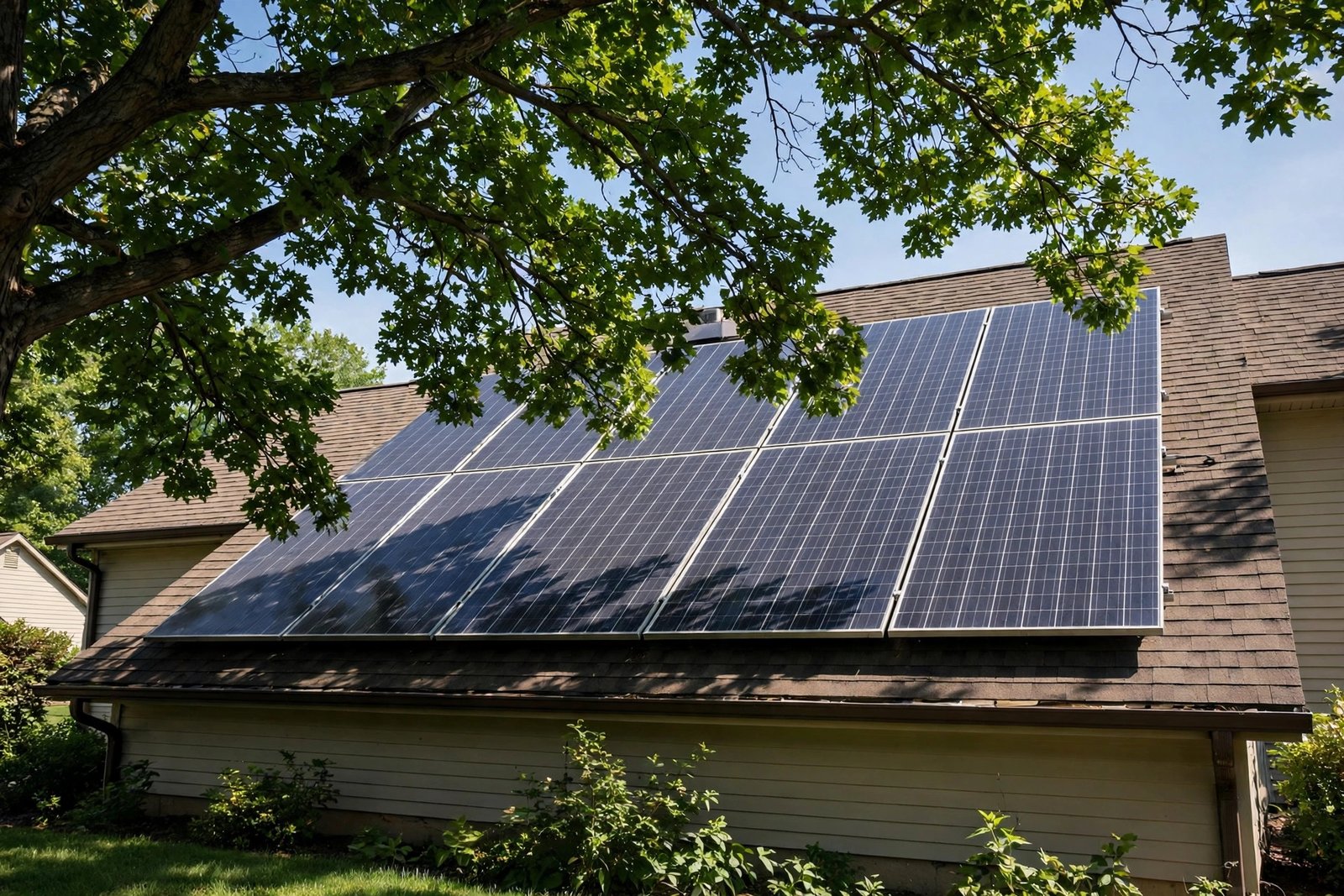
A solar panel only makes its full power when sunlight reaches all of its cells. Cover part of a panel and that part stops producing — but in most home systems the damage does not stop there. The panels in a typical residential array are wired in series, in a “string”, and a string is only as strong as its weakest panel. When shade weakens one panel, the current through the whole string drops, so the loss can be several times larger than the shaded area alone.
This is why a chimney shadow covering a tenth of your roof can show up as a large dip in your monitoring app, and why panels not producing enough power so often turn out to be a shading problem. The panels are not faulty — the system is simply being starved of light at the wrong time of day.
Shade is also easy to miss: a tree that barely touches the roof in summer can throw a long shadow across the array in winter, when the sun sits lower, and a tree that has grown since installation can create shade that was not there when the system was fitted.
How Shading Works: Strings and Bypass Diodes
A standard panel is divided into groups of cells, and each group is protected by a bypass diode. When one group is shaded, its diode lets the current flow around that group instead of through it, so the panel keeps producing from its unshaded groups at reduced power. That is a useful safety net, but it is not a cure: bypass diodes reduce the damage, they do not remove it, and the string still suffers because the shaded panel is producing less.
There are two common system designs, and shade affects them very differently:
- String inverter systems: all panels feed one central inverter. Shade on one panel can reduce the output of the whole string. This is the most common setup in older and budget installations.
- Microinverter or power optimiser systems: each panel has its own small inverter or optimiser, so panels work independently. Shade on one panel affects only that panel, and the rest keep producing at full power.
If you do not know which type you have, check your inverter: a single box on the wall with all the panel cables running into it usually means a string system. Small boxes under each panel, or a monitoring app that shows output per panel, usually means microinverters or optimisers.
Common Sources of Shade on a Home Roof
- Trees: the most common cause. Branches grow year by year, and a tree that was harmless at installation can shade the array within a few years.
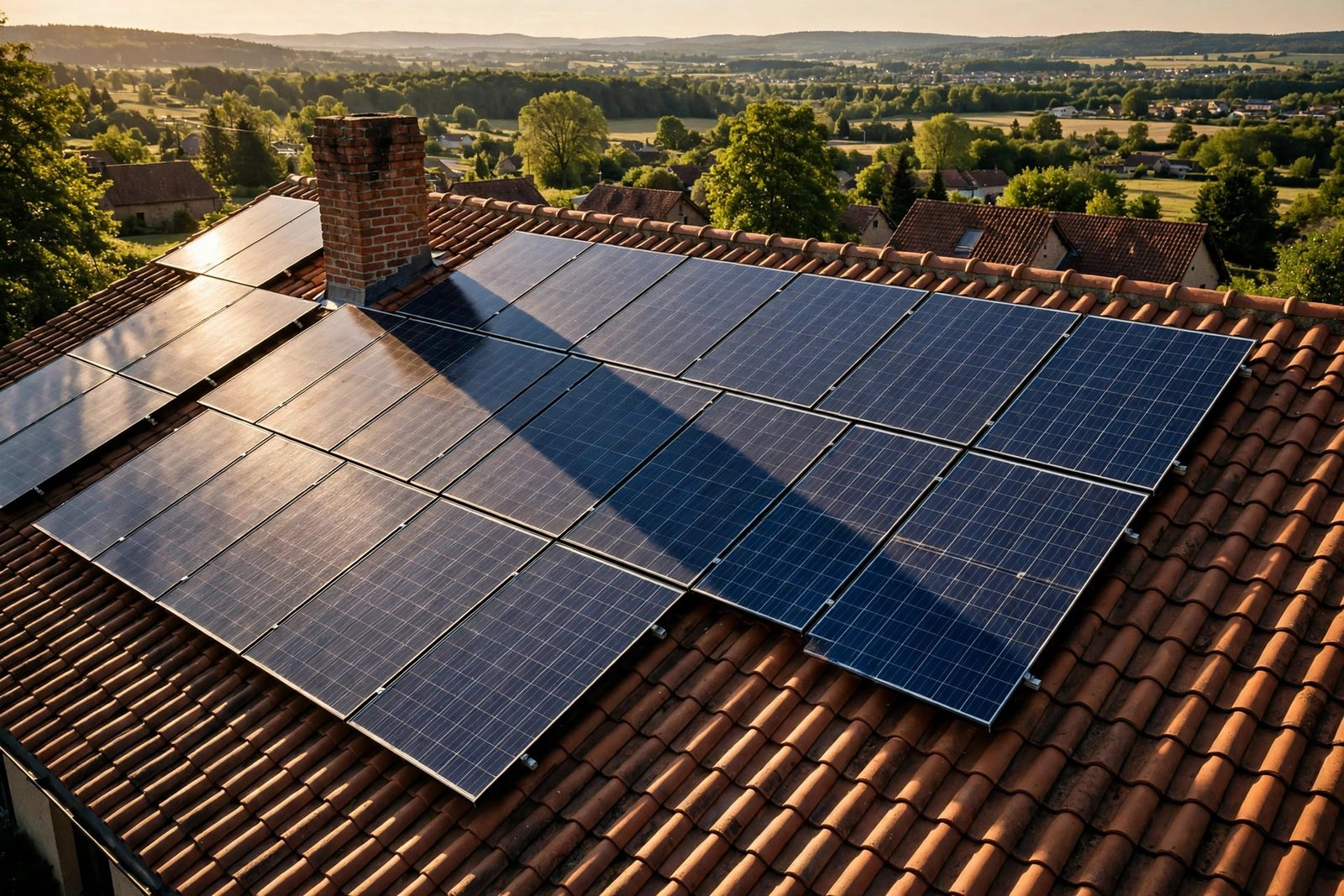
- Chimneys, dormers and vents: a fixed object near the array casts a shadow that moves across the panels during the day. Late-afternoon chimney shade is very common.
- Neighbouring buildings: a new extension, a taller house next door, or scaffolding during building work can shade a roof that was clear before.
- Satellite dishes, antennas and poles: small objects cast surprisingly long shadows in the morning and evening, when the sun is low.
- Snow, leaves and debris: a patch of snow or a pile of leaves on part of a panel acts just like shade.
- Bird droppings: a single dropping can shade a few cells — enough to trigger a bypass diode and cut a string’s output noticeably.
How to Find Out If Shade Is Your Problem
Before spending money on a fix, confirm that shade is actually the cause. These checks cost nothing:
- Watch the roof through the day. Note when shadows first touch the array and when they leave. Midday shade matters most; shade before 9 a.m. or after 4 p.m. costs relatively little, because the sun is weak then anyway.
- Check your monitoring app. Look at the daily production curve. A smooth bell shape is normal. A sharp dip in the middle of the day, or a flat top that cuts off early, points to shade — especially if the dip happens at the same time every day.
- Compare panels or strings. If your app shows per-panel or per-string output, look for one panel or string far below the rest at the same time of day. That is the shaded one.
- Repeat on a clear day. Clouds also cut output, so check on a sunny day and compare with a similar day last month or last year.
- Check the inverter. Shade does not usually cause fault codes, but a string that keeps dropping out can trigger warnings. If you see a fault, read our guide to inverter error codes before assuming the inverter is at fault.
7 Ways to Minimize Power Loss from Shading
1. Trim or Remove the Tree
If a tree is the cause, trimming overhanging branches is usually the cheapest and most effective fix. Do it from the ground or hire a tree surgeon — never climb onto a roof near live panels, and never work near overhead power lines. Check first whether the tree is protected by a preservation order or belongs to a neighbour; you cannot cut a neighbour’s tree without permission.
2. Move the Affected Panels
If a chimney or dormer shades only one or two panels, an installer can sometimes move those panels to a sunnier part of the roof. This is a bigger job than trimming a tree, but it can be the right answer when the shade source cannot move. Get a quote before deciding — moving panels means new cabling and re-testing.
3. Add Microinverters or Power Optimisers
This is the most effective technical fix for a string system that cannot escape shade. Fitting a power optimiser to each panel, or replacing the string inverter with microinverters, lets every panel work independently. The shaded panel loses output, but the rest of the string keeps producing at full power. It costs more upfront, so get a qualified installer to quote it — but for a roof with unavoidable shade it often pays for itself in recovered energy.
4. Re-string the Array
An installer can sometimes rewire the array so that panels which get shaded together sit on the same string, while the unshaded panels sit on another string. That way shade drags down one string instead of all of them. This only helps if your inverter has more than one string input, and it needs a qualified person to do safely — never rewire DC cabling yourself.
5. Keep the Panels Clean
Dirt and shade are not the same problem, but they combine badly: a dusty panel under a tree shadow loses more than either problem alone. Clean the panels from the ground with clean water and a soft brush when they look dull, or hire a professional. Never use a pressure washer, abrasive pads or harsh chemicals, and never climb onto a wet roof.
6. Plan Around the Seasons
Shade is worst in winter, when the sun is low and shadows are long. If trimming is planned, do it before winter. If you are considering new panels, ask the installer for a shade analysis that covers the whole year, not just a summer snapshot — a roof that looks clear in June can be heavily shaded in December.
7. Monitor and Act Early
Shade problems creep in slowly as trees grow. Check your monitoring app once a month and compare the same month with last year. A gradual decline that lines up with the growing season is almost always a tree. Catching it early means a light trim instead of a major cut — and years of recovered output.
Seasonal Shade: Winter, Morning and Evening
Not all shade is worth fixing. A shadow that only touches the array before 9 a.m. or after 4 p.m. costs very little energy, because the sun is low and the panels are producing little anyway. The shade that hurts is the shade that falls between roughly 10 a.m. and 3 p.m., when the sun is strongest and the system should be at its peak.
Winter shade deserves more attention than summer shade: the days are short, the sun is low, and every hour of clear sun counts. If your output drops sharply every autumn and recovers in spring, seasonal shade — not a fault — is the most likely explanation. A one-off fault, such as an inverter that will not turn on at all, behaves differently: it stops production entirely, whatever the season.
When to Call a Professional
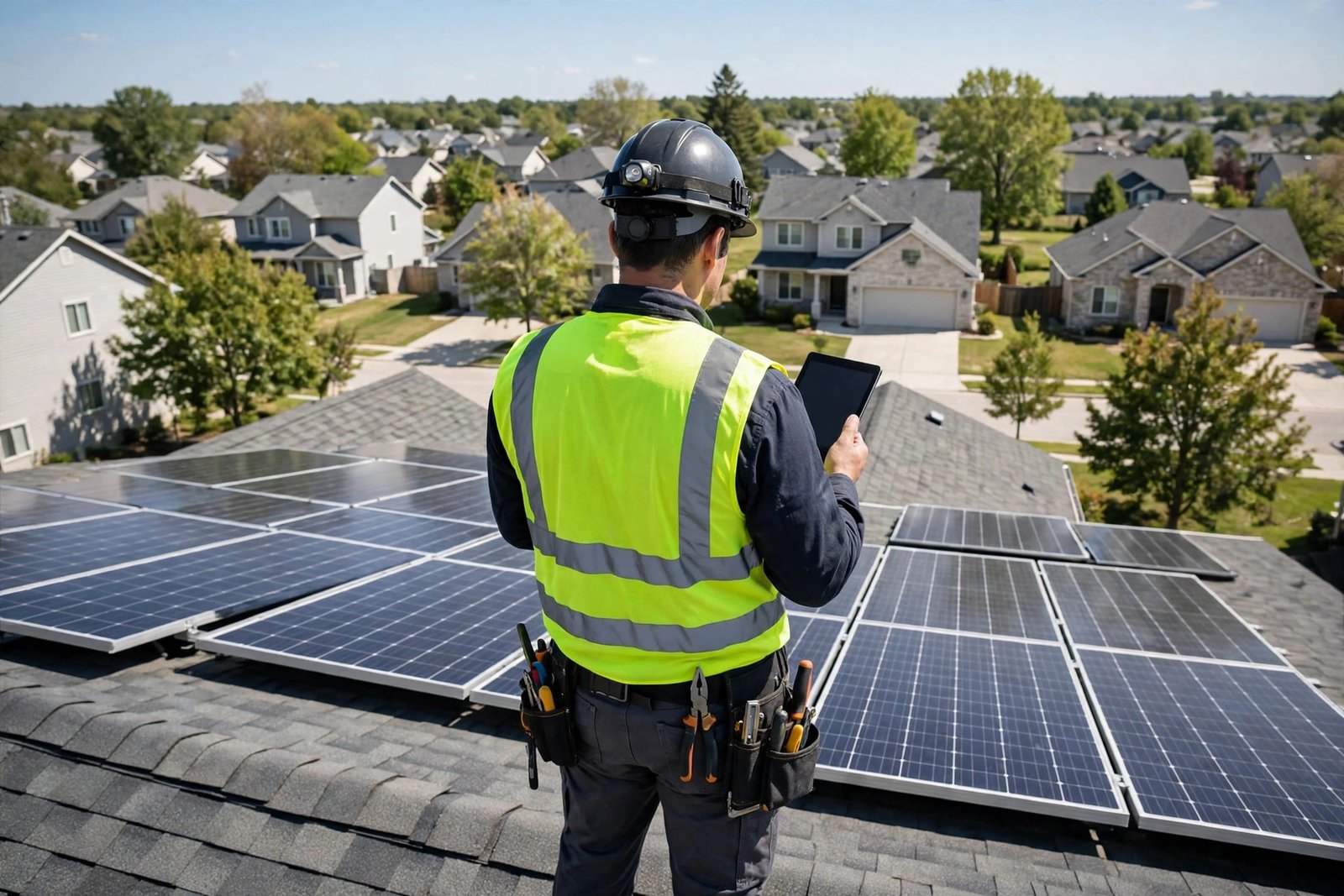
Call a qualified solar installer or electrician if the shade comes from a fixed object such as a chimney or a neighbour’s building, if you are considering microinverters, optimisers or re-stringing, if panels need moving, or if the shade is combined with a fault — for example an inverter that keeps shutting down or a panel that reads zero. Never climb onto a roof to trim branches near panels, and never open a panel junction box or touch DC wiring yourself: panels produce voltage whenever there is daylight on them, even when the inverter is switched off.
If the fix is a simple reset after a storm or a grid outage, you can safely reset your inverter using the correct switch-off and switch-on order — but do not reset repeatedly for the same fault. Before the technician visits, gather evidence: photos of the array at the time the shadow falls, screenshots of your monitoring data showing the daily dip, and the dates the problem started.
Conclusion
Shade is the most underestimated cause of lost solar power. A small shadow can cost far more than its size suggests, especially on a string system — but it is also one of the most fixable problems a solar owner can face. Watch the roof, check your monitoring data, and fix the shade at its source where you can. Where the shade cannot move, microinverters or optimisers let the rest of the array keep working. The rule to remember is simple: protect the midday sun, and the rest of the day will largely take care of itself.
FAQs
Does shade on one solar panel affect the whole system?
Yes, in a traditional string system — the panels are wired in series, so a shaded panel limits the current through the whole string. Systems with microinverters or power optimisers are much less affected, because each panel works independently.
How much power do solar panels lose from shading?
It depends on how much of the panel is shaded, when it happens, and whether the system is a string or a microinverter system. A small shadow at midday on a string system can cut output by far more than the shaded area — which is why shade at midday matters most. Only your monitoring data can show the true loss for your roof.
Can you fix shading on solar panels without removing a tree?
Often, yes. Trimming branches is the simplest option, but you can also move the affected panels, add microinverters or power optimisers, or re-string the array so the shaded panels sit on their own string. A qualified installer can advise which option suits your roof.
Do microinverters help with shading?
Yes — microinverters and power optimisers let each panel produce independently, so shade on one panel does not drag the others down. They are one of the best fixes for roofs with unavoidable shade, though they cost more than a string inverter.
Is morning or evening shade a problem for solar panels?
Usually not much. The sun is low and weak in the early morning and late evening, so the panels are producing little anyway. Shade between roughly 10 a.m. and 3 p.m. is the expensive kind, because that is when the system should be at its peak.
Pingback: Solar Battery Not Charging Properly? Troubleshooting Steps for Lithium & Lead-Acid – Solar Fixing Guide
Pingback: Can You Repair a Cracked Solar Panel? DIY Fixes vs. Replacement - Solar Fixing Guide
Pingback: What Are Solar Panel Hotspots and How to Prevent Permanent Damage - Solar Fixing Guide
Pingback: How to Clean Solar Panels Safely Without Scratching the Glass - Solar Fixing Guide