Quick answer: Solar inverter error codes are short messages your inverter shows when it detects a problem, such as a wiring fault, an out-of-range grid voltage, or overheating. You can usually find it on the inverter’s display, in the manufacturer’s monitoring app, or as a pattern of LED lights. The golden rule: write down the exact code word for word, note the time and weather, and check it against your own inverter manual — codes vary by manufacturer and model. Many faults are temporary, but isolation faults can indicate damaged wiring and should never be reset repeatedly.
What Are Solar Inverter Error Codes?
A solar inverter converts the direct current (DC) from your panels into the alternating current (AC) your home uses. It constantly monitors voltages, currents, temperature, and the grid; when something falls outside its safe range, it reduces output or shuts down — and records an error code.
An error code tells you what the inverter detected, not a full diagnosis — the same code can have more than one cause. Always read it exactly as shown and look it up in the manual for your specific inverter model.
Where to Find the Error Code
- On the inverter display: Many inverters have a small screen showing the fault code and a short message.
- In the monitoring app: Most modern inverters send fault notifications to the manufacturer’s app or portal, with a timestamp and a history log — useful for seeing whether a fault happened once or keeps repeating.
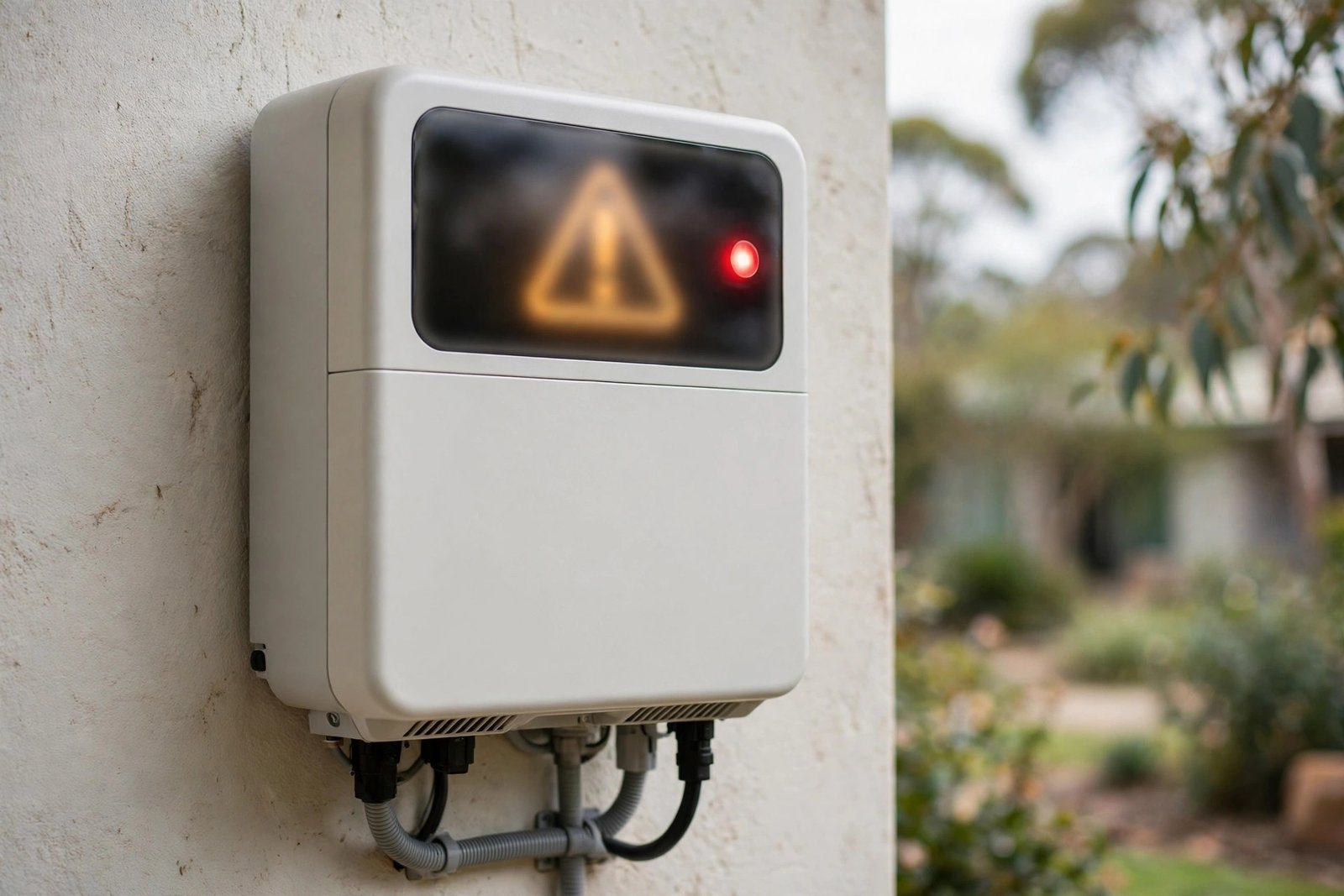
- LED indicators: Some inverters have no screen and use coloured lights instead. A steady or flashing red light usually signals a fault. If your inverter shows a red light on your solar inverter, that guide explains what to check first.
Before doing anything, record the exact code, the date and time, and the weather — this record is the first thing a technician will ask for. Never guess what a code means from a list for a different brand: your own manual is the only reliable reference.
Common Solar Inverter Fault Families
Most faults homeowners see fall into a few families, summarised below.
| Fault family | What it usually means | First safe check |
|---|---|---|
| Isolation / ground fault | Current leaking where it should not be | Note the code; do not keep resetting |
| Grid overvoltage | Grid voltage above the allowed range | Note the time of day |
| Grid undervoltage | Grid voltage below the allowed range | See whether it clears on its own |
| Grid frequency fault | Grid frequency outside the allowed range | Wait and watch — usually a grid event |
| DC overvoltage | Panel voltage too high for the inverter | Note cold, bright mornings |
| Overheating / temperature fault | Unit too hot; shut down to protect itself | Check ventilation and shading |
| AC / DC connection fault | Loose, corroded, or damaged connection | Look for damage from a safe distance |
Isolation Fault / Ground Fault
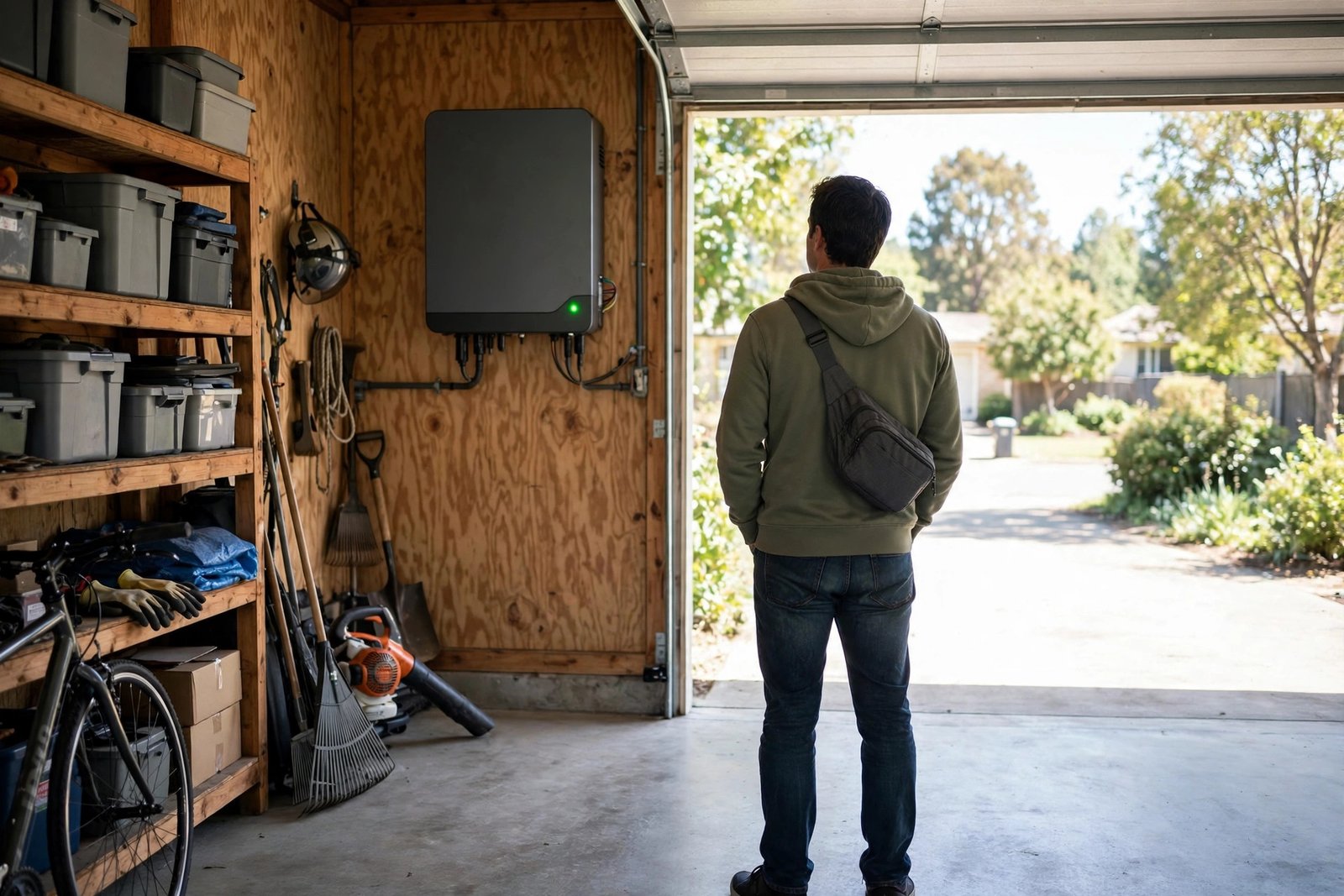
An isolation fault — sometimes shown as a ground or insulation fault — means the inverter detected electricity leaking to earth through damaged wiring or water in a component. It often appears after rain. The inverter shuts down for safety. Do not repeatedly reset it: if the leak is real, the fault will return and repeated resets can mask a safety problem. Note the code and call a qualified solar technician or electrician.
Grid Overvoltage
Grid overvoltage means grid voltage rose above the range your inverter is allowed to feed into. It is common around midday in sunny neighbourhoods where many homes export solar power at once, and it is often a grid condition rather than a fault in your own system. Brief faults that clear by themselves are usually grid events. If it happens often, note the times and contact your installer or grid operator.
Grid Undervoltage
Grid undervoltage is the opposite: grid voltage fell below the inverter’s allowed range, during very high local demand or grid maintenance. It is usually temporary, and the inverter restarts automatically once voltage returns. If your whole house is affected — lights dimming, for example — the problem is almost certainly grid-side. If the fault is frequent, log the times and share them with your installer or grid operator.
Grid Frequency Fault
Your inverter must synchronise with grid frequency — 60 Hz in the US, 50 Hz in the UK and most of Europe. A frequency fault means grid frequency drifted outside the inverter’s permitted window and the inverter disconnected for safety. These are rare for individual homeowners and almost always grid-side events. The inverter normally reconnects automatically. If the fault repeats often, it is a matter for your grid operator, not a DIY fix.
DC Overvoltage
DC overvoltage means panel voltage is higher than the inverter can accept. Panel voltage rises in cold, bright conditions, so this fault is most likely on a clear, cold morning. It can also occur if panels were wired in a string producing too much voltage, or after panels were added without checking the inverter’s limits. Fixing it means changing the panel wiring, which only a qualified installer should do. Note when it occurs and contact your installer.
Overheating / Temperature Fault
Inverters generate heat while working, and on a hot day — or in a poorly ventilated space — the unit can overheat and shut down to protect its electronics. This is most common in summer or in direct sunlight. Check that nothing blocks the ventilation openings and there is clear space around the unit. Never spray water on the inverter to cool it, and never open the casing. If it keeps happening on mild days, it needs professional attention.
AC / DC Connection Faults
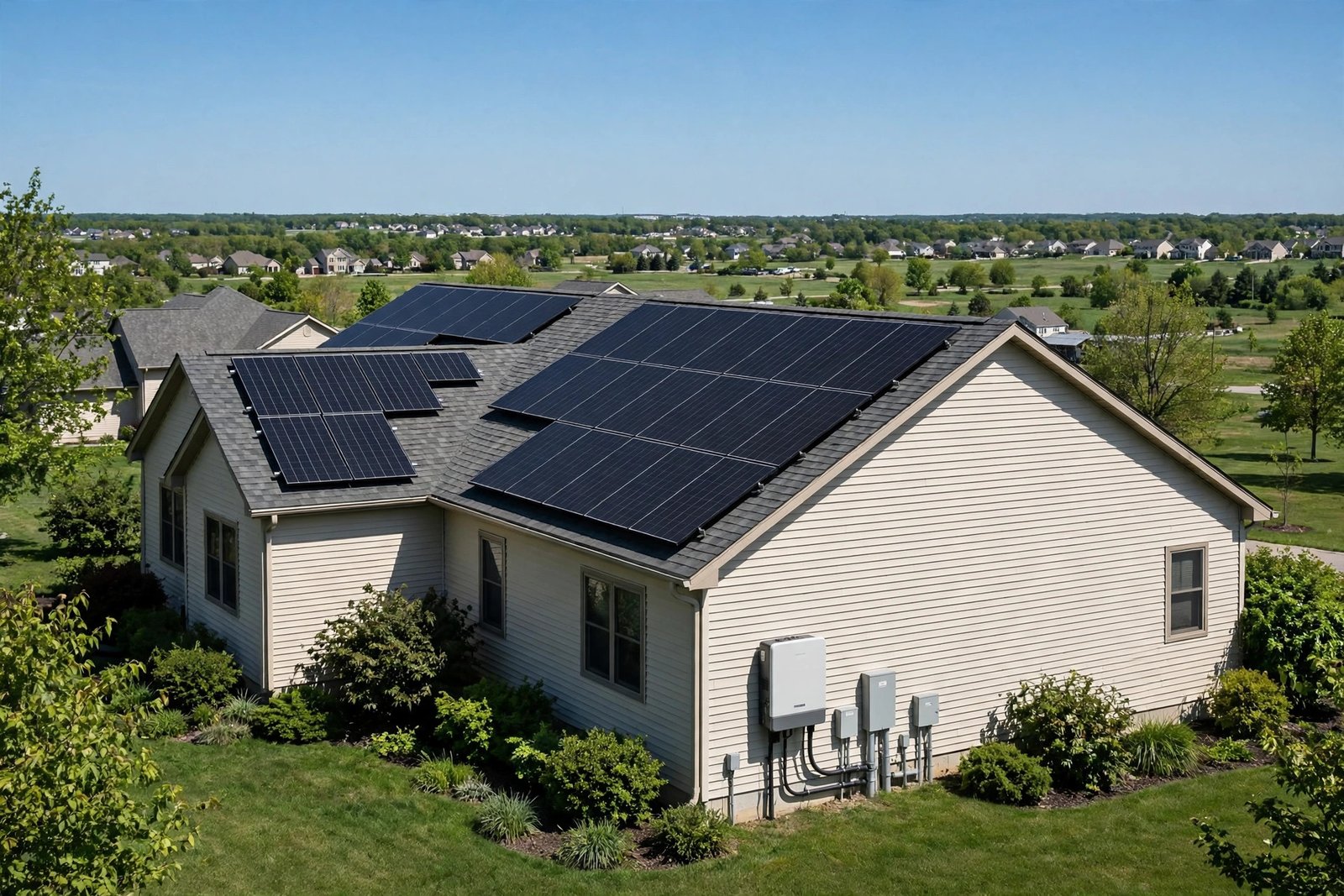
A connection fault means the inverter detected a problem in the wiring on the AC side (inverter to your home’s electrical panel) or the DC side (panels to the inverter). Loose, corroded, or heat-damaged connections are common causes, and the fault may appear intermittently, for example only at full power. From a safe distance, look for discoloured or melted connectors. Do not touch any wiring or try to tighten connections: loose DC connections can arc and cause fires. Treat this as urgent — switch the system off at the labelled isolator switches if you know how, and call a qualified electrician promptly.
What to Do First When Your Inverter Shows an Error
- Write down the exact code — the code, message, time, and weather. Take a photo of the display.
- Check the manual. Look the code up in your own inverter manual or the manufacturer’s app — not in a generic list for another brand.
- Look, don’t touch. From a safe distance, check for water near the unit, a burning smell, visible damage, or a tripped breaker.
- Wait and watch. Many grid-related faults clear on their own within minutes. Note whether the fault repeats.
- Try one safe reset only if the manual allows it. Follow the manufacturer’s restart procedure exactly, once. If the fault returns, stop.
- Check your monitoring app. See whether the fault is a one-off or a pattern.
- Call for help if in doubt. If the code is an isolation or connection fault — or if the inverter will not turn on at all — contact your installer or a qualified technician.
Safety Warning
Solar inverters carry high voltage, and solar panels keep producing electricity whenever light falls on them — even when the inverter is switched off. Never open the inverter casing, touch exposed wiring, or work on the roof or inside the electrical panel unless you are qualified.
Isolation faults can indicate damaged wiring. Do not keep resetting the inverter to force it back into service, and do not ignore a fault that returns repeatedly. If you smell burning, see smoke, or notice scorch marks, switch the system off at the labelled isolator switches if you can do so safely, and call a qualified electrician or solar technician immediately.
Preventive Tips to Reduce Inverter Faults
- Keep the inverter ventilated. Leave clear space around the unit, keep vents free of dust, and do not store items against it.
- Keep it out of direct sun where possible, without blocking airflow.
- Book a periodic inspection. Ask a qualified installer to check connections and cables once a year, or after a major storm.
- Watch your monitoring data. A gradual drop in output, or faults at the same time each day, are early warnings.
- Keep the manual and installer details handy. Note your inverter’s make, model, and serial number somewhere easy to find.
When to Call a Professional
Call a qualified electrician or solar technician if any of the following apply:
- The fault is an isolation or ground fault, or the code mentions insulation or leakage.
- The same fault returns after one safe reset.
- You can see or smell damage — burn marks, melted connectors, or smoke.
- The fault is a DC overvoltage, or it began after panels were changed.
- You are unsure what the code means, or the manual’s advice does not resolve it.
A professional can test the system with proper equipment and confirm whether the fault is in your system or on the grid.
Frequently Asked Questions
What does an isolation fault mean on a solar inverter?
It means the inverter detected electricity leaking to earth through damaged wiring or moisture. The inverter shuts down for safety. Do not keep resetting it — note the code and call a qualified solar technician or electrician.
Why does my inverter keep showing a grid overvoltage error?
It usually means grid voltage rose above your inverter’s allowed range, often around midday when many homes export solar power. Brief faults are usually grid events. If it happens often, log the times and ask your installer or grid operator to check the inverter’s grid settings.
Can I reset my solar inverter myself?
Sometimes — if your manual describes a restart procedure, follow it exactly and only once. If the fault comes back, stop resetting and seek professional help.
Do inverter error codes mean the same thing on every brand?
No. Code numbers, abbreviations, and even the wording of the same fault vary between manufacturers and models. Always match the code on your own display or app against your own manual.
When should I call a professional about an inverter error code?
Call a professional for isolation or ground faults, connection faults, faults that return after a reset, any sign of burning or damage, or DC overvoltage.
Conclusion
Solar inverter error codes look technical, but they are simply your system’s way of asking for attention. Record the exact code, check it against your own manual, and watch whether it clears on its own or keeps coming back. Many grid-related faults are temporary and need no action. Others — especially isolation faults, connection faults, and faults that repeat — are clear signals to call a qualified professional.