
Quick answer: You can safely handle simple solar jobs yourself: visual inspections from the ground, checking your monitoring app, cleaning the panels with water and a soft brush, clearing leaves and debris, and keeping good records. Leave anything involving wiring, the inverter internals, the junction box, the battery, roof work, or panel removal to a certified solar technician. DIY electrical work on a solar system is dangerous — panels produce high-voltage DC electricity whenever the sun is shining — and it can also void your warranty and your home insurance cover. The smart approach is to do the easy maintenance yourself and hire a pro for everything electrical.
Table of Contents
- Why the DIY vs. Pro Question Matters
- The One Rule: Never Touch Live Electrical Parts
- Jobs You Can Safely Do Yourself
- DIY Job 1: Visual Inspections From the Ground
- DIY Job 2: Checking Your Monitoring App
- DIY Job 3: Cleaning Your Solar Panels
- DIY Job 4: Clearing Debris and Shade
- DIY Job 5: Keeping Records and Photographs
- Jobs That Belong to a Professional
- DIY vs. Pro at a Glance
- The Real Cost of Getting It Wrong
- How to Decide: 5 Questions to Ask Yourself
- How to Find a Good Solar Technician
- When to Call a Professional
- FAQs
- Conclusion
Why the DIY vs. Pro Question Matters
Every solar homeowner faces the same question sooner or later: can I fix this myself, or should I pay someone? Solar systems are marketed as low-maintenance, and in many ways they are — there are no moving parts in the panels themselves, and a well-installed system can run for years with little attention. But panels get dirty, output drops, inverters show errors, and storms damage mounts. When something goes wrong, the temptation to save money by doing it yourself is strong.
The problem is that a solar system is not like a household appliance. It is a power-generating electrical system connected to your roof, your home’s wiring, and the electricity grid. It produces high-voltage direct current (DC) whenever sunlight hits the panels — even when the system is switched off at the inverter. That makes some jobs genuinely dangerous for anyone without training and the right equipment.
The other risk is financial. Many homeowners do not realise that a DIY repair can void the product warranty on their panels and inverter, and that an insurer may refuse a claim if damage was caused by unauthorised work. A repair that saves you a few hundred pounds or dollars today can cost you thousands later if a warranty claim is refused. Our guide on what voids a solar panel warranty explains the seven most common mistakes, and DIY electrical work is at the top of the list.
The good news is that the line between DIY and professional work is clear once you know it. Plenty of useful maintenance is completely safe for a homeowner. The trick is knowing exactly where that line sits — and staying on the right side of it.
The One Rule: Never Touch Live Electrical Parts
If you remember only one thing from this article, make it this: never open, disconnect, cut, or touch any electrical part of your solar system. That includes the inverter’s internal components, the panel junction boxes, the DC isolators, the cabling, the connectors, and the battery. Solar panels cannot be “switched off” the way a light can — as long as light is falling on them, they are generating voltage. Even a single panel in daylight can produce enough voltage to give a serious electric shock.
This rule applies even if you are confident with household electrics. Solar DC systems behave differently from the AC wiring in your home. DC current does not let go the way AC does, DC arcs are harder to extinguish, and solar connectors and isolators are designed to be handled only with the system shut down in the correct sequence — a sequence that varies by manufacturer and system design. A mistake here can cause an electric shock, a fire, or permanent damage to the inverter.
There is also a legal side. In the United States, most states require electrical work on a solar system to be done by a licensed electrician. In the United Kingdom, work on a solar installation generally needs to be carried out or certified by an MCS-certified installer or a qualified electrician, and the work may need to be notified under building regulations. Doing it yourself can leave you with an installation that is not legally compliant — which matters if you sell the house or make an insurance claim.
Safety warning: If you ever see burnt connectors, melted cable insulation, a burning smell, smoke, or sparking from any part of your solar system, do not touch anything. Switch the system off at the AC isolator if you can do so safely from a distance, keep everyone away, and call a qualified solar technician or electrician immediately. If there is a fire, call the emergency services first.
Jobs You Can Safely Do Yourself
Not everything on a solar system is electrical work. A surprising amount of useful maintenance involves no tools, no roof climbing, and no contact with live parts at all. These are the jobs a homeowner can — and should — do themselves. They cost nothing, they keep your system running well, and they help you spot problems early, when they are cheapest to fix.
DIY Job 1: Visual Inspections From the Ground
The simplest and most valuable DIY job is looking at your system regularly. Once a month, stand in your garden or on the pavement and look at your panels with binoculars if you have them. You are looking for anything that has changed: a cracked panel, a panel that looks discoloured or yellowed, a loose-looking frame, debris sitting on the glass, bird nests under the panels, or a mounting rail that looks bent or out of place.
Also look at the ground beneath the array after heavy rain or wind. Loose bolts, broken clips, or pieces of flashing on the ground are warning signs that something has come loose on the roof. Inside the house, check the inverter display or its indicator lights — a green light or a normal display usually means the system is running, while a red light or an error message means something needs attention.
Take photographs of anything unusual, and note the date. These photos are useful twice over: they help a technician diagnose the problem faster, and they are evidence for a warranty or insurance claim. For more detail on what to look for, see our guide on how to read solar monitoring data and spot hidden system faults.
DIY Job 2: Checking Your Monitoring App
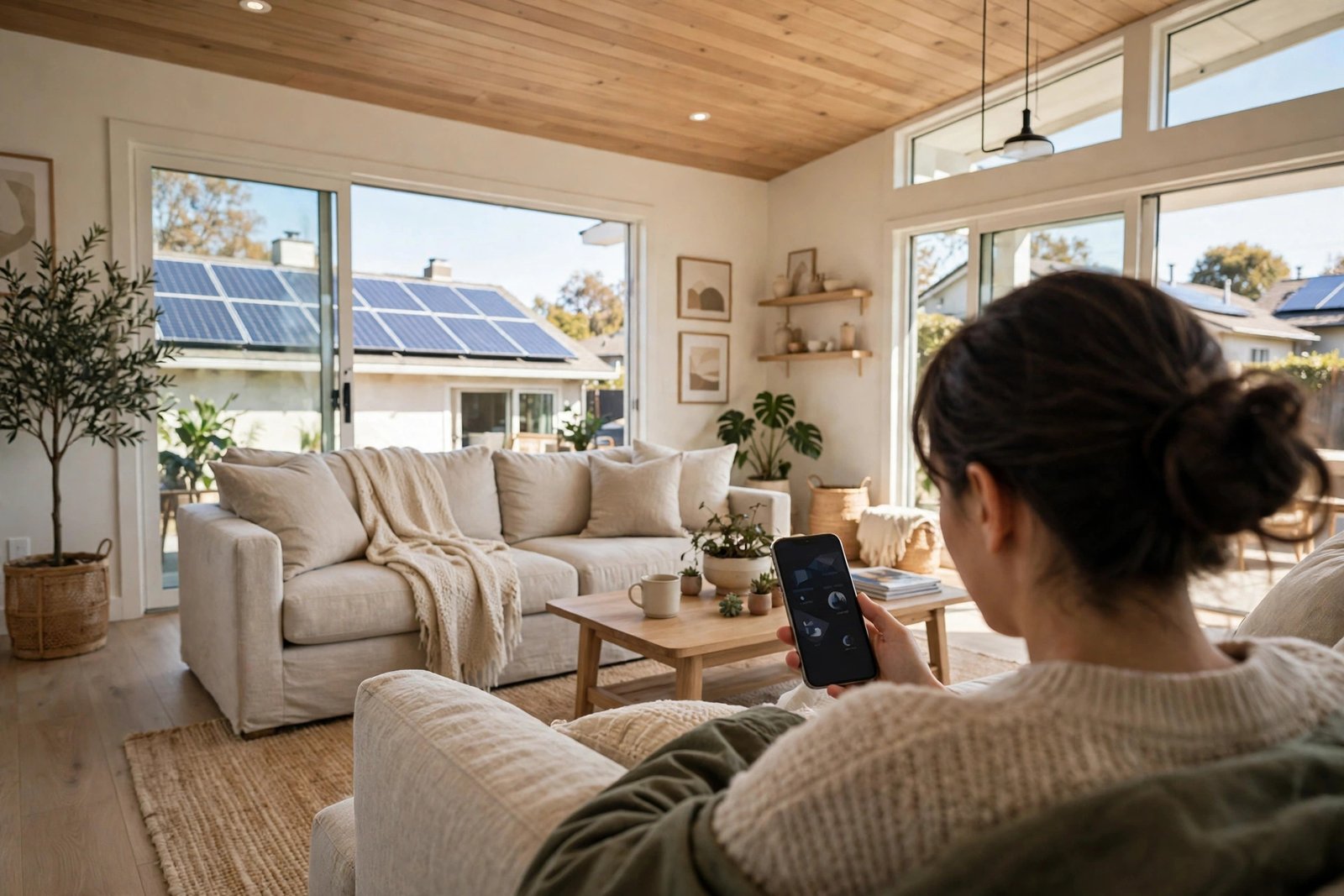
Almost every modern solar system comes with a monitoring app or web portal that shows how much electricity your panels are producing, day by day and panel by panel. Checking it once a week is one of the best DIY habits you can build. You do not need to understand every number — you just need to notice when something changes.
Look for these warning signs:
- A sudden drop in output on a sunny day, compared with similar days in the past
- One panel producing much less than the others (if your system shows per-panel data)
- Zero output during daylight hours, which usually means the inverter has tripped or shut down
- Repeated error messages or alerts from the inverter
- A gradual decline over weeks or months, which can point to dirt, shading, or a developing fault
If you spot a problem, note the date, take a screenshot, and contact your installer or a technician. Do not try to fix the inverter yourself — but the information you gathered will save the technician time and save you money. If your app has stopped updating or the system shows as offline, our guide on solar monitoring app problems walks through the safe checks you can do, such as restarting your router and checking the inverter’s Wi-Fi connection.
DIY Job 3: Cleaning Your Solar Panels
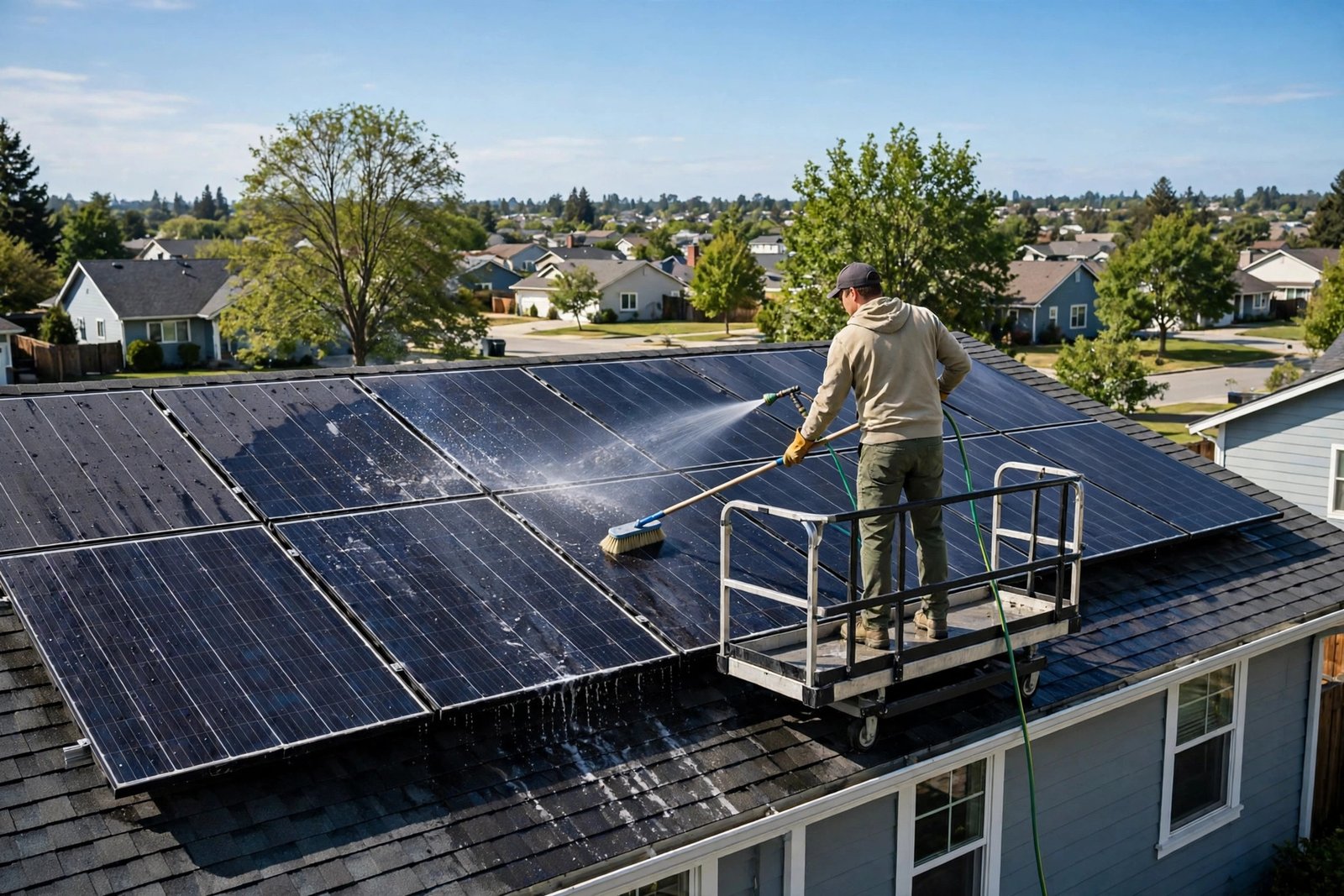
Cleaning is the classic DIY solar job, and it is one most homeowners can do safely — with one important condition: only clean panels you can reach safely from the ground or from a stable, low platform. Never climb onto a wet or steep roof to clean panels. If your panels are on a high or steep roof, hire a professional cleaner with the right safety equipment.
The safe method is simple. Wait for a cool, cloudy part of the day — never clean panels in full sun, when cold water on hot glass can cause thermal shock and crack the glass. Rinse the panels with plain water from a normal garden hose, wash gently with a soft brush or sponge and a mild, non-abrasive soap, then rinse again. Never use a pressure washer, a stiff brush, an abrasive pad, bleach, or a strong chemical cleaner: all of these can scratch the glass, damage the seals, and void your warranty.
How often you need to clean depends on where you live. In most areas, rain does much of the work, and cleaning once or twice a year is enough. If you live near a dusty road, a building site, or trees that drop sap and bird droppings, you may need to clean more often. For the full safe method, including what to avoid, see our guides on how to clean solar panels safely and the best cleaning solutions and tools for dirty solar panels.
DIY Job 4: Clearing Debris and Shade
Leaves, branches, bird droppings, and dust can all reduce your panels’ output, and clearing them is usually safe DIY — as long as you can do it from the ground. Use a long-handled soft brush or a leaf blower to remove leaves from panels you can reach. Trim back overhanging branches that shade the panels, if the tree is on your property and you can do it safely from the ground with proper tools.
Do not climb onto the roof to clear debris, and do not try to remove bird nests from underneath the panels yourself. Nests under panels can trap moisture and damage wiring, but removing them means working close to live cables on a roof — a job for a professional with the right safety gear. The same applies to anything that has fallen onto the panels, such as a large branch after a storm: if you cannot remove it safely from the ground, call a technician.
If shading from a neighbour’s tree or a new building is cutting your output, that is not a DIY fix at all — it is a conversation with the neighbour or, in some areas, a planning matter. Note the pattern of shade in your monitoring app, take photographs at different times of day, and keep the evidence if you need to discuss it.
DIY Job 5: Keeping Records and Photographs
Good records are free, they take minutes, and they can be worth thousands of pounds or dollars when a warranty or insurance claim is needed. Keep a single folder — physical or digital — with your installation invoice, warranty documents, panel serial numbers, monitoring screenshots, maintenance receipts, and photographs of any problem.
Photograph the serial number labels on the back of your panels before they go on the roof if you can, or ask your installer for a list. Keep every email from your installer and every receipt for cleaning or maintenance. If you move house, hand the whole folder to the new owner, because many warranties transfer with the property only if the paperwork is complete. Our step-by-step warranty claim guide lists exactly what to gather before you contact a manufacturer.
Jobs That Belong to a Professional
Everything below this line involves live electricity, roof work at height, or sealed components. These are not jobs to learn from an online video. They belong to a certified solar technician or a licensed electrician, and doing them yourself risks serious injury, fire, a voided warranty, and an insurance claim being refused.
Inverter repairs and replacements
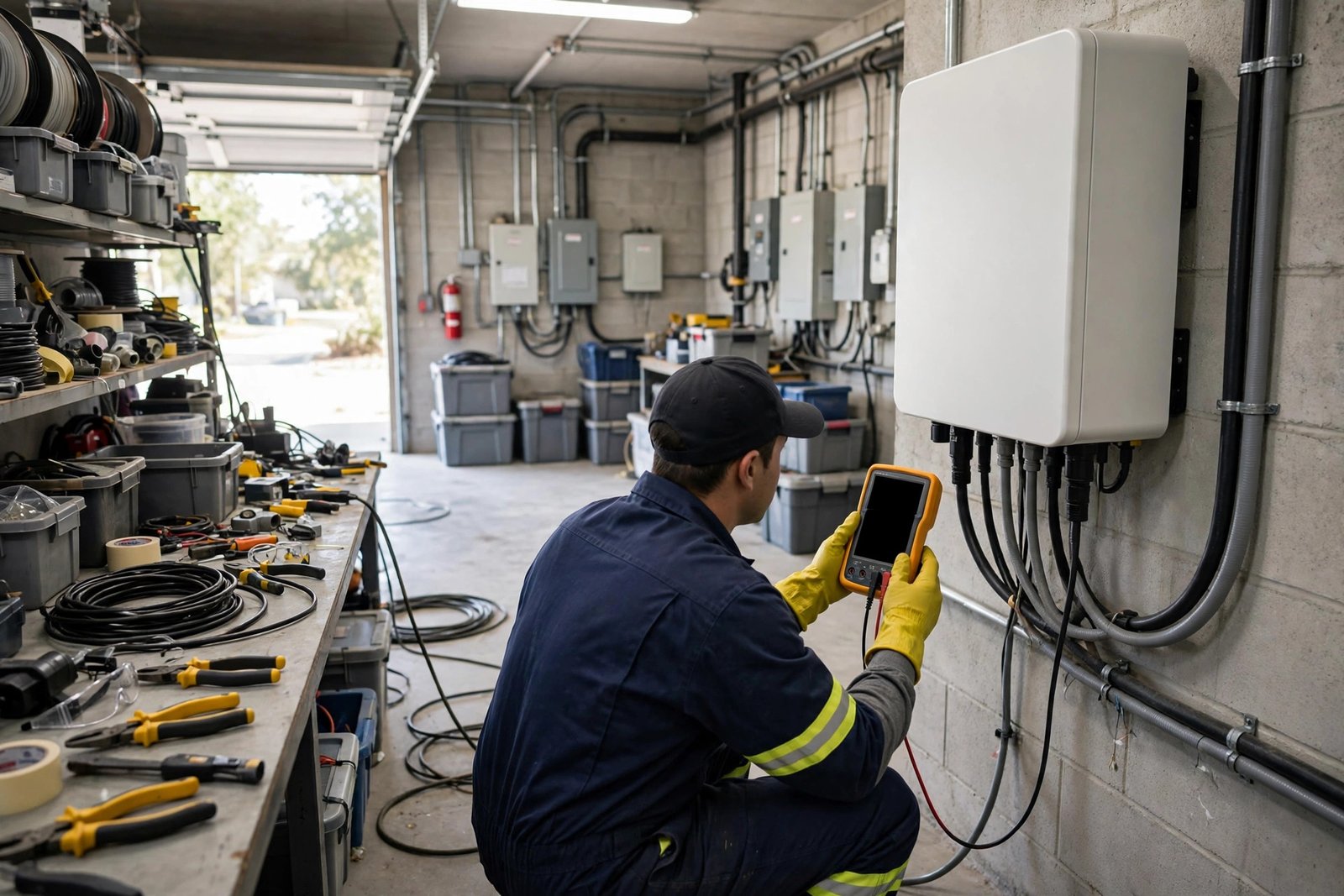
The inverter converts DC electricity from your panels into AC electricity for your home. It contains high-voltage components, capacitors that can hold a charge after switch-off, and manufacturer-specific electronics. Diagnosing an inverter fault, replacing an inverter, or opening its casing is professional work. What you can do is read the error message on the display, note it down, and pass it to a technician. If the inverter has failed completely, our guide on the cost of replacing a broken solar inverter will help you understand what to expect.
Wiring, connectors, and junction boxes
Loose, corroded, or burnt wiring is one of the most common causes of solar fires. It is also one of the most dangerous things to touch, because a loose DC connector can arc — producing intense heat — while it looks perfectly normal from the outside. Never re-terminate a connector, splice a cable, or open a junction box yourself. If you see damaged wiring, switch the system off safely if you know how, photograph it from a distance, and call a technician. Our guide on fixing loose or corroded solar wiring explains why this work is strictly professional.
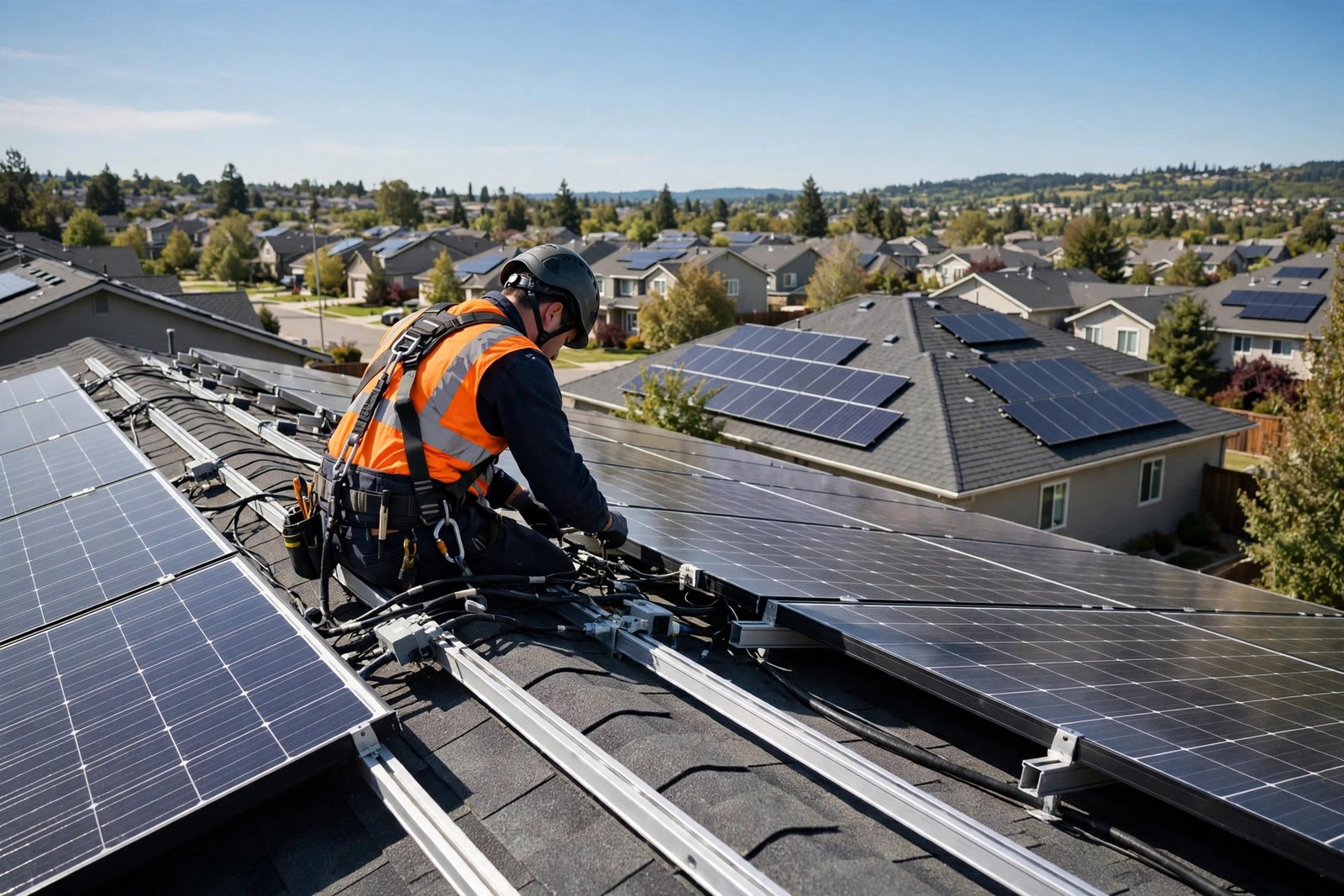
Panel removal, reinstallation, and roof work
Removing panels for a roof repair, replacing a damaged panel, or fixing a leak around the mounts all require working at height with heavy, fragile panels that are still generating voltage. Panels must be labelled so they go back in the same positions, handled so they do not develop microcracks, and reinstalled with the correct torque on the clamps. A dropped or badly stored panel can look fine and fail months later. For the costs involved, see our guide to solar panel removal and reinstallation costs, and for leaks around mounts, how to fix a roof leak around solar panel mounts.
Battery work
Solar batteries store large amounts of energy and can deliver very high currents. Installing, replacing, or servicing a battery involves heavy lifting, correct ventilation, and electrical connections that must be made in the right order. A mistake can cause a fire or a chemical hazard. Battery work is always professional work.
Anything involving the consumer unit, the meter, or the grid connection
Work on the AC side of the system — the consumer unit (fuse box), the generation meter, the export meter, or the grid connection — must be done by a qualified electrician, and in many areas it must be notified to the local authority or the network operator. Never open the consumer unit or the meter cabinet to work on solar circuits yourself.
DIY vs. Pro at a Glance
| Job | DIY or Pro? | Why |
|---|---|---|
| Visual inspection from the ground | DIY | No contact with live parts; spots problems early |
| Checking the monitoring app | DIY | Safe, free, and the best early-warning tool you have |
| Cleaning reachable panels with water and a soft brush | DIY | Safe if you can reach them without climbing the roof |
| Clearing leaves and light debris from the ground | DIY | No electrical contact and no work at height |
| Keeping records and photographs | DIY | Protects your warranty and insurance claims |
| Inverter repair or replacement | Pro | High-voltage DC, stored charge, manufacturer-specific electronics |
| Wiring, connectors, junction boxes | Pro | Arc and fire risk; touching them can void the warranty |
| Panel removal or replacement | Pro | Work at height with live, heavy, fragile panels |
| Battery installation or service | Pro | High stored energy, fire and chemical risk |
| Roof leaks around mounts and flashing | Pro | Needs panels lifted and flashing resealed correctly |
| Consumer unit, meter, or grid work | Pro | Legally restricted; must be done by a qualified electrician |
| Cleaning panels on a steep or high roof | Pro | Fall risk; a professional has harnesses and safe access equipment |
The Real Cost of Getting It Wrong
Many homeowners weigh a technician’s call-out fee against the cost of doing it themselves and conclude that DIY is cheaper. That comparison misses the real costs of a DIY job that goes wrong.
Safety. Solar DC systems can cause severe electric shocks and burns, and DC arcs are a known cause of roof fires. A fall from a roof while cleaning or inspecting panels can cause life-changing injuries. No saving on a call-out fee is worth that risk.
Warranty. Most panel and inverter warranties state that unauthorised work — opening a sealed component, using non-approved parts, or having repairs done by an uncertified person — voids the cover. If a panel later fails for an unrelated reason, the manufacturer can still refuse the claim. Losing a 25-year performance warranty over a DIY repair is a very expensive mistake.
Insurance. If a fire or damage is traced to unauthorised electrical work, your home insurer may refuse the claim. Insurers expect solar work to be done by qualified professionals, and they will ask who did the work.
Repair costs. A DIY fix that does not work often makes the problem worse. A connector that was re-terminated incorrectly, a cable that was spliced badly, or a panel that was reinstalled with the wrong torque can all create faults that cost more to fix than the original problem. Our solar panel repair cost guide shows what common professional repairs cost — and in most cases, the professional repair is far cheaper than fixing a DIY mistake on top of the original fault. Before deciding whether to repair or replace an ageing panel at all, read our guide on whether it is cheaper to repair or replace an old solar panel.
How to Decide: 5 Questions to Ask Yourself
When a problem appears and you are not sure which side of the line it falls on, run through these five questions. If the answer to any of them points to a professional, hire one.
- Does it involve opening, disconnecting, or touching any electrical part? If yes, it is professional work. This includes the inverter, junction boxes, isolators, connectors, cabling, and the battery.
- Would I need to climb onto the roof? If yes, hire a professional. Falls from roofs are one of the most common causes of serious DIY injuries, and wet or steep roofs are especially dangerous.
- Would the work void my warranty? Check your warranty terms. If the work must be done by a certified technician or with the manufacturer’s approval, do not do it yourself — the saving is not worth losing 25 years of cover.
- Am I sure I know what is wrong? If you are guessing at the cause, a professional diagnosis is cheaper than replacing the wrong part. Many solar faults have similar symptoms, and only testing with the right equipment identifies the real cause.
- What happens if I get it wrong? If the worst case is a scratched panel or a wasted afternoon, DIY may be fine. If the worst case is a fire, a shock, a fall, or a voided warranty, hire a professional.
How to Find a Good Solar Technician
Finding the right professional matters as much as deciding to hire one. Start with the company that installed your system — they know your equipment, and their workmanship warranty may still apply. If they have closed down or you have moved, look for a technician who is certified by a recognised body in your country, such as NABCEP in the United States or MCS in the United Kingdom, and who has experience with your panel and inverter brands.
Before you agree to any work, ask for these things:
- Proof of certification and insurance, including public liability cover
- A written quote that separates the diagnosis fee from the repair cost
- The parts they will use, and confirmation that they are approved by the manufacturer
- A written record of the work done, which you keep with your warranty documents
- References or reviews from other solar homeowners in your area
Get two or three quotes for any major repair, and be wary of anyone who offers a very low price without seeing the system, or who pressures you to decide immediately. A good technician will explain the problem in plain language, show you the fault if possible, and tell you honestly whether a repair or a replacement makes more sense. Keep their details with your records — a technician you trust is worth keeping.
When to Call a Professional
Call a certified solar technician or a licensed electrician immediately if you notice any of the following:
- Burning smells, smoke, sparking, or scorch marks anywhere on the system
- A cracked, shattered, or badly discoloured panel
- An inverter that shows a fault code, a red light, or no output at all
- Loose, hanging, or visibly damaged cables or connectors
- Water leaking into the house around the panel mounts
- A sudden, unexplained drop in output that does not recover
- Any problem with the battery, such as swelling, leaking, or unusual heat
- Any work that requires opening a sealed component or climbing onto the roof
Do not wait to see if the problem goes away on its own. Solar faults rarely fix themselves, and a small electrical fault can become a fire if it is left alone. If you are ever unsure whether a job is safe to do yourself, the safe choice is to call a professional — a short phone call costs nothing, and most reputable technicians will tell you honestly whether the job is something you can handle.
FAQs
Can I repair my solar panels myself?
You can do simple maintenance yourself — visual inspections, checking the monitoring app, cleaning reachable panels with water and a soft brush, and keeping records. You should not repair panels, wiring, connectors, junction boxes, or the inverter yourself. Those jobs involve high-voltage DC electricity and can void your warranty.
Is it legal to do DIY solar repairs?
It depends on where you live and what the work involves. Simple maintenance such as cleaning is fine everywhere. Electrical work on a solar system usually has to be done by a licensed electrician or a certified installer, and in the UK it may need to be notified under building regulations. Check your local rules before doing any electrical work.
Will DIY repairs void my solar panel warranty?
Very likely, yes. Most panel and inverter warranties state that opening sealed parts, using non-approved parts, or having work done by an uncertified person voids the cover. Simple cleaning and visual checks do not void a warranty, but anything involving the wiring or the inverter can. Read your warranty terms before touching anything.
How much does it cost to hire a solar technician?
Costs vary by country, region, and the type of fault. A typical diagnostic visit and minor repair often costs a few hundred pounds or dollars, while an inverter replacement costs considerably more. See our solar panel repair cost guide for typical prices for common fixes.
Can I clean my solar panels myself?
Yes, if you can reach them safely without climbing onto the roof. Use plain water, a soft brush or sponge, and a mild soap, on a cool cloudy day. Never use a pressure washer, harsh chemicals, or abrasive pads, and never clean panels on a steep or high roof — hire a professional cleaner for those.
What should I do if my inverter shows an error?
Note down the exact error message or code, take a photograph of the display, and check your monitoring app for when the problem started. Then contact your installer or a certified technician. Do not open the inverter or try to reset its internal components yourself.
How do I know if a solar technician is qualified?
Look for certification from a recognised body — NABCEP in the United States or MCS in the United Kingdom — plus experience with your panel and inverter brands, proof of insurance, and a written quote. Ask for references from other solar homeowners in your area.
Conclusion
DIY solar maintenance is a good idea — within clear limits. Visual inspections, monitoring your output, cleaning reachable panels, clearing debris, and keeping good records are all safe, useful jobs that any homeowner can do, and they will help your system last longer and perform better. They also help you spot problems early, when a professional repair is at its cheapest.
But the line is firm: anything involving live electrical parts, sealed components, the inverter, the battery, roof work, or the grid connection belongs to a certified solar technician or a licensed electrician. Crossing that line risks serious injury, fire, a voided warranty, and an insurance claim being refused — costs that dwarf any saving on a call-out fee.
The smartest solar homeowners are not the ones who do everything themselves. They are the ones who do the easy maintenance themselves, watch their monitoring app, keep good records, and call a professional the moment a job involves electricity or height. If you are ever in doubt, make the call — it costs nothing to ask, and it could save you a great deal.
Pingback: Essential Safety Gear and Tools Every DIY Solar Owner Should Have - Solar Fixing Guide