
Quick answer: If your solar installer has gone out of business, your solar system almost certainly still works — panels, inverters and batteries are made by manufacturers, not by your installer, and their warranties usually survive the installer. Your first job is to gather every document you have: the contract, equipment warranties, monitoring login, permits and the final inspection certificate. Then check which warranties are manufacturer warranties (still valid) and which were installer workmanship warranties (usually lost). After that, find a reputable local solar company or certified technician to take over servicing your system. You do not need the original installer for repairs, warranty claims or monitoring — any qualified company can do that work. This guide walks you through each step, including what to do if you leased your system or bought it through a power purchase agreement.
Table of Contents
- What Actually Happens When a Solar Installer Closes
- First Steps: Gather Your Paperwork
- Which Warranties Survive — and Which Do Not
- Check Your Monitoring and System Status
- How to Find a New Installer or Technician
- Questions to Ask a Replacement Company
- If You Leased Your System or Have a PPA
- Getting Repairs, Replacements and Roof Work Done
- Protecting Yourself Going Forward
- What NOT to Do
- When to Call a Professional
- FAQs
- Conclusion
What Actually Happens When a Solar Installer Closes
Discovering that the company that installed your solar panels has closed its doors is unsettling. The phone number is disconnected, the website is gone, and nobody answers your emails. The good news is that your system is not suddenly worthless, and you are not on your own.
A solar installation is made of parts from several different companies. Your installer designed the system, fitted it to your roof and connected it — but the panels, inverter, battery and racking were made by manufacturers, and each of those manufacturers offers its own warranty. Those manufacturer warranties are contracts between you and the manufacturer, and they do not depend on your installer staying in business.
What you do lose when an installer closes is the workmanship warranty — the installer’s own promise to fix leaks, loose racking or faulty wiring caused by their installation work. That warranty usually lasts 5 to 10 years and is only as strong as the company behind it. You also lose your first point of contact: the company you would normally call for a fault, a monitoring problem or a warranty claim. The job now is to replace that point of contact with a new one.
Solar companies close more often than most homeowners expect. The industry has seen many small and mid-size installers fold, especially after changes to government incentives, supply problems or a slowdown in new sales. Some are bought by larger companies, which may or may not honour the old company’s obligations. Others simply disappear. If this has happened to you, you are far from alone — so-called “orphaned” solar systems are common, and the industry has developed ways to look after them.
First Steps: Gather Your Paperwork
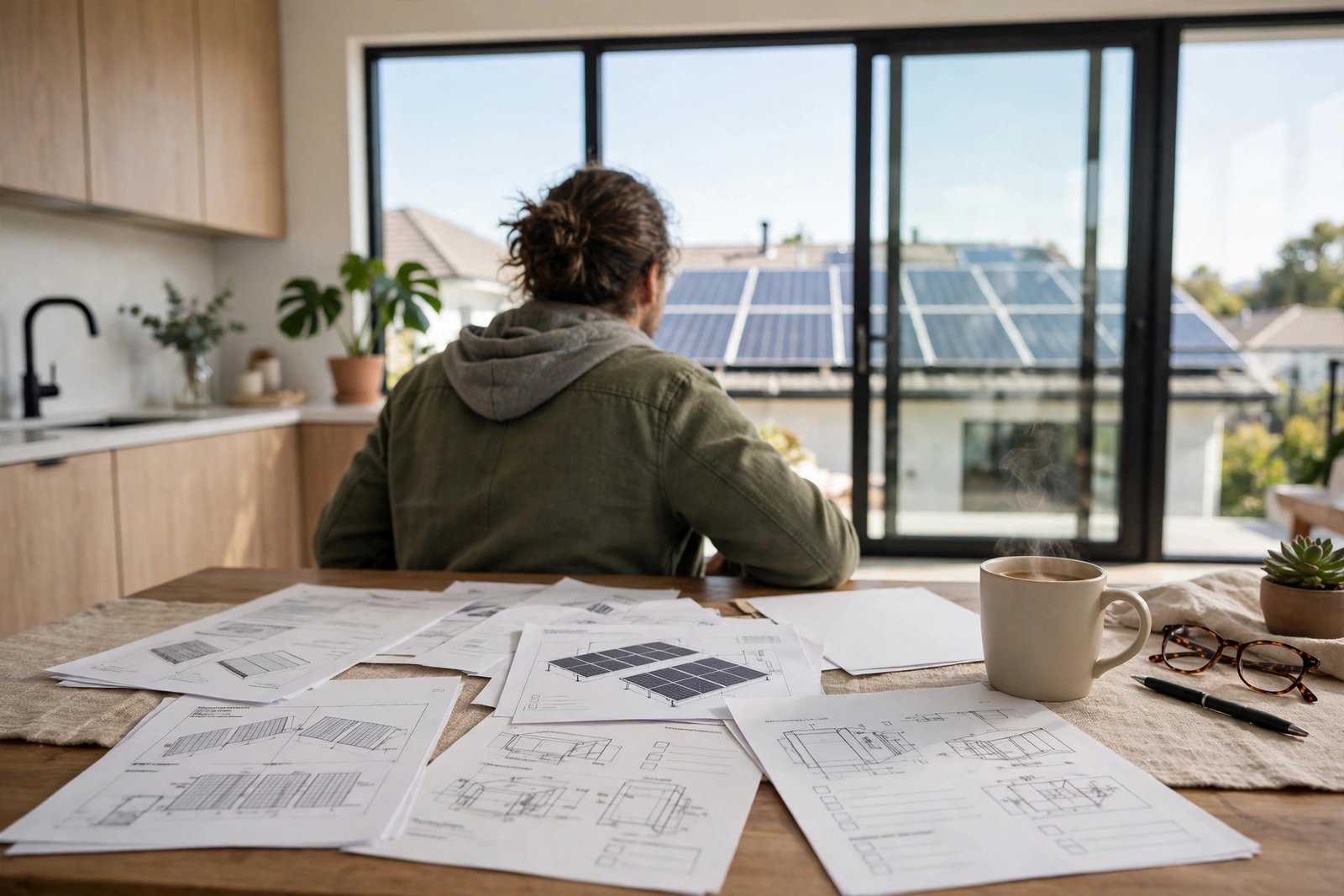
Before you call anyone, collect everything connected to your installation. Good paperwork turns a difficult situation into a manageable one, because a new technician needs to know exactly what equipment you have, how it was installed and what is covered.
Documents to find
- The original contract and quote: this lists the equipment models, system size, price and the warranties promised. It also shows whether you bought the system outright, financed it, leased it or signed a power purchase agreement (PPA).
- Equipment warranty certificates: separate documents from the panel, inverter and battery manufacturers, with serial numbers and warranty periods.
- Monitoring account details: your login for the monitoring app or web portal (for example, the inverter manufacturer’s app). This is how you check whether your system is producing power normally.
- Permits and inspection certificates: proof the system was installed to code and passed inspection. Keep these safe — a future buyer of your home will ask for them.
- Roof and electrical diagrams: the layout drawing showing where panels, inverters and isolators are, and how the wiring runs. A new technician will find this very useful.
- Payment records and finance agreements: proof of what you paid, and any loan agreement if the system was financed. If you are still paying off a loan, your payments continue to the lender, not the installer.
- Any emails or letters from the installer: including any notice that the company was closing, being sold or entering bankruptcy. Save these — they may matter if you make a claim.
If you cannot find the paperwork
Do not worry if some documents are missing. The serial numbers on your panels and inverter are printed on labels on the equipment itself, and a technician can read them during a visit. Your monitoring app usually shows the equipment models too. Your local building department or council may hold a copy of the permit. And if you paid by card or bank transfer, your bank statements prove the purchase. Rebuild the file as best you can, and keep everything together in one folder — physical or digital — from now on.
Also write down a short history of your system: when it was installed, any problems it has had, any repairs already done, and roughly how much electricity it normally produces. A new company will ask these questions, and having the answers ready saves time.
Which Warranties Survive — and Which Do Not
Warranties are the part of this situation that confuses homeowners most. Here is how they normally break down.
Manufacturer warranties — usually still valid
Panel manufacturers typically offer a product warranty of around 10 to 25 years and a performance warranty of 25 years, guaranteeing the panels still produce a stated percentage of their original output. Inverter warranties commonly run 5 to 12 years, sometimes extendable. Battery warranties are usually around 10 years. These warranties are with the manufacturer, so your installer’s closure does not cancel them. You (or your new technician) claim directly with the manufacturer, using the serial numbers and proof of purchase.
One caution: some manufacturer warranties require the system to have been installed by a certified installer and registered within a set time. If your original installer registered the equipment — as most do — you are covered. If registration was never completed, contact the manufacturer with your proof of purchase and ask whether the warranty can be registered now. Do not assume it is lost until you have asked.
Installer workmanship warranty — usually lost
The workmanship warranty covers the quality of the installation itself: roof penetrations and flashing, racking, wiring and connections. When the installer closes, this warranty normally dies with the company. If a roof leak later turns out to have been caused by the original installation, you will probably have to pay for the repair yourself — or claim on your home insurance if the damage is covered. This is the real financial risk of an installer closing, and it is why a thorough inspection by a new company is worth doing.
Extended warranties and insurance-backed guarantees
Check whether your installation came with an insurance-backed guarantee or an extended warranty from a third party. In some countries and schemes, installer work is backed by an insurance policy or a consumer protection scheme that survives the installer’s closure. Your contract or the handover documents should mention it. If you find such a policy, contact the insurer directly. It is also worth checking whether your home insurance covers any part of the system — for example, storm damage to panels. See our guide on whether homeowners insurance covers damaged solar panels for what to ask your insurer.
For a fuller explanation of how the two main warranty types differ, read product warranty vs. performance warranty, and if you do need to make a claim, our step-by-step guide on how to claim your solar panel warranty explains the documentation you will need.
Check Your Monitoring and System Status
Your next step is to confirm that your system is actually working properly. Many homeowners only discover a fault weeks after it starts, because nobody is watching the numbers any more.
Log in to your monitoring app
Open your monitoring app or web portal and check the last few weeks of production. Compare today’s output with a similar sunny day in the past, or with the same month last year if you have the history. A sudden drop, a flat line on a sunny day, or an inverter showing offline are all signs something needs attention. If you have lost your login, contact the inverter manufacturer — they can usually recover the account using the inverter serial number.
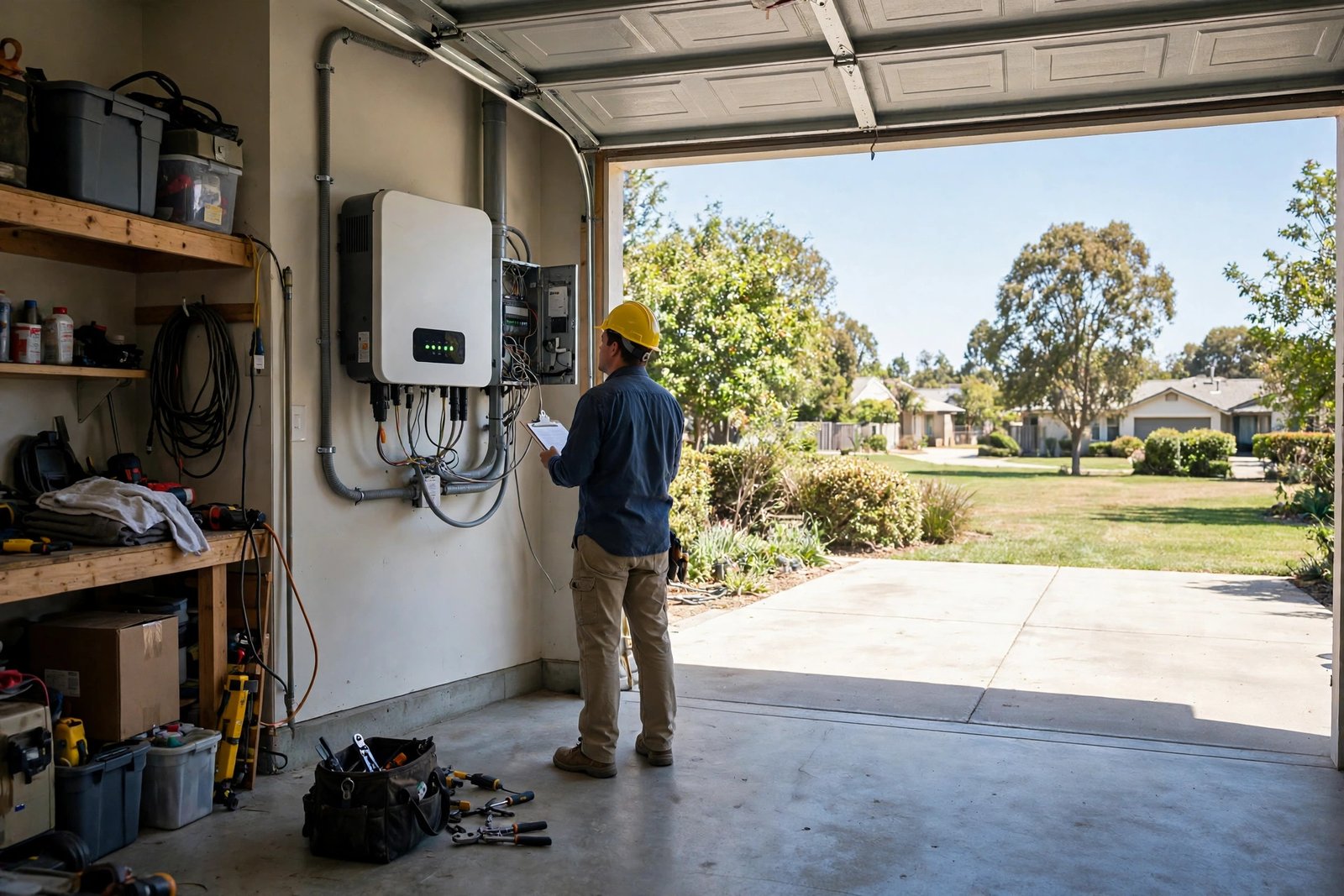
Check the inverter in person
Look at the inverter itself. A steady green light normally means it is working. A red or amber light, an error code on the display, or no light at all means something is wrong. Note any error code shown and look it up in the inverter manual or the manufacturer’s website. Do not open the inverter casing — there are live high-voltage parts inside even when the system appears off. If your inverter is not turning on at all, see our guide on solar inverter not turning on for the safe checks you can do yourself.
Book an inspection if anything looks wrong — or if you are unsure
Even if everything looks fine, a one-off inspection by a qualified technician is a sensible investment after your installer closes. They can check the roof penetrations and flashing, tighten racking, test the wiring, confirm the inverter settings and verify that your system is producing what it should. This gives you a clean baseline and a written report you can keep with your documents.
How to Find a New Installer or Technician
You do not need a company that installed your exact system. Any qualified solar company can service, repair and maintain a system installed by someone else. Here is how to find a good one.
Where to look
- Manufacturer directories: panel and inverter manufacturers list certified installers on their websites. A company certified by your inverter or panel manufacturer is a strong choice, because they can handle warranty claims for that brand.
- Trade associations and certification schemes: look for installers registered with a recognised industry body or certification scheme in your country (for example, MCS in the UK, or NABCEP-certified installers in the USA). These schemes set standards for workmanship and consumer protection.
- Local recommendations: ask neighbours with solar, local community groups or your electrician. A company with a long local track record and its own service team is often better than a large national sales company.
- Your electricity supplier or network operator: some can point you to registered installers in your area.
What to look for
Prefer a company that has been trading for several years, has its own employed technicians rather than only subcontractors, and offers a written workmanship warranty on its own repair work. Check online reviews, but read them critically — a few bad reviews among many good ones are normal; a pattern of the same complaint is a warning sign. Confirm the company carries public liability insurance and, where required, is licensed for electrical work.
Get at least two or three quotes for any significant work. A reputable company will visit your property, inspect the system and give a written quote — not a price over the phone without seeing the installation.
Questions to Ask a Replacement Company
Before you hire a new company, ask these questions. Their answers will tell you quickly whether you are dealing with a professional outfit.
- Are you certified by my inverter and panel manufacturers, and can you handle warranty claims for those brands?
- How long have you been trading, and do you have your own service technicians?
- What workmanship warranty do you offer on your repair work, and is it insurance-backed?
- Can you take over my monitoring account, or set up monitoring so I can see my system’s production?
- What will the first inspection cost, and what does it cover?
- Do you offer a maintenance plan, and what does it include?
- Are you licensed and insured for this work? Can I see proof?
- Can you provide references from customers whose systems you have taken over?
For more on choosing the right person for repair work, see our guide on DIY solar repair vs. hiring a pro, which explains which jobs are safe to do yourself and which always need a professional.
If You Leased Your System or Have a PPA
If you did not buy your system outright, the situation is different — and in some ways simpler.
Leased systems and power purchase agreements
With a lease or a PPA, you usually do not own the panels: a solar company owns them and you pay a monthly fee or pay for the electricity they produce. In that case the responsibility for maintenance and repairs normally sits with the system owner, not with you. If your installer was also the system owner and it has closed, the lease or PPA agreement — and the system itself — is usually sold or transferred to another company as part of the closure or bankruptcy process. You should receive a letter telling you who the new owner is and where to send payments.
Keep paying under the terms of your agreement until you are told otherwise in writing, and keep records of every payment. Do not stop paying because the original company has gone — the debt and the agreement usually transfer to the new owner, and stopping payments can put you in breach of contract. If you hear nothing for several weeks, contact the finance company or the administrator handling the closure; their details should be in the closure notice or your original agreement.
Financed systems you own
If you bought the system with a loan, you own it and the loan is with a separate lender. Your loan payments continue as normal to the lender. The installer’s closure changes nothing about the loan, but it does mean you are now responsible for finding your own maintenance and repairs.
Getting Repairs, Replacements and Roof Work Done
Once you have a new technician, most repairs are straightforward. Common jobs after an installer closes include replacing a failed inverter, fixing a monitoring connection, tightening loose racking, resealing a roof penetration and replacing damaged cabling. Your new company will be familiar with all of these.
Inverter replacement
Inverters are the component most likely to fail first, typically after 10 to 15 years. If yours fails and is still under the manufacturer warranty, the manufacturer usually supplies a replacement unit and your technician fits it. If it is out of warranty, you pay for the new unit plus labour. Our guide on how much it costs to replace a broken solar inverter explains the price ranges to expect.
Roof work
If you need roof repairs under the panels, the panels must be removed and refitted. This is a job for a solar company working with a roofer — the panels are heavy and fragile, and the roof penetrations must be resealed properly when they go back. Get a written quote that covers removal, storage, roof work and reinstallation, and ask who warrants the resealing. Our guide on repair or replace an old solar panel and the solar panel repair cost guide will help you judge whether a quote is fair.
Panel replacement
If a panel is damaged and covered by the manufacturer warranty, your technician can handle the claim and fit the replacement. Note that exact replacement panels are sometimes no longer made; a compatible panel of similar output may be used instead. If the panel is out of warranty, compare the cost of one replacement panel against the age and condition of the rest of the array.
Protecting Yourself Going Forward
Once your system has a new home with a reliable company, take a few steps to make sure you are never caught out the same way again.
- Keep your own records: store copies of all documents, warranties, serial numbers and monitoring logins in one place, and keep a backup copy somewhere safe. Do not rely on any single company to hold your paperwork.
- Register your warranties directly: where the manufacturer allows it, register your equipment in your own name so you can claim directly if needed.
- Monitor your system yourself: check the monitoring app at least once a month, and set up email or app alerts for faults if your inverter supports them. A fault caught in days costs far less than one caught in months.
- Consider a maintenance plan: a yearly inspection and clean from a reputable local company keeps small problems from becoming big ones — and gives you a regular point of contact.
- Choose stable companies: when you next need work done, favour companies with a long trading history, manufacturer certifications and insurance-backed warranties over the cheapest quote.
- Keep your insurance up to date: tell your home insurer about the system and check that it is covered for storm, fire and accidental damage.
What NOT to Do
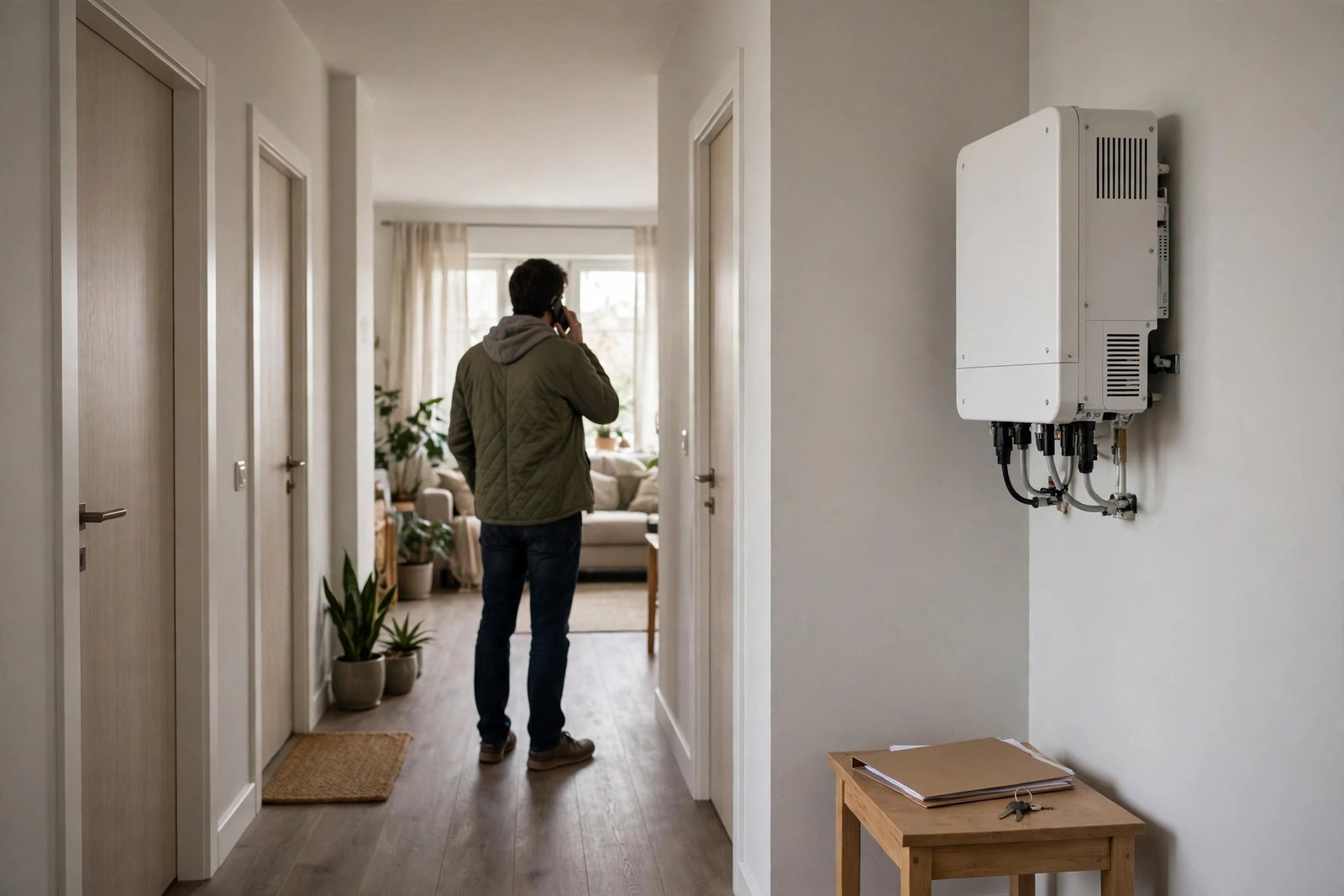
- Do not try to fix the inverter yourself. Inverters contain high-voltage DC even when switched off. Leave internal repairs to a qualified technician, and wear proper safety gear for any DIY task. See our guide on essential safety gear and tools before doing any work on your system.
- Do not climb on the roof without proper safety equipment and experience. Falls are the biggest risk in solar maintenance. If you are not trained and equipped for roof work, stay on the ground.
- Do not stop paying a lease, PPA or loan because the installer closed. Those agreements usually survive and transfer to another company.
- Do not sign a new contract in a hurry. Some companies target owners of orphaned systems with high-pressure sales and expensive “takeover” packages. Get competing quotes and read the small print.
- Do not let anyone remove your panels or inverter without a written quote and a clear statement of what happens to the old equipment.
- Do not assume your warranty is void until you have checked with the manufacturer directly. Many homeowners lose valid claims by assuming the worst.
When to Call a Professional
Call a qualified solar technician or electrician if any of the following apply:
- Your inverter shows a red light, an error code, or no light at all — and the basic checks in the manual do not clear it.
- Your monitoring shows a sudden or sustained drop in production you cannot explain.
- You can see physical damage: cracked panels, burnt connectors, loose racking, or water stains on the ceiling below the panels.
- You smell burning, see scorch marks, or hear buzzing or crackling from the inverter or isolators. Switch the system off at the isolators if it is safe to do so and call a professional immediately — do not touch damaged wiring.
- You need any roof work, inverter replacement, or wiring repair.
- You are unsure whether a warranty claim is valid, or a manufacturer has asked for a technician’s report.
Safety warning: solar panels produce electricity whenever light falls on them, even on cloudy days and even when the inverter is switched off. Never touch exposed wiring, open the inverter casing, or work on live parts. If in doubt, switch off at the AC and DC isolators, keep clear, and call a qualified professional.
FAQs
Does my solar system still work if the installer goes out of business?
Yes, in almost all cases. Your panels and inverter keep producing electricity exactly as before. The installer’s closure affects your service and workmanship warranty, not the equipment itself. Check your monitoring app to confirm the system is producing normally.
Is my panel warranty still valid after the installer closes?
Usually yes. Panel, inverter and battery warranties are manufacturer warranties and do not depend on the installer. You claim directly with the manufacturer using the serial numbers and proof of purchase. The warranty that is normally lost is the installer’s own workmanship warranty.
Who do I call for repairs now?
Any qualified local solar company or certified technician can service your system. Look for one certified by your inverter or panel manufacturer, check their trading history and insurance, and get a written quote before work starts.
What if I leased my solar panels and the company closed?
With a lease or PPA, the system owner is normally responsible for maintenance. The agreement and the system are usually transferred to another company. Keep paying under the agreement until you are told otherwise in writing, and contact the finance company or administrator if you hear nothing.
Can I claim on the installer’s workmanship warranty after it closes?
Normally no, unless the work was backed by an insurance-backed guarantee or a consumer protection scheme. Check your contract and handover documents for any third-party guarantee, and contact that insurer directly if one exists.
What documents do I need to find a new installer?
Your contract, equipment warranty certificates with serial numbers, monitoring login, permits and inspection certificates, and the system layout diagram. If some are missing, a technician can read serial numbers from the equipment and your monitoring app usually shows the models.
How much does it cost to get an orphaned solar system inspected?
Prices vary by region and system size, but a standard inspection typically costs about the same as a routine service visit. Ask for a fixed written quote before the visit, and get two or three quotes if any repair work is recommended.
Conclusion
Losing your solar installer is stressful, but it is not a disaster for your system. Your panels, inverter and battery are covered by manufacturer warranties that survive the installer’s closure, and any qualified solar company can take over servicing your system. The most important steps are simple: gather your paperwork, check your monitoring to confirm the system is working, find out which warranties still apply, and choose a reputable local company to look after the system from now on. Keep your own records, watch your production each month, and get a professional inspection so you have a clean baseline. With those steps done, an orphaned solar system can keep producing clean electricity for decades — no original installer required.