

Run your washing machine, dishwasher and water heater when the sun is strongest. Learn the best times to run heavy appliances on solar and cut your bill.
Quick answer: The best time to run heavy appliances on solar power is during peak sun hours, usually between 10am and 4pm, when your panels are producing the most electricity. Run your washing machine, dishwasher, tumble dryer and water heater in that window and they will use free solar power instead of expensive grid electricity.
Avoid running several heavy appliances at the same time, because your inverter can only supply so much power at once. In winter the window is shorter — roughly 11am to 3pm — so plan your biggest jobs for the middle of the day.
A quick look at your solar monitoring app will show you exactly when your own system produces the most.
Table of Contents
- Why Timing Matters More Than You Think
- The Best Window: When Solar Production Peaks
- How to Find Your Own Best Window
- Which Appliances to Run — and When
- Do Not Run Everything at Once
- What About Evenings and Night?
- Use Timers and Smart Plugs to Automate It
- Summer vs Winter: How the Window Changes
- Safety Reminders
- When to Call a Professional
- FAQs
- Conclusion
Why Timing Matters More Than You Think
Solar panels only produce electricity while the sun is shining, but most homes use most of their electricity in the early morning and the evening — exactly when panels produce little or nothing. That mismatch is the main reason many solar owners still pay a high electricity bill.
The panels are working fine; the power is simply being produced at the wrong time of day for the way the household uses it.
When your panels produce more electricity than your home is using, the surplus usually flows back to the grid. Most export payments are worth far less than the price you pay to buy electricity back later, so every unit of solar power you use yourself is worth more than a unit you export.
Running a washing machine at midday on solar power can cost you almost nothing; running the same machine at 7pm means buying grid electricity at full price.
The good news is that fixing this costs nothing. You do not need new equipment. You only need to move the biggest jobs in your home into the hours when your panels are producing the most.
For more ways to cut the amount of grid power you buy, see our guide on how to reduce your electricity bill with solar.

The Best Window: When Solar Production Peaks
For most homes in the USA and UK, solar production follows a curve that rises through the morning, peaks around midday, and falls in the late afternoon. The strongest hours are usually:
- Summer: roughly 10am to 4pm, with the peak between 11am and 3pm.
- Spring and autumn: roughly 10am to 3pm.
- Winter: roughly 11am to 3pm, with a lower and shorter peak.
These are general guides, not fixed rules. The exact peak depends on where you live, which way your roof faces, the time of year, and the weather. A south-facing roof in the northern hemisphere usually peaks around noon.
A roof that faces east will peak earlier in the day, and a west-facing roof will peak later in the afternoon — which can actually suit households that do most of their cooking and laundry later in the day.
Cloudy days flatten the curve. Your panels still produce electricity on a cloudy day, but much less, and the peak is less clear. On those days it is still worth running appliances in the middle of the day, but you may need to accept that some of the power will come from the grid.
How to Find Your Own Best Window
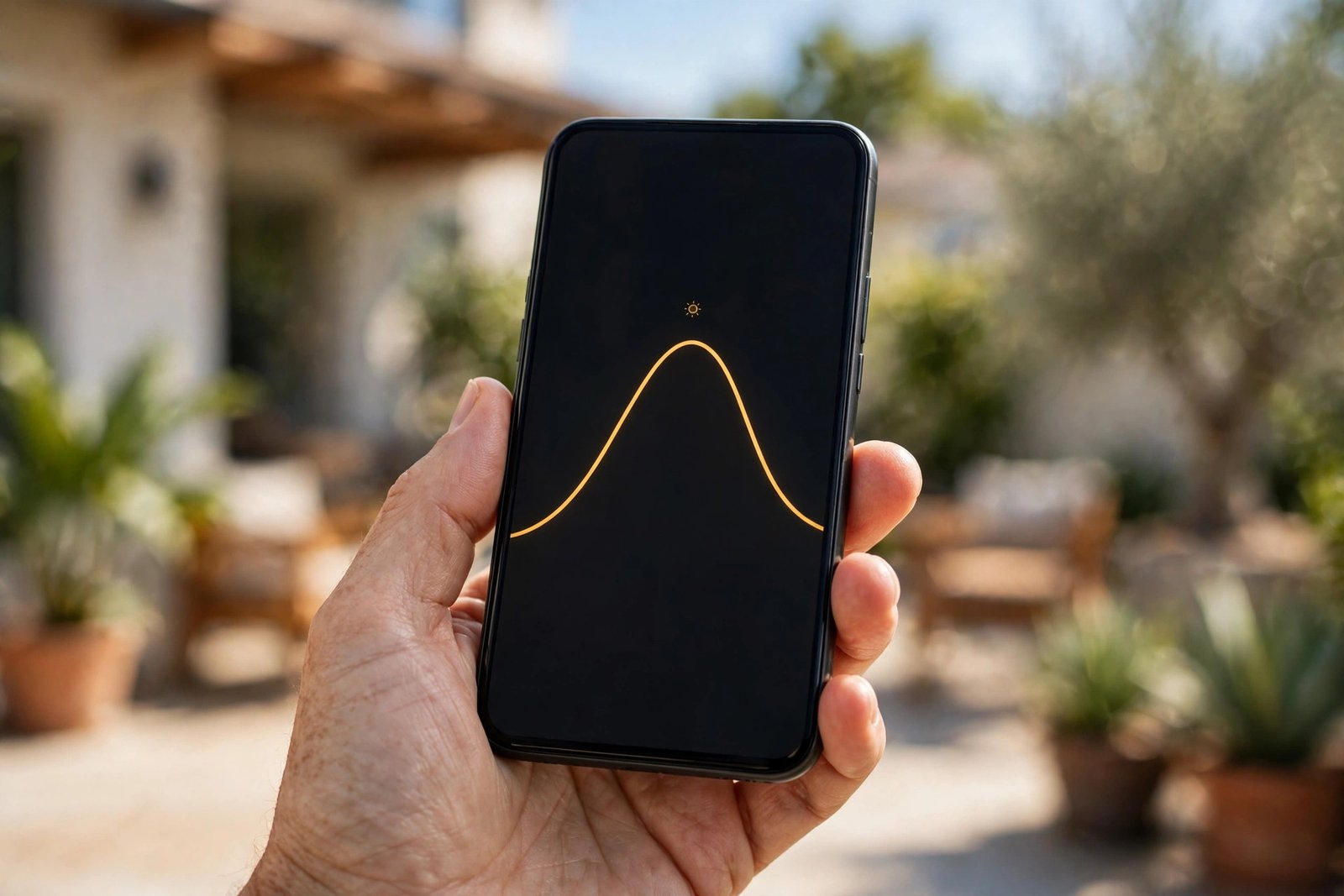
You do not need to guess. Your solar monitoring app shows exactly when your system produces power, usually as a graph for the day. Open it on a sunny day and look for the hours where the curve is highest. That is your window. Check it over a few days, because one cloudy afternoon can mislead you.
If you do not have a monitoring app, watch your inverter display or your smart meter instead. Many inverters show live production on a small screen, and many smart meters show when your home is exporting power to the grid. The hours when you are exporting are the hours when you have spare solar power to use.
A simple test works well too. Run the washing machine at different times over a week and compare your daily grid imports. The day with the lowest grid use usually tells you when your production was strongest. Once you know your window, you can build your household routine around it.
Which Appliances to Run — and When
Not every appliance is worth moving. Small loads such as lights, phone chargers and the television use so little power that their timing barely matters. Focus on the heavy users:
Washing machine
Run it between late morning and early afternoon. Load it in the morning and start it before lunch rather than in the evening. A cold or warm wash uses much less power than a hot wash, so use a lower temperature setting when the clothes allow it.
Dishwasher
Start it after lunch and let it run through the afternoon. Many dishwashers have a delay-start button, so you can load it after breakfast and set it to run at midday automatically. Use the eco setting if your machine has one — it takes longer but uses less power and less water.
Tumble dryer
The tumble dryer is one of the hungriest appliances in the home. If you can, dry clothes outside on a washing line on sunny days and save the dryer for rainy days. When you do use it, run it in the peak solar window and avoid running it at the same time as the washing machine.
Water heater
If you have an electric water heater or immersion heater, heat your water in the middle of the day. A timer on the heater can do this automatically. Heating water with solar power during the day is far cheaper than heating it from the grid in the evening.
Oven, vacuum cleaner and iron
These are heavy but short jobs. An oven used for an hour at midday costs little on solar; the same hour in the evening is grid power. Vacuum and iron during the day when you can — small changes like these add up over a month.
Do Not Run Everything at Once
It is tempting to start the washing machine, dishwasher, dryer and water heater all at midday, but that can backfire. Your inverter can only convert a limited amount of solar power at any one moment.
If the total load is bigger than what your panels and inverter can supply, the extra power comes from the grid — and you may also trip a breaker or overload a circuit.
Stagger the big jobs instead. A practical daytime routine looks like this:
- 10am–12pm: washing machine.
- 12pm–2pm: dishwasher, then water heater.
- 2pm–4pm: tumble dryer if needed, then vacuum or iron.
One heavy appliance at a time is a good rule of thumb, especially on smaller systems. If your system is large and your inverter has plenty of capacity, two at once may be fine — but check your monitoring app to see whether you are still importing grid power while they run. If you are, spread the jobs out.

What About Evenings and Night?
Evenings are the hardest time for a solar home, because the panels have stopped producing just when cooking, lighting and television use rise. If you have a battery, this is when it earns its keep.
A battery charged during the day can run your evening loads, so keep enough charge in reserve for the evening instead of using it all up during the day.
Without a battery, evening power comes from the grid. The best you can do is keep evening use low: cook efficiently, use LED lighting, and avoid starting the washing machine or dishwasher after dark.
If your electricity tariff has a cheap overnight rate, some households run the dishwasher or washing machine late at night on cheap grid power — that can be a good second choice when solar is not available.
Keep your battery healthy so it is ready for the evening. Clean terminals and correct water levels matter for lead-acid batteries — see our guides on cleaning solar battery terminals and checking lead-acid battery water levels, and on equalization charging for keeping older batteries in good condition.
Use Timers and Smart Plugs to Automate It
Remembering to start appliances at midday every day is hard, especially if you are out at work. Timers and smart plugs solve that. Most modern washing machines and dishwashers have a built-in delay start. Set it in the morning and the machine will run itself in the peak window.
For older appliances, a plug-in timer or a smart plug works just as well. A smart plug can also be controlled from your phone, so you can start the dishwasher from work when you see the sun come out.
Some home energy systems can even switch appliances on automatically when solar production is high, but a simple timer is enough for most homes.
Start with one appliance — the washing machine is usually the easiest — and add timers to the dishwasher and water heater once the habit is working. Automation turns a daily chore into something you set once and forget.
Summer vs Winter: How the Window Changes
In summer the days are long and the peak window is wide, so you have plenty of time to run heavy appliances on solar. You can often run two or three big jobs on a bright summer day and still export power to the grid.
In winter the window shrinks to a few hours around midday, and output is much lower. You will not be able to run everything on solar, so choose the biggest job — usually the washing machine or the water heater — and give it the best hours.
On dark winter days it may be cheaper to run some jobs on an off-peak overnight tariff instead of waiting for weak winter sun.
Spring and autumn sit in between. Mornings can be slow to warm up, so the best window often starts a little later than in summer. Watch your monitoring app as the seasons change and shift your routine by an hour or two when you notice the peak moving.
Safety Reminders
Running appliances at a different time of day is safe, but the electrical work around it is not always. Keep these points in mind:
- Never run several heavy appliances from one extension lead or a single overloaded socket. Use fixed wall sockets and check that plugs and sockets are in good condition.
- Do not open your inverter, consumer unit or battery to change settings you do not understand. Solar equipment carries live DC voltage even when the sun is not bright.
- Keep timers and smart plugs dry and away from water sources, especially in kitchens and laundry rooms.
- If a breaker trips repeatedly when you run appliances, stop and find the cause before resetting it again and again.
When to Call a Professional
Call a qualified electrician or solar technician if your breaker trips often when you run heavy appliances, if you smell burning or see scorch marks around sockets, or if your inverter shows a fault or warning light when loads are high. These can be signs of a wiring problem or an inverter that is too small for your loads.
Also call a professional if you want to add automatic load control, a bigger battery, or a second inverter. A technician can check whether your system can safely handle more daytime load and whether your wiring is rated for it.
If you are unsure whether a job is safe to do yourself, read our guide on DIY solar repair vs hiring a pro first. For any work on live equipment, use the right protective gear — see essential safety gear for DIY solar owners.
FAQs
What is the best time of day to run appliances on solar?
Usually between 10am and 4pm, with the strongest production around midday. In winter the window is shorter, roughly 11am to 3pm. Your monitoring app will show the exact peak for your own roof.
Can I run the washing machine and dishwasher at the same time on solar?
Sometimes, but only if your panels and inverter can supply enough power for both at once. Check your monitoring app — if you are importing grid power while both run, stagger them instead.
Does it matter if it is cloudy?
Yes. Panels still produce power on cloudy days, but much less. The middle of the day is still the best time, but you may need to accept that some of the power will come from the grid.
Should I charge my battery first or run appliances first?
Run the heavy appliances first during peak sun, then let the battery charge with what is left. That way the appliances use solar power directly, which is the most efficient use of it, and the battery still has the afternoon to charge for the evening.
Is it better to run appliances at night on a cheap tariff?
If you have a cheap overnight tariff and no battery, running the dishwasher or washing machine late at night can be a good second choice. But using your own solar power at midday is usually cheaper still, because you are not buying electricity at all.
What if I am out at work during the day?
Use the delay-start function on your washing machine and dishwasher, or plug-in timers and smart plugs. Load the machines in the morning and let them run themselves in the peak solar window.
Will running appliances at midday damage my inverter?
No, as long as the total load stays within what your inverter and wiring are rated for. Problems only start if you run too many heavy appliances at once. Stagger the big jobs and watch for repeated breaker trips.
Conclusion
The best time to run heavy appliances on solar power is the middle of the day, when your panels are producing the most electricity. Move the washing machine, dishwasher, tumble dryer and water heater into the 10am to 4pm window — shorter in winter — and stagger them so you run one big job at a time.
Use your monitoring app to find your own peak, use timers and delay-start settings to automate the routine, and save your battery for the evening. It costs nothing to change when you run your appliances, but over a month it can make a real difference to how much grid electricity you buy.
Pingback: Solar Inverter Keeps Tripping or Shutting Down? Causes and Fixes - Solar Fixing Guide