
Quick answer: Removing and reinstalling solar panels for a roof repair typically costs $1,500–$4,000 (£1,200–£3,200) for an average home system, including labour, safe storage, and recommissioning. That works out to roughly $200–$400 (£160–£320) per panel for a full detach-and-reset job, though the final figure depends on how many panels you have, how steep or high your roof is, whether new racking or flashing is needed, and how long the panels stay off. The roofing work itself is a separate bill. Always get the removal, storage, and reinstallation priced as one job, in writing, before the roofers start.
Contents
- Why Panels Have to Come Off for a Roof Repair
- Average Removal and Reinstallation Costs at a Glance
- What It Costs Per Panel
- What the Price Should Include
- What Drives the Final Bill Up or Down
- Timing the Job Around Your Roof Repair
- How Your Panels Are Stored While the Roof Is Fixed
- Extra Work Worth Doing While the Panels Are Off
- Warranty and Insurance: Who Pays?
- Getting Quotes Without Overpaying
- Safety Warnings
- When to Call a Professional
- FAQs
- Conclusion
Why Panels Have to Come Off for a Roof Repair
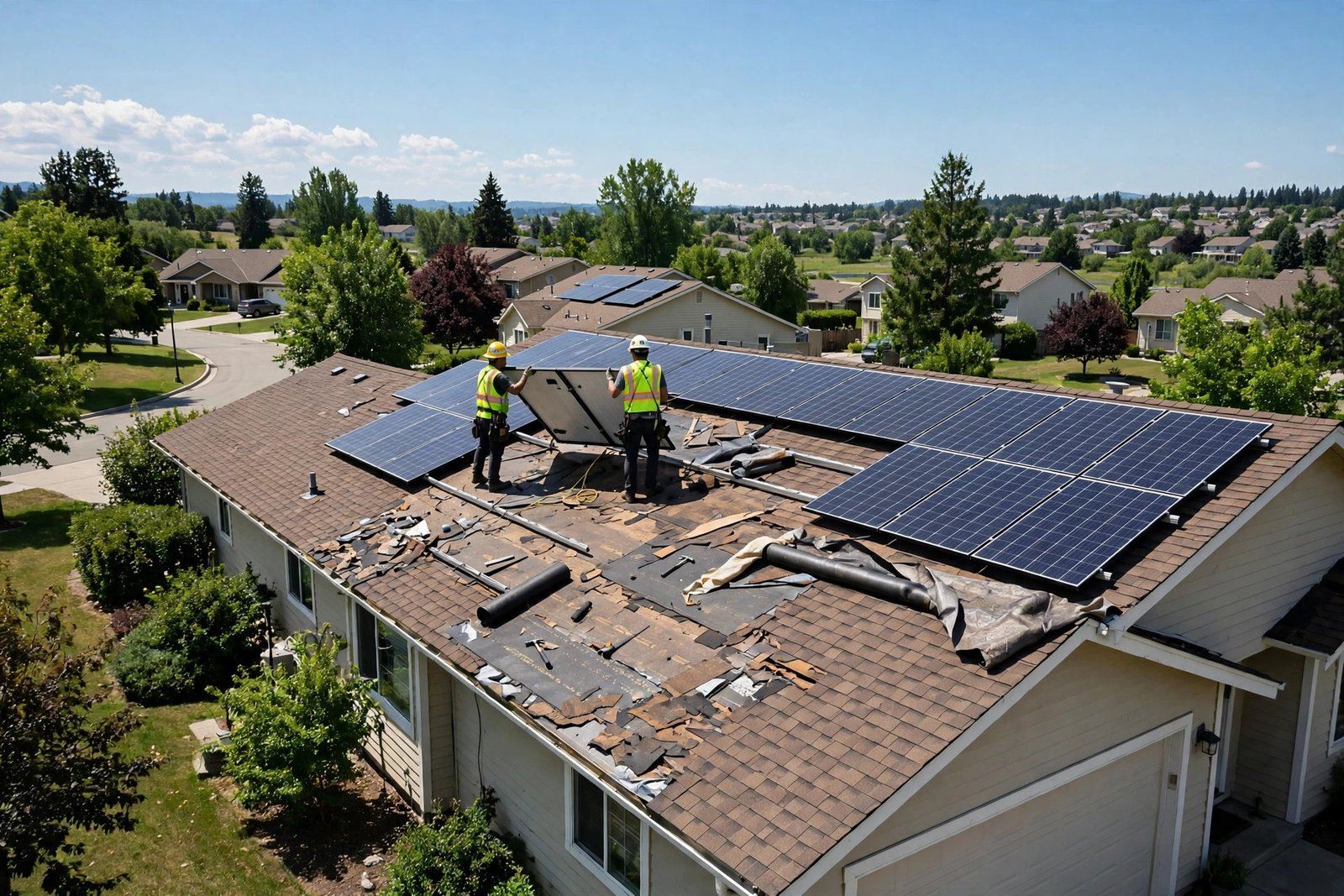
Solar panels cover a large part of your roof, and the roof underneath them cannot be repaired or replaced while they are in place. The panels sit on racking bolted through the roofing material, and every mounting point is a penetration that has to be sealed properly. A roofer cannot strip old shingles, replace underlayment, or fix decking under a panel array — so the panels, the racking, and often the wiring have to come off first.
Common situations that need a full or partial removal include:
- A full re-roof: the roof has reached the end of its life, or the shingles under the panels have failed. The whole array usually has to come off.
- A leak under or near the array: water getting in around a mount or flashing can only be fixed properly with the panels and racking removed. Our guide to fixing a roof leak around solar panel mounts and flashing explains how these leaks start.
- Storm or hail damage: if the roof decking or shingles are damaged, the panels above them need to come off so the repair is done right. See our guide to repairing storm and hail damage on rooftop solar arrays.
- Structural work: replacing decking, reinforcing rafters, or fixing a sagging roof section all need clear access.
- Replacing failed flashing or mounts: sometimes only one or two rows of panels need to come off, which costs much less than a full removal.
One thing to be clear about: the roofer does not remove the panels. Solar panels are live electrical equipment — they generate DC voltage whenever light hits them, even when the system is switched off. Only a qualified solar technician should disconnect, remove, and reinstall them. A roofer who offers to “just lift them off” is not the person for that part of the job.
Average Removal and Reinstallation Costs at a Glance
Prices below are typical ranges for the US and UK, based on commonly published installer pricing, and cover the full detach-and-reset job — removal, storage, reinstallation, and recommissioning — unless stated otherwise. The roofing work itself is always a separate bill. Treat these figures as a planning guide, not a quote.
| System size | Typical total cost (US) | Typical total cost (UK) | Notes |
|---|---|---|---|
| Small system (up to 10 panels) | $1,000–$2,000 | £800–£1,600 | One-day job in most cases |
| Average system (15–25 panels) | $1,500–$4,000 | £1,200–£3,200 | Most common range |
| Large system (25–40 panels) | $3,000–$6,000 | £2,400–£4,800 | Two days, more storage needed |
| Partial removal (a few panels only) | $500–$1,500 | £400–£1,200 | For a localised leak or repair |
| Removal only (no reinstallation yet) | $800–$2,000 | £650–£1,600 | Reinstallation billed later |
For an average 20-panel home system, most homeowners pay somewhere in the $2,000–$3,500 (£1,600–£2,800) range for the complete job. The panels are typically off the roof for a few days to a few weeks, depending on how long the roofing work takes, and your system produces no power during that time — so lost generation is part of the real cost too.
What It Costs Per Panel
Many installers price this work per panel, which makes it easy to compare quotes. Typical per-panel rates for a full detach-and-reset job are:
- Removal and reinstallation combined: $200–$400 (£160–£320) per panel, including labour, storage, and recommissioning.
- Removal only: $100–$200 (£80–£160) per panel.
- Reinstallation only: $100–$200 (£80–£160) per panel.
Per-panel pricing usually falls as the system gets bigger, because the fixed costs — travel, scaffolding, electrical isolation, and recommissioning — are spread across more panels. A 10-panel job may work out at $300 per panel, while a 30-panel job from the same company might be $200 per panel. That is why a flat quote for the whole job is often better value than a per-panel rate on a large system.
Be careful with very low per-panel quotes. A price of $100 per panel for the whole job usually means something is missing — often the storage, the new flashing, or the recommissioning and testing. Ask for an itemised quote so you can see exactly what is included.
What the Price Should Include
A proper detach-and-reset quote should cover every step. Before you agree to anything, check that all of these are included:
- Safe shutdown and disconnection: isolating the system, disconnecting the DC and AC wiring, and removing the panels and racking without damaging them.
- Labelling: every panel, cable, and optimiser or microinverter should be labelled so it goes back in exactly the same place. Mixed-up wiring is a common cause of faults after reinstallation.
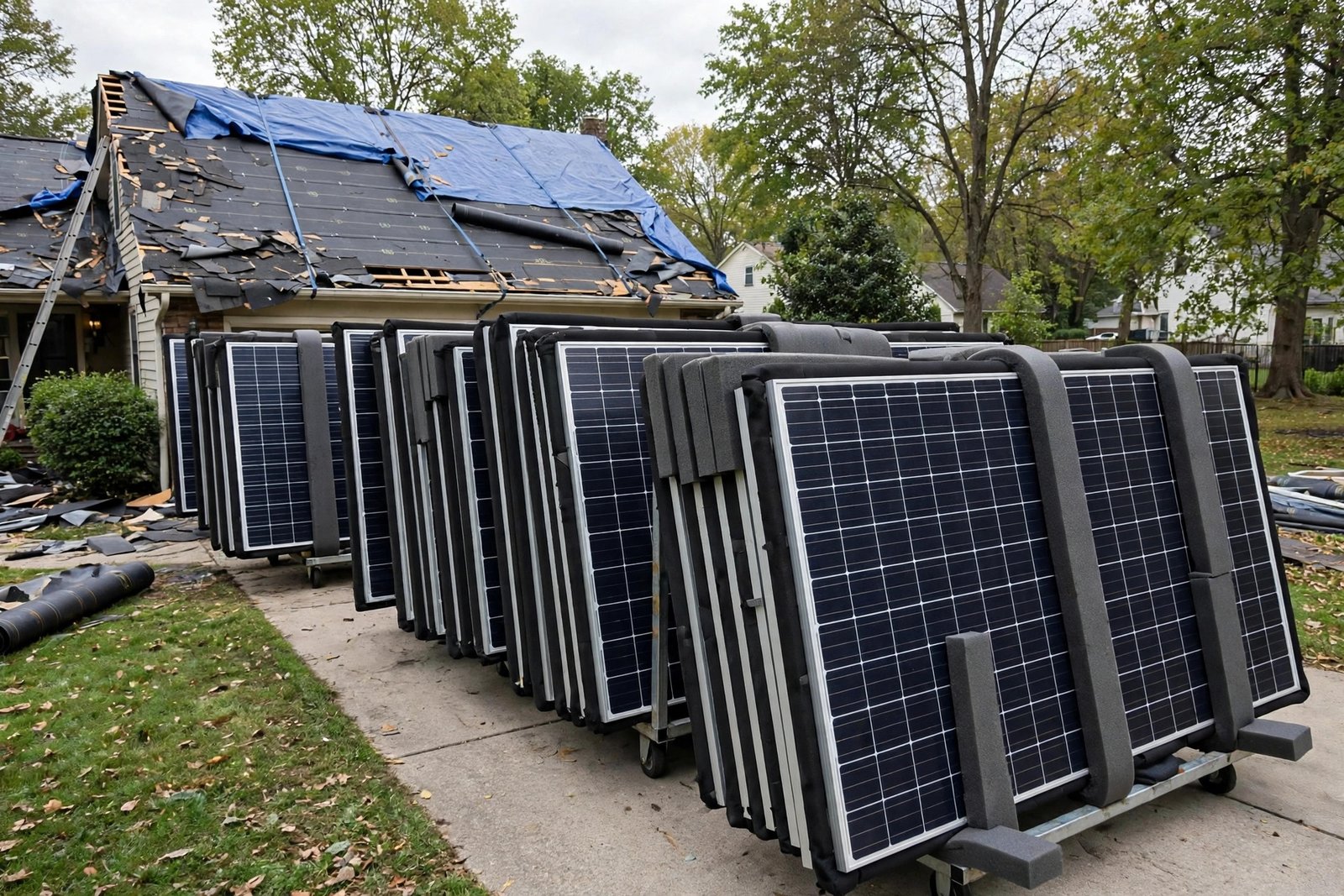
- Transport and storage: moving the panels to a safe, dry storage spot and keeping them there while the roof work is done. Panels should be stored upright on padded racks, never stacked flat.
- Reinstallation: refitting the racking with new flashing and seals, remounting the panels, reconnecting all wiring, and re-securing everything to the manufacturer’s torque settings.
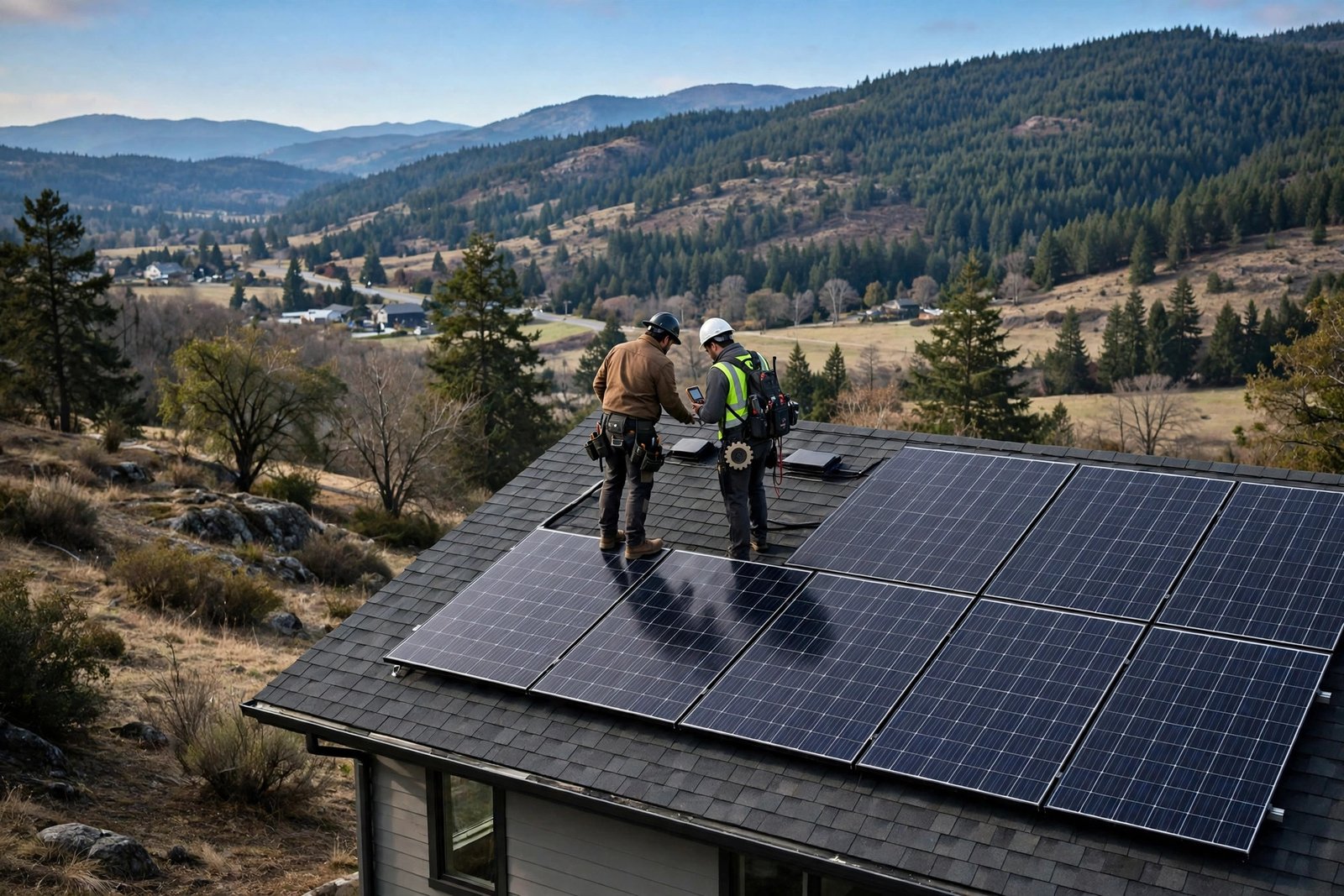
- Recommissioning and testing: switching the system back on, checking that every panel and string is producing power, and confirming the monitoring app shows the system correctly.
- Disposal of old racking or flashing: worn mounts and seals should be replaced, not reused, and the old material taken away.
If a quote does not mention storage, new flashing, or recommissioning, ask about it directly. These are the items that turn into surprise charges later — or worse, into leaks and faults after the panels go back up.
What Drives the Final Bill Up or Down
Two homes with the same number of panels can get very different quotes. These are the factors that move the price:
- Number of panels: the biggest single factor — more panels means more labour on both the removal and the refit.
- Roof height and pitch: a steep, high, or hard-to-reach roof needs scaffolding and takes longer. Scaffolding alone can add $300–$800 (£240–£650).
- Roof material: tile and slate roofs are slower and more delicate to work on than asphalt shingles or metal, and broken tiles add replacement costs.
- Microinverters or optimisers: if each panel has its own microinverter or optimiser, every unit has to be disconnected, labelled, and reconnected — adding time and cost.
- Storage duration: most quotes include a few weeks of storage. If the roofing job drags on for months, storage fees may apply.
- New racking or flashing: if the old mounts are corroded or the flashing is worn, new parts add $200–$600 (£160–£480) to the bill.
- Location: labour rates are higher in large cities and in the south-east of England than in rural areas; US rates vary by state.
- Urgency: an emergency removal after storm damage costs more than a job booked weeks ahead. If you can plan the re-roof in advance, do so — see our guide to preparing your panels for storms for how to reduce the risk of emergency work.
Timing the Job Around Your Roof Repair
Good timing saves money and lost generation. The sequence that works best is:
- Get the solar quote first. Before the roofer books a start date, get a written detach-and-reset quote from a solar installer. Some roofers have a solar partner they work with regularly — ask, but still compare with an independent quote.
- Book the removal a day or two before the roofing starts. The solar crew removes the panels, then the roofers start the next day. That way the panels are not sitting on the ground any longer than they need to be.
- Book the reinstallation as soon as the roof is finished. Every day the panels are off is a day of lost generation. In summer, a 20-panel system can lose a meaningful amount of output in a single week, so do not let the reinstallation drift.
- Allow for weather delays. Roofing work can slip by days if it rains. Build a buffer into the schedule and confirm the storage arrangement covers the delay.
- Coordinate the two crews. The roofer and the solar installer should talk to each other about flashing details, mount positions, and the order of work. You should not be the go-between for technical decisions.
If your roof is old and your panels are more than 10 years old, it is worth asking whether the roof should be replaced before the panels go back — or whether the panels themselves should be assessed at the same time. Our solar panel repair cost guide covers what the common panel fixes should cost, which helps you judge whether a panel is worth refitting or replacing while it is already off the roof.
How Your Panels Are Stored While the Roof Is Fixed
Storage sounds simple, but it matters. A solar panel is a large sheet of tempered glass with delicate cells inside, and careless storage is how panels get cracked or chipped.
- Upright on padded racks: panels should stand on their long edge, leaning slightly against a padded frame, with spacers between them. This is the correct way to store them.
- Never stacked flat: stacking panels flat in a pile puts the weight of the whole pile on the bottom panel and risks cracking the glass.
- Under cover: panels should be kept dry and out of direct sun where possible — a garage, a covered area, or a tarped rack in the driveway.
- Out of the way: the storage spot should be somewhere nobody will bump into it, and children and pets should not be able to reach it.
- Connectors protected: open MC4 connectors should be capped or taped so dust and water cannot get in while the panels are stored.
Ask the installer where the panels will be stored and for how long. If the quote says “storage included”, ask how many weeks that covers. And take photos of your panels before removal — if a panel comes back damaged, dated photos make a claim much easier.
Extra Work Worth Doing While the Panels Are Off
With the panels already off the roof, some jobs cost far less than they would on their own. Consider these while the array is down:
- New flashing and seals at every mount: this should be standard, not optional. Old flashing is the most common cause of leaks after reinstallation.
- Replace worn racking or corroded bolts: if the mounts have rusted or the bolts are seized, replacing them now is cheap compared with doing it later, when the panels would have to come off again.
- Add critter guards: mesh guards around the edge of the array stop birds and squirrels nesting under the panels. Fitting them while the panels are off is much easier.
- Clean the panels: a proper clean before reinstallation costs little and restores output. Our guide to how often to clean solar panels explains the right schedule.
- Check panel condition: with every panel in hand, the installer can spot cracked glass, delamination, or damaged junction boxes that are hard to see on the roof. A panel that needs replacing is far cheaper to swap now than after it is refitted.
- Consider a layout change: if part of the roof is now shaded by a new tree or extension, this is the one chance to move panels to a better spot without paying for a second removal.
Do not let extras balloon the job. Get each extra priced separately so you can decide what is worth doing and what can wait.
Warranty and Insurance: Who Pays?
Removal and reinstallation is rarely free — but sometimes someone else pays part of it.
- Roofing warranty: if the roof itself is still under warranty and the leak or failure is a roofing defect, the roofer may cover the roofing work — but usually not the solar removal. Read the roofing warranty carefully.
- Solar panel warranty: a panel warranty covers the panel, not the cost of taking it off the roof for a roofing job. However, if a panel is damaged during removal, the installer’s insurance should cover it — confirm this before work starts.
- Home insurance: if the roof damage was caused by a storm, hail, or another insured event, your home insurance may cover both the roof repair and the solar removal and reinstallation. File the claim before the work starts and keep every receipt.
- Installer workmanship warranty: if the original installer fitted the panels badly and that caused the leak, their workmanship warranty may cover the removal and refit. This is worth checking before you pay for the job yourself.
- Whoever damages it, pays for it: if the roofing crew damages a panel, or the solar crew damages the roof, the responsible company’s insurance should cover it. Make sure both companies are insured and ask for proof.
Keep all paperwork together: the solar quote, the roofing quote, photos of the roof and panels before removal, and any insurance correspondence. If a claim or a warranty dispute comes up later, this file is your evidence.
Getting Quotes Without Overpaying
A little preparation saves real money:
- Get three written quotes. At least one from the original installer (they know your system), one from an independent solar company, and one through your roofer’s solar partner if they have one.
- Ask for an itemised quote. Removal, storage, reinstallation, new flashing, scaffolding, and recommissioning should each be listed separately — not a single lump sum.
- Confirm the storage terms. How long is storage included, where will the panels be kept, and what happens if the roofing job runs late?
- Ask about the lost-generation cost. No installer can pay you for lost output, but a fast, well-planned job keeps the panels off the roof for days rather than weeks.
- Check credentials and insurance. In the US, look for a NABCEP-certified installer; in the UK, an MCS-certified installer. Both should carry liability insurance that covers damage to your panels and your roof.
- Do not pay everything upfront. A deposit for the removal is normal; the balance for reinstallation is due when the system is back on the roof, tested, and producing power.
If your inverter is also due for replacement, it can make sense to do both jobs together — the system is already shut down and the installer is already on site. Our guide to inverter replacement costs gives you the figures to compare.
Safety Warnings
Do not remove solar panels yourself. Panels generate dangerous DC voltage whenever light hits them, even with the system switched off at the isolator. Disconnecting live DC cables without the right tools and training can cause a serious electric shock or an arc flash. Removal is a job for a qualified solar technician.
Do not work on the roof. Roof work needs proper fall protection, scaffolding, and equipment. Falls from roofs are one of the most common causes of serious DIY injury — and a roof with panels partly removed is even more hazardous, with open mounts, loose cables, and tripping hazards.
Never leave disconnected cables exposed. If you see open cable ends or connectors lying on the roof during the job, keep away and tell the installer. Exposed DC connectors are live in daylight and must be capped or insulated.
When to Call a Professional
Call a qualified solar technician or electrician if:
- Your roof needs repair or replacement and panels are in the way — the removal must be done by a solar professional, not the roofer.
- You find a leak under or around the array and are unsure whether the panels need to come off.
- A panel is visibly damaged, cracked, or loose after a storm — do not touch it, and keep children and pets away from the area below it.
- The system is not producing power after reinstallation, or the monitoring app shows missing panels or strings.
- You smell burning, see scorch marks, or find melted parts anywhere in the system.
- You are unsure about anything electrical. Solar systems combine high-voltage DC and mains AC; guessing is not worth the risk.
A professional removal and reinstallation usually takes one to two days of work, spread across the roofing job, and ends with a tested, producing system. If your installer offers to skip the testing step, find another installer — a system that has not been recommissioned and checked is not a finished job.
FAQs
How much does it cost to remove and reinstall solar panels for a roof repair?
For an average home system, $1,500–$4,000 (£1,200–£3,200) for the full detach-and-reset job, or roughly $200–$400 (£160–£320) per panel. The roofing work itself is a separate bill. Scaffolding, new flashing, and a large or steep roof can push the price higher.
How long will my solar panels be off the roof?
Usually a few days to a few weeks, depending on how long the roofing work takes. The removal itself takes a day, and reinstallation takes another day once the new roof is finished. Plan the schedule so the panels are off for as short a time as possible, because the system produces no power while they are down.
Can roofers remove solar panels themselves?
No. Solar panels are live electrical equipment that generate DC voltage in daylight, even when switched off. Only a qualified solar technician should disconnect, remove, and reinstall them. Your roofer and your solar installer should work together, but each does their own part of the job.
Does home insurance cover solar panel removal for a roof repair?
Sometimes. If the roof damage was caused by an insured event such as a storm or hail, your home insurance may cover the roof repair and the solar removal and reinstallation. If the roof simply wore out with age, insurance usually does not cover it. File the claim before the work starts and keep every receipt.
Do I need new racking or flashing when panels are reinstalled?
New flashing and seals at every mounting point are strongly recommended, and most good installers include them as standard. Racking should be replaced only if it is corroded, damaged, or no longer meets the manufacturer’s requirements — your installer should check it while the panels are off.
Will my system work the same after reinstallation?
It should, as long as every panel, cable, and optimiser or microinverter goes back in the same place and the system is properly recommissioned and tested. That is why labelling during removal matters. If output is lower after reinstallation, ask the installer to check the monitoring data for missing or underperforming panels.
Is it worth replacing panels while they are off the roof?
If a panel is cracked, delaminated, or underperforming, yes — swapping it while the array is already down saves a second removal cost later. Ask the installer to check every panel while it is off the roof and to price any replacements separately before you decide.
Conclusion
Removing and reinstalling solar panels for a roof repair is a routine job, but it is not a small one. For most homes, budget $1,500–$4,000 for the full detach-and-reset job, on top of the roofing bill, and expect the system to be off for a few days to a few weeks. The money is well spent when the job is done properly: labelled panels, safe storage, new flashing at every mount, and a tested, producing system at the end.
The three things that protect you are a written itemised quote, a solar technician (not a roofer) doing the electrical work, and a firm schedule that gets the panels back on the roof as soon as the roofing is done. Check your warranty and insurance first — sometimes someone else pays — and use the time while the panels are off to fix the small things, like worn flashing or missing critter guards, that are expensive to reach later. If you are planning a re-roof, start with our solar panel repair cost guide to get the full picture of what solar work costs, and our guide to roof leaks around solar mounts to understand why the panels have to come off in the first place.