
Quick answer: Replacing a broken solar inverter typically costs $1,000–$3,000 (£800–£2,400) in total, including the new inverter and labour. A standard string inverter for an average home system usually lands in the $1,200–$2,500 range fitted, while a single failed microinverter costs far less — roughly $200–$500 (£160–£400) to swap. Hybrid inverters that work with batteries cost more, often $2,000–$4,000 (£1,600–£3,200) installed. The final bill depends on your inverter type, system size, whether wiring or permits are needed, and whether the old unit is still under warranty. Always get two or three written quotes before agreeing to the work.
Contents
- Why Inverters Fail — and When Replacement Is the Answer
- Average Inverter Replacement Costs at a Glance
- String Inverter Replacement Costs
- Microinverter Replacement Costs
- Hybrid and Battery-Ready Inverter Costs
- What Drives the Final Bill Up or Down
- Repair or Replace? How to Decide
- How Warranty Can Cut the Cost to Zero
- Extra Costs to Budget For
- Getting Quotes Without Overpaying
- Safety Warnings
- When to Call a Professional
- FAQs
- Conclusion
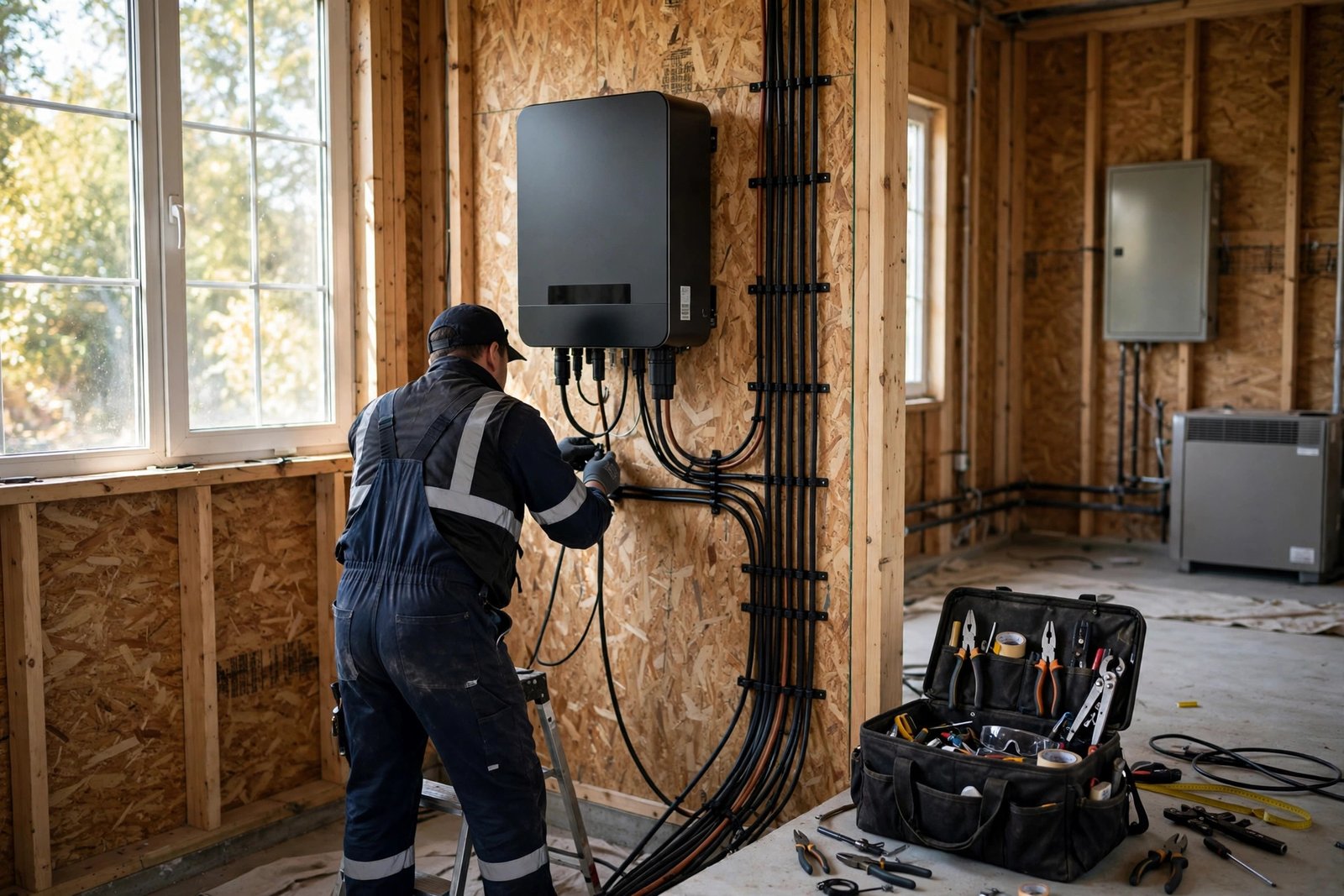
Why Inverters Fail — and When Replacement Is the Answer
The inverter is the hardest-working part of a solar system. It converts the direct current (DC) from your panels into alternating current (AC) your home can use, and it runs whenever the sun is shining. Most string inverters are designed to last around 10–15 years, while microinverters often last 20–25 years. Panels themselves usually outlive the inverter, so many homeowners face at least one inverter replacement during the life of their system.
Common reasons an inverter fails include:
- Age and wear: internal components such as capacitors wear out over years of daily heat cycles.
- Overheating: an inverter installed in a hot loft, a cramped cupboard, or direct sun works harder and fails sooner.
- Power surges and lightning: a nearby strike or a grid surge can damage the electronics instantly.
- Water or dust ingress: outdoor units exposed to driving rain or dust can corrode inside over time.
- Manufacturing faults: some units fail early because of a faulty batch — which is exactly what a warranty is for.
Not every dead inverter needs replacing. A tripped breaker, a blown fuse, a loose DC connection, or outdated firmware can all make an inverter look dead when it is not. Before you budget for a replacement, work through the basic checks in our guide to a solar inverter that will not turn on, and check the common solar inverter error codes — a red light does not always mean the unit is finished. Our guide to fixing a solar inverter red light covers the safe checks you can do yourself.
Average Inverter Replacement Costs at a Glance
Prices below are typical ranges for the US and UK, based on commonly published installer and industry pricing, and include parts and labour unless stated otherwise. Treat them as a planning guide, not a quote.
| Inverter type | Typical total cost (US) | Typical total cost (UK) | Notes |
|---|---|---|---|
| String inverter (average home system) | $1,200–$2,500 | £950–£2,000 | Most common replacement |
| String inverter (large system, 8 kW+) | $2,000–$3,500 | £1,600–£2,800 | Bigger unit, more labour |
| Single microinverter | $200–$500 | £160–£400 | One unit only; roof access adds cost |
| Full microinverter set (whole system) | $1,500–$3,000 | £1,200–£2,400 | Rare — usually only one fails at a time |
| Hybrid inverter (battery-ready) | $2,000–$4,000 | £1,600–£3,200 | More complex wiring and setup |
| Power optimiser (single unit) | $150–$400 | £120–£320 | Often replaced with the panel work |
Labour alone for a straightforward string inverter swap is usually $300–$800 (£240–£650), covering removal of the old unit, fitting the new one, reconnecting cables, recommissioning, and testing. A diagnostic visit before the replacement is often charged separately, typically $75–$150 (£60–£120), though many installers waive it if you go ahead with the replacement.
String Inverter Replacement Costs
Most homes with a single central inverter have a string inverter, usually mounted on a garage or utility-room wall. This is the most common — and most predictable — replacement job.
- Small systems (up to about 3 kW): $1,000–$1,800 (£800–£1,450) fitted.
- Average systems (4–6 kW): $1,200–$2,500 (£950–£2,000) fitted.
- Large systems (8 kW and above): $2,000–$3,500 (£1,600–£2,800) fitted, sometimes needing a larger or second unit.
The inverter itself is most of the cost. A like-for-like swap — same size, same brand family — is cheapest because the existing wiring, isolators, and mounting usually fit with little or no change. Switching brands or upsizing the inverter can add $200–$600 (£160–£480) for new brackets, cable work, or a different monitoring setup.
If your inverter is more than 10 years old, the exact model may no longer be made. A modern equivalent usually works fine, but check compatibility with your panels and your monitoring app before ordering — your installer should confirm this in writing.
Microinverter Replacement Costs
Microinverters sit under each panel on the roof, one per panel, so a single failure only stops one panel. That makes replacement much cheaper per unit — but the work is on the roof.
- One microinverter: $200–$500 (£160–£400) including the unit and labour.
- Roof access: a steep or high roof, or a need for scaffolding, can add $200–$500 (£160–£400).
- Several failing at once: if multiple units from the same batch are failing, replacing them together saves repeated call-out fees.
Microinverters usually carry long warranties — often 25 years — so check the warranty first. If the unit is covered, you may pay only labour. Keep the serial number and the original installation paperwork; the manufacturer will ask for both.
Hybrid and Battery-Ready Inverter Costs
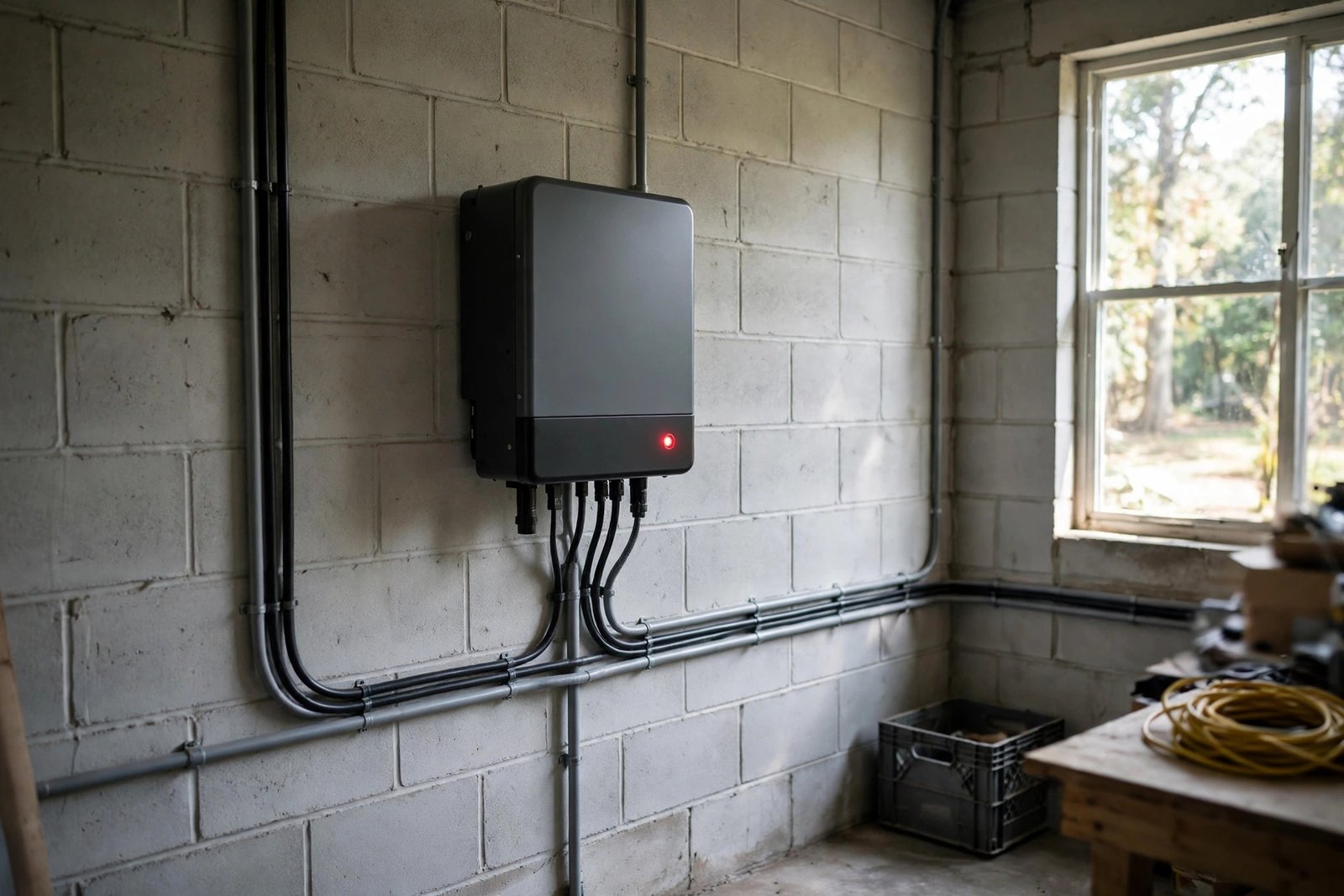
A hybrid inverter manages both your panels and a battery, so it is a more complex — and more expensive — unit. Replacement costs typically run $2,000–$4,000 (£1,600–£3,200) installed, and can be higher for larger battery systems.
- Hybrid inverter only: $1,500–$3,000 (£1,200–£2,400) for the unit, plus $400–$1,000 (£320–£800) labour.
- Re-pairing with the battery: the new inverter must be compatible with your existing battery brand and model — a mismatch can mean a new battery too, which is a much bigger bill.
- Extra setup time: battery settings, charge limits, and backup modes must be reconfigured and tested, adding an hour or two of labour.
If you are thinking of adding a battery at the same time as replacing a failed inverter, doing both together saves a second call-out and often a second permit. Ask your installer for a combined quote and compare it with the cost of doing the jobs separately.
What Drives the Final Bill Up or Down
Two homeowners with the same inverter can get very different quotes. These are the factors that move the price:
- System size: bigger systems need bigger, pricier inverters and more labour.
- Inverter brand: premium brands cost more upfront but often carry longer warranties and better monitoring.
- Roof or wall access: a ground-floor garage wall is cheap to work on; a high, steep roof or a loft with no floor is not.
- Age of the system: old wiring, isolators, or breakers may need replacing to meet current safety standards, adding $200–$600 (£160–£480).
- Location: labour rates are higher in large cities and in the south-east of England than in rural areas; US rates vary by state.
- Urgency: an emergency call-out can cost 50% more than a scheduled visit. If your system is down in summer, every day without it is lost generation — but a few days’ wait for a scheduled slot is usually worth the saving.
- Monitoring and commissioning: setting up the app, Wi-Fi connection, and export settings is part of a proper job — confirm it is included in the quote, not billed separately.
Repair or Replace? How to Decide
Sometimes a repair is the smarter spend. Use this simple test:
- Repair it if the fault is a fuse, a fan, a loose connection, or a firmware problem — and the unit is under 8 years old. A repair typically costs $150–$600 (£120–£480).
- Replace it if the inverter is over 10–12 years old, has failed twice, or the repair quote is more than half the price of a new unit. A new inverter also comes with a fresh warranty, often 10–12 years.
- Replace it if the model is discontinued and spare parts are unavailable — a repair that cannot be completed is money wasted.
- Consider upgrading if your panels have grown in number, or you plan to add a battery soon. A slightly larger or hybrid inverter now can be cheaper than a second replacement later.
Ask the installer to put the repair option in writing alongside the replacement quote, with the warranty each option carries. If a repair comes with only a 90-day warranty and a replacement with 10 years, the replacement is usually better value. Our broader solar panel repair cost guide covers the same decision for panels, wiring, and mounts.

How Warranty Can Cut the Cost to Zero
Before you pay anything, check the warranty — it is the single biggest factor in what you actually spend.
- Manufacturer warranty: most string inverters carry 5–12 years; microinverters often carry 25 years. If your unit is inside that window, the replacement unit itself may be free — you pay only labour, and sometimes not even that.
- Installer workmanship warranty: many installers guarantee their work for 2–10 years. If the failure was caused by a bad installation, the installer may cover the whole job.
- Extended warranty: some manufacturers sell extensions. If you bought one, check whether it is still active before ordering a replacement.
- What you will need: the inverter’s serial number, the purchase or installation date, and photos of any error display. Keep these together — a warranty claim without them is slow or refused.
If the manufacturer approves a warranty replacement, the new unit may be a refurbished or current-equivalent model rather than an identical one. That is normal. Confirm in writing who pays for shipping and labour before the work starts, because those are the costs that surprise people.
Extra Costs to Budget For
A replacement quote should cover the whole job. Watch for these items, and ask whether each one is included:
- Permit or notification fees: in the US, some areas require a permit or a utility notification when an inverter is replaced, typically $50–$250 (£40–£200). In the UK, a like-for-like swap usually needs no new planning permission, but the installer must notify the distribution network operator if the inverter size changes.
- New isolators or breakers: $100–$300 (£80–£240) if the old ones are worn or no longer meet current standards.
- Cable or conduit work: $100–$400 (£80–£320) if the new inverter’s connections sit in a different place.
- Monitoring subscription: most basic monitoring is free, but some advanced features are paid. Ask before you sign up.
- Disposal of the old unit: usually included, but confirm it — inverters contain electronics that must be recycled, not binned.
- Scaffolding: $300–$800 (£240–£650) if roof work is needed and safe access is not already in place.
Getting Quotes Without Overpaying
A little preparation saves real money:
- Get three written quotes. They should list the inverter make and model, labour, permits, and any extras separately — not a single lump sum.
- Compare like with like. A cheap quote using a smaller or short-warranty inverter is not the same job as a quote with a full-size, long-warranty unit.
- Ask about the warranty. A new inverter should come with at least a 5-year manufacturer warranty, and the installer’s work should be guaranteed too.
- Check credentials. In the US, look for a NABCEP-certified installer; in the UK, an MCS-certified installer. Both are signs of proper training and insurance.
- Ask what happens if the new unit fails. A good installer will explain the warranty process and who to call first.
- Do not pay everything upfront. A deposit of 25–50% is normal; the balance is due when the system is working and tested.
Safety Warnings
Do not open a solar inverter yourself. Inverters carry dangerous DC voltage from the panels and AC voltage from the grid, and capacitors inside can hold a charge even after the power is switched off. Opening the case can cause a serious electric shock, voids the warranty, and may breach your home insurance conditions.
Never touch exposed wiring. If you see burnt, melted, or damaged cables, a burning smell, or scorch marks, switch the system off at the AC isolator if you can do so safely, keep away from the unit, and call a qualified solar technician or electrician.
Do not work on the roof. Inverter work that involves the roof — microinverters, optimisers, or panel-side wiring — needs proper fall protection and equipment. Falls from roofs are one of the most common causes of serious DIY injury.
When to Call a Professional
Call a qualified solar technician or electrician if:
- The inverter shows no lights at all and the basic checks (breakers, isolator, firmware) have not fixed it.
- You smell burning, see smoke, or find scorch marks or melted parts.
- The inverter trips repeatedly, or the same error code keeps coming back after a reset.
- The unit is under warranty — a DIY attempt can void the claim.
- The replacement involves a battery, a larger inverter, or any change to the wiring or breaker panel.
- You are unsure about anything electrical. Solar systems combine high-voltage DC and mains AC; guessing is not worth the risk.
A professional diagnosis usually takes under an hour and gives you a firm answer — repair, replace, or warranty claim — instead of a guess. If your system is still under the installer’s workmanship warranty, call the original installer first.

FAQs
How much does it cost to replace a solar inverter?
For an average home, $1,000–$3,000 (£800–£2,400) including the new inverter and labour. A standard string inverter usually costs $1,200–$2,500 fitted, a single microinverter $200–$500, and a hybrid battery-ready inverter $2,000–$4,000.
Can I replace a solar inverter myself?
No. Inverter replacement involves high-voltage DC from the panels and mains AC from the grid, and it must be done by a qualified electrician or solar technician. DIY replacement is dangerous, voids the warranty, and may breach building and insurance rules.
How long does an inverter replacement take?
A straightforward like-for-like string inverter swap usually takes 2–4 hours, including testing and recommissioning. Jobs that need new wiring, a different inverter size, or a permit can take a full day or longer.
Will my warranty cover a broken inverter?
Often, yes. Most string inverters carry a 5–12 year manufacturer warranty and microinverters up to 25 years. If the unit is still covered, the replacement unit may be free and you pay only labour. Check the serial number and warranty terms before ordering a replacement.
Is it worth repairing an old inverter instead of replacing it?
If the repair costs less than half the price of a new unit and the inverter is under 8 years old, repair can make sense. If the unit is over 10–12 years old, has failed before, or parts are unavailable, replacement is usually better value because a new unit comes with a fresh warranty.
Does replacing the inverter affect my solar panels?
No. The panels stay in place; only the inverter box is swapped. The new inverter must be compatible with your panels’ voltage and power output, which your installer should confirm before ordering.
How long do solar inverters last?
String inverters typically last 10–15 years, while microinverters often last 20–25 years. Heat, poor ventilation, and power surges shorten inverter life, so good placement and airflow matter.
Conclusion
Replacing a broken solar inverter is one of the most common — and most expensive — solar repairs, but it is also one of the most predictable. For most homes, budget $1,000–$3,000 including labour, with the exact figure set by your inverter type, system size, and whether the old unit is still under warranty. Check the warranty first, rule out the simple faults, get three written quotes, and use a certified installer. A new inverter with a fresh 10-year warranty is not just a repair — it is another decade of reliable solar generation.
If your inverter is showing errors rather than sitting dead, start with our guides on common inverter error codes and updating inverter firmware — a surprising number of “broken” inverters come back to life with a reset or an update. And if your system is due a wider check, our solar panel repair cost guide covers what the other common fixes should cost.
Pingback: Is It Cheaper to Repair or Replace an Old Solar Panel? - Solar Fixing Guide