
Quick answer: You can clean solar panels safely without scratching the glass by rinsing off loose dust first, then washing gently with clean water and a soft brush or sponge — never a pressure washer, abrasive pad, or harsh chemical. Use plain water, or a small amount of mild soap if needed, and rinse thoroughly so no residue dries on the glass. Clean early in the morning or late in the evening when the panels are cool, work from the ground or a safe ladder position with a long-handled brush, and never walk on the panels. If your panels are on a steep or high roof, or the dirt will not come off with gentle cleaning, hire a professional solar cleaner instead.
Table of Contents
- Why Cleaning Your Solar Panels Matters
- How to Tell If Your Panels Need Cleaning
- What You Need (and What to Avoid)
- Safety First: Read This Before You Start
- How to Clean Solar Panels Step by Step
- Removing Stubborn Dirt Without Scratching
- Common Mistakes That Damage Solar Panel Glass
- How Often Should You Clean Your Panels?
- When to Hire a Professional Cleaner
- When to Call a Professional
- FAQs
Why Cleaning Your Solar Panels Matters
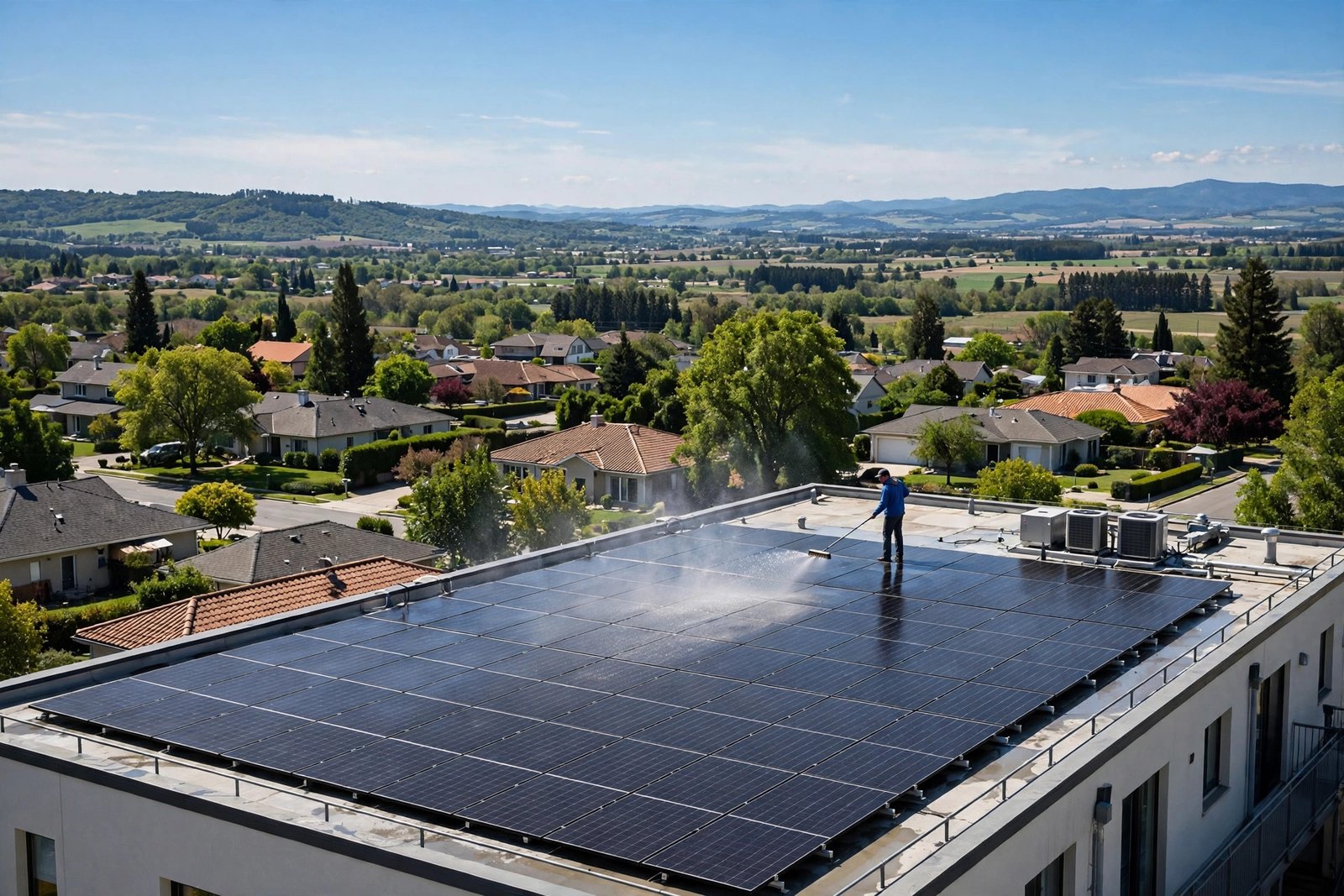
Solar panels work by turning sunlight into electricity, and anything sitting on the glass gets in the way. A layer of dust, pollen, leaves, bird droppings or road grime blocks some of the light before it reaches the solar cells underneath. The panels still work, but they produce less power than they should.
For most homeowners, light dust costs only a small amount of output, and regular rain washes much of it away. The real losses come from heavy soiling: a thick layer of dust after a dry spell, bird droppings that cover a whole cell, or sticky tree sap. Because the cells in a panel are wired in series, a heavily soiled patch can drag down the output of a much larger area — the same reason shading affects solar panel output more than people expect. If your solar panels are not producing enough power and there is no obvious fault, dirt is one of the first things to check.
Cleaning is also a chance to look at your panels. While you clean, you can spot problems early: a cracked panel, a loose clamp, yellowing or delamination and yellowing, or damage around the mounts. Catching these early is cheaper than fixing them later.
How to Tell If Your Panels Need Cleaning
You do not need to clean on a fixed schedule. Clean when the panels actually need it. Here are the signs:
- Visible dirt. Stand on the ground and look at the panels. If you can see a dull film, dust, leaves, bird droppings or sap, they need a wash.
- A drop in output. Check your monitoring app. If output has fallen on clear, sunny days with no change in weather, shading or system settings, soiling is a likely cause. Compare with the same month last year if you have the data.
- Uneven soiling. Bird droppings and sap matter more than an even layer of dust, because they block light from individual cells completely. A few droppings are worth cleaning off even if the rest of the panel looks fine.
- After a storm or dry spell. Dust storms, pollen season, nearby construction, or a long period without rain all leave panels dirty.
If the panels look clean from the ground and output is normal, leave them alone. Over-cleaning wastes your time and adds unnecessary wear to the glass.
What You Need (and What to Avoid)
You need very little equipment, and the most important rule is that everything that touches the glass must be soft.
What to use
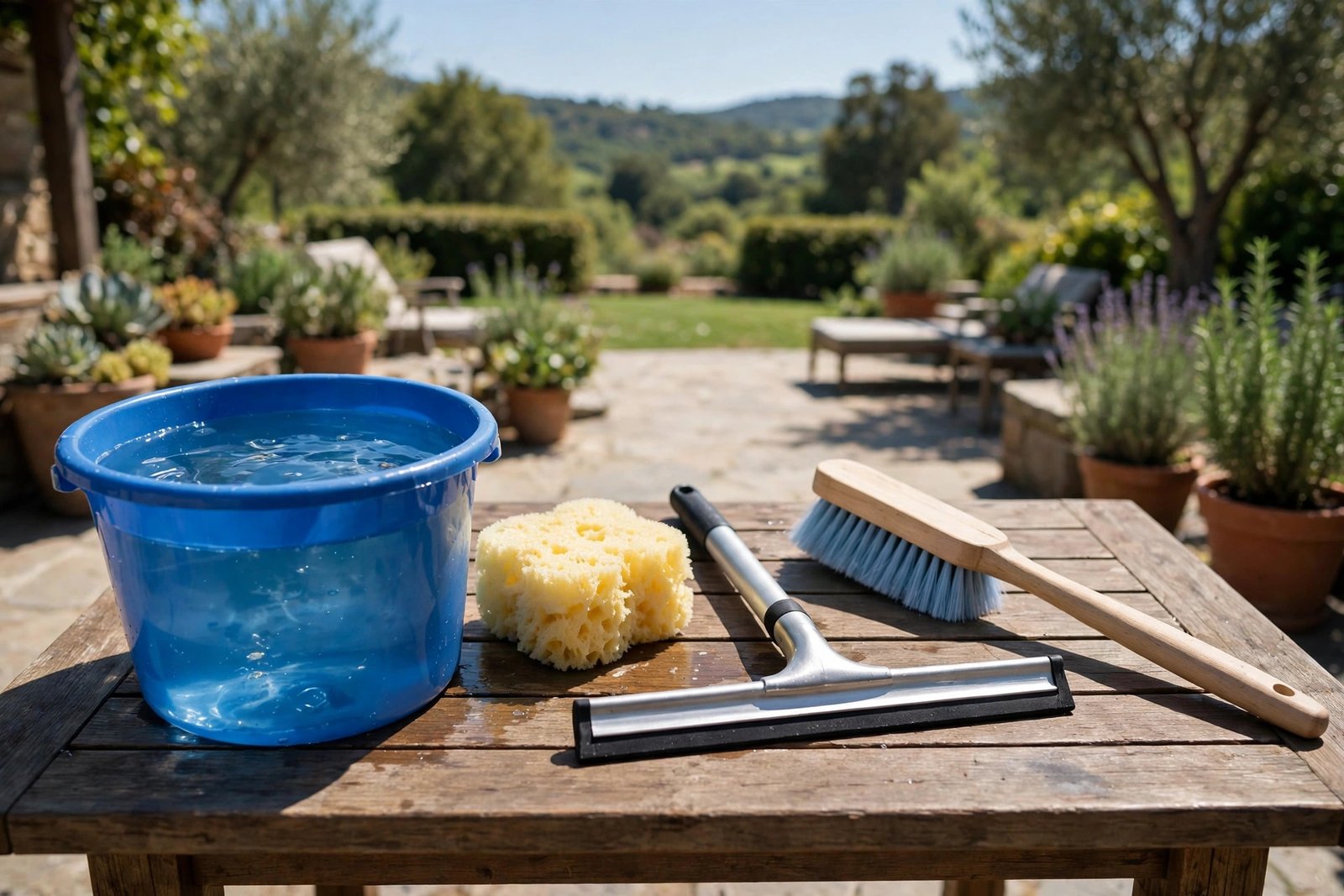
- A garden hose with a gentle spray nozzle, or a bucket of clean water.
- A long-handled soft brush made for washing cars or windows, with soft bristles. A water-fed pole brush is ideal for rooftop panels because it lets you work from the ground or a ladder.
- A soft sponge or microfibre cloth for stubborn spots you can reach safely.
- A squeegee (optional) to remove excess water and prevent water spots, especially in hard-water areas.
- Plain water, or a small amount of mild, non-abrasive soap if plain water is not enough. Rinse thoroughly afterwards.
What to avoid
- Pressure washers. High-pressure water can force water under the panel frame, damage seals, and crack the glass. Never use one on solar panels.
- Abrasive pads, scouring sponges, steel wool or stiff brushes. These scratch the glass and the anti-reflective coating. Scratches are permanent and they reduce light reaching the cells.
- Harsh chemicals. Avoid bleach, ammonia-based cleaners, solvents, oven cleaners and strong detergents. They can damage the glass coating, the frame and the seals.
- Hard or dirty water left to dry. In hard-water areas, tap water can leave mineral deposits on the glass. Rinse with clean water and squeegee off the excess, or use deionised water if your water is very hard.
- Metal tools. Never scrape dirt off with a blade, a metal scraper or a screwdriver. You will scratch the glass or chip the frame.
Safety First: Read This Before You Start
Cleaning solar panels involves water, electricity and often a roof. Take the safety part seriously.
- Never walk on solar panels. Panels are not designed to carry your weight. Walking on them can crack the glass, damage the cells underneath, and void your warranty. It is also a fall risk.
- Do not climb on a steep or high roof. If you cannot reach the panels safely from the ground with a long-handled brush, or from a stable ladder on flat ground, do not attempt it. Hire a professional.
- Clean when the panels are cool. Early morning or late evening is best. Hot glass plus cold water can cause thermal shock, which can crack the glass. Cleaning in direct midday sun also dries the water too fast and leaves streaks and mineral deposits.
- Turn the system off first. Follow your inverter’s shutdown procedure (usually a switch on the inverter and the AC isolator) before you start, and switch it back on when you are finished. This removes the risk of electric shock from wet equipment.
- Never touch exposed wiring. If you see damaged cables, a loose connector or an exposed junction box while cleaning, stop and call a technician. Do not open live electrical equipment.
- Watch your footing. Wet roofs, wet ladders and wet patios are slippery. Wear shoes with good grip, and never work on a roof in wet or windy weather.
- Check your warranty. Some manufacturers and installers have specific cleaning rules. Using a pressure washer or an unapproved chemical can void the warranty, so check the manual first.
How to Clean Solar Panels Step by Step
Follow these steps in order. The whole job usually takes 20 to 40 minutes for a typical home array.
Step 1: Pick the right time
Choose a cool, overcast morning or evening. Avoid the middle of the day when the panels are hot, and avoid cleaning in strong wind or rain.
Step 2: Shut the system down
Turn off the inverter using its shutdown procedure, and switch off the AC isolator. This is a precaution — panels still produce voltage in daylight, but a shut-down system is safer to work around.
Step 3: Rinse off the loose dirt
Spray the panels gently with a hose, or pour clean water over them. This removes loose dust, leaves and grit. This step matters more than people think: if you scrub a dry, gritty panel, the grit acts like sandpaper and scratches the glass. Always rinse first, and never brush a dry panel.
Step 4: Wash gently with a soft brush
Dip your soft brush in clean water and wash the glass with light, even strokes. Let the water and the brush do the work — do not press hard. Work from the top of the panel downwards so dirty water runs off the panel instead of across clean glass. If you use a small amount of mild soap, use only a little, and only on the glass.
Step 5: Rinse thoroughly
Rinse the panels with clean water until all soap and loosened dirt are gone. Soap residue left on the glass dries into a film that attracts more dirt and can slightly reduce output.
Step 6: Remove excess water
If you can reach the panels safely, run a squeegee over the glass to remove standing water. This is especially useful in hard-water areas, where water left to dry leaves mineral spots. Do not lean over a roof edge to reach a panel — if you cannot squeegee it safely, let it air-dry.
Step 7: Inspect and switch back on
While the panels dry, look for anything unusual: cracks in the glass, discoloured patches, loose frames or damaged wiring. If you spot a cracked solar panel or damaged wiring, leave the system off and call a technician. Otherwise, switch the system back on and check your monitoring app to confirm it is producing power normally.
Removing Stubborn Dirt Without Scratching
Some dirt does not come off with a rinse and a soft brush. Here is how to handle the common stubborn types, still without scratching the glass.
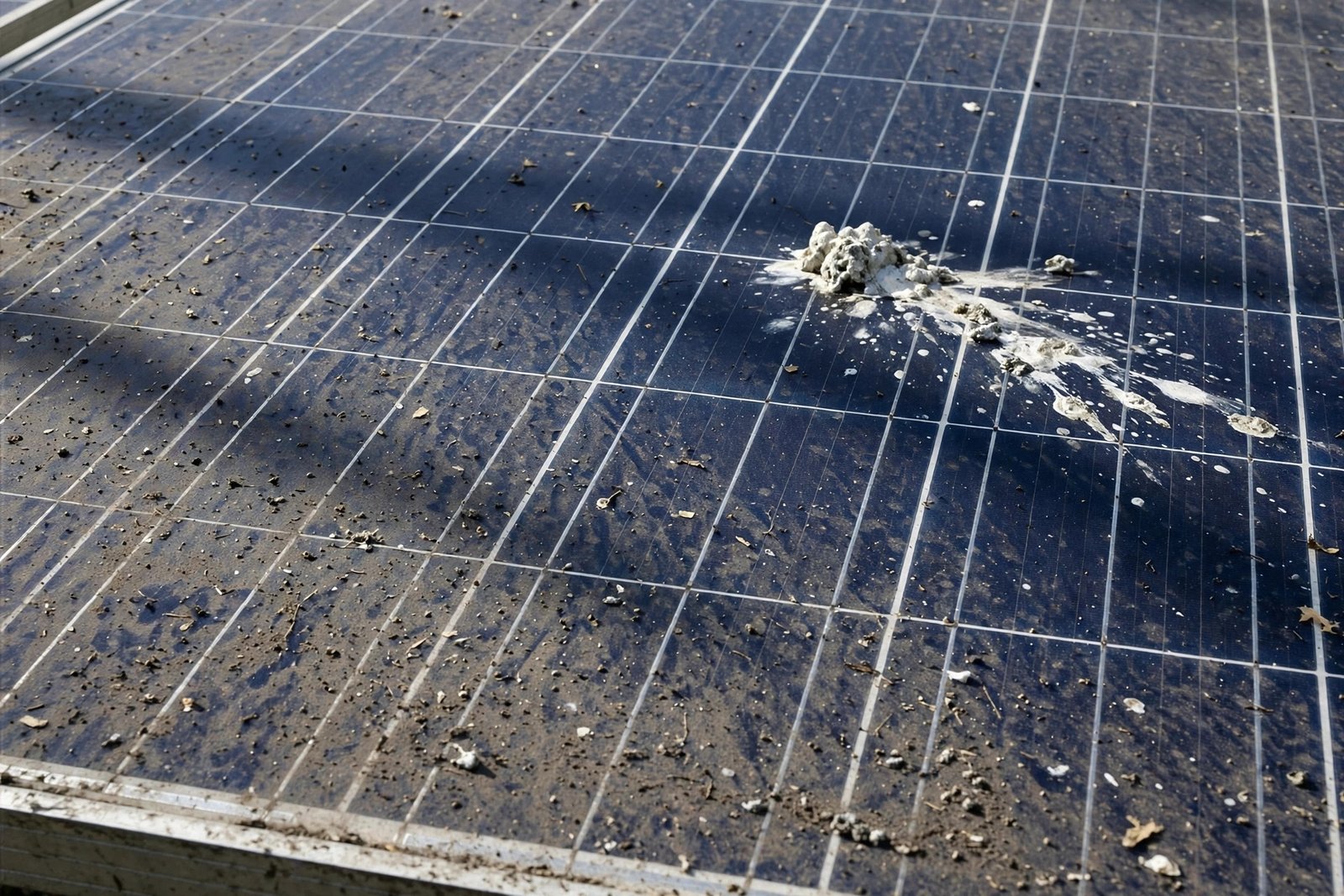
- Bird droppings. Soak the spot with water for a few minutes to soften it, then wipe gently with a soft, wet sponge. Repeat if needed. Never scrape a dried dropping off with a hard object.
- Tree sap. Soak with warm (not hot) water and a little mild soap. Let it sit, then wipe gently with a microfibre cloth. Patience is the only safe method — scraping sap scratches glass.
- Hard water stains. A diluted white vinegar solution (roughly one part vinegar to four parts water) can help dissolve mineral deposits. Apply it, leave it for a minute or two, wipe gently, and rinse thoroughly with clean water. Do not use vinegar on the frame or seals more than necessary, and rinse well.
- Pollen and dust film. A second wash with clean water and the soft brush usually removes it. Pollen is sticky when damp, so rinse, wash, then rinse again.
- Lichen or moss. If green growth has taken hold, usually on panels in shaded, damp spots, soak and wash gently. If it does not come off, call a professional cleaner — scrubbing hard will damage the glass.
If a stain does not come off after two gentle attempts, stop. Repeated scrubbing is how scratches happen. A professional cleaner has the right tools, and some marks are simply part of the panel’s ageing and are not worth damaging the glass to remove.
Common Mistakes That Damage Solar Panel Glass
| Mistake | What happens | Do this instead |
|---|---|---|
| Pressure washer | Forces water into seals, can crack glass or lift the frame | Garden hose on a gentle spray |
| Scrubbing a dry panel | Grit on the glass acts like sandpaper | Always rinse first, then wash wet |
| Abrasive pads or steel wool | Permanent scratches in the glass and coating | Soft brush, sponge or microfibre only |
| Cleaning hot panels at midday | Thermal shock can crack glass; water dries into spots | Clean early morning or evening |
| Harsh chemicals or bleach | Damages coatings, frames and seals | Plain water, or a little mild soap |
| Walking on the panels | Cracks cells and glass, voids warranty | Use a long-handled brush from the ground or ladder |
| Scraping with a blade | Deep scratches and chipped glass | Soak the spot, then wipe gently |
How Often Should You Clean Your Panels?
There is no single answer, because it depends on where you live. A good rule is to inspect your panels every three to six months and clean only when they are visibly dirty or output has dropped.
- Rainy areas: Regular rain usually keeps panels clean enough. One or two cleans a year, or none at all, may be enough.
- Dry, dusty areas: Dust builds up fast. Check monthly during dry spells and clean when you can see a film on the glass.
- Near trees: Pollen, sap, leaves and bird droppings mean more frequent cleaning, especially in spring and autumn.
- Near roads or construction: Traffic dust and building dust settle quickly. Inspect monthly.
- Coastal areas: Salt spray can leave a film on the glass. Rinse more often, and always rinse with fresh water.
Do not clean on a fixed weekly schedule. Cleaning too often wastes water and time, and every wash is a small amount of wear on the glass. Clean when the panels need it, not by the calendar.
When to Hire a Professional Cleaner
Some jobs are better left to a professional solar cleaning service. Call one if:
- Your panels are on a steep, high or hard-to-reach roof.
- You cannot reach the panels safely from the ground or a ladder.
- The dirt will not come off after two gentle cleaning attempts.
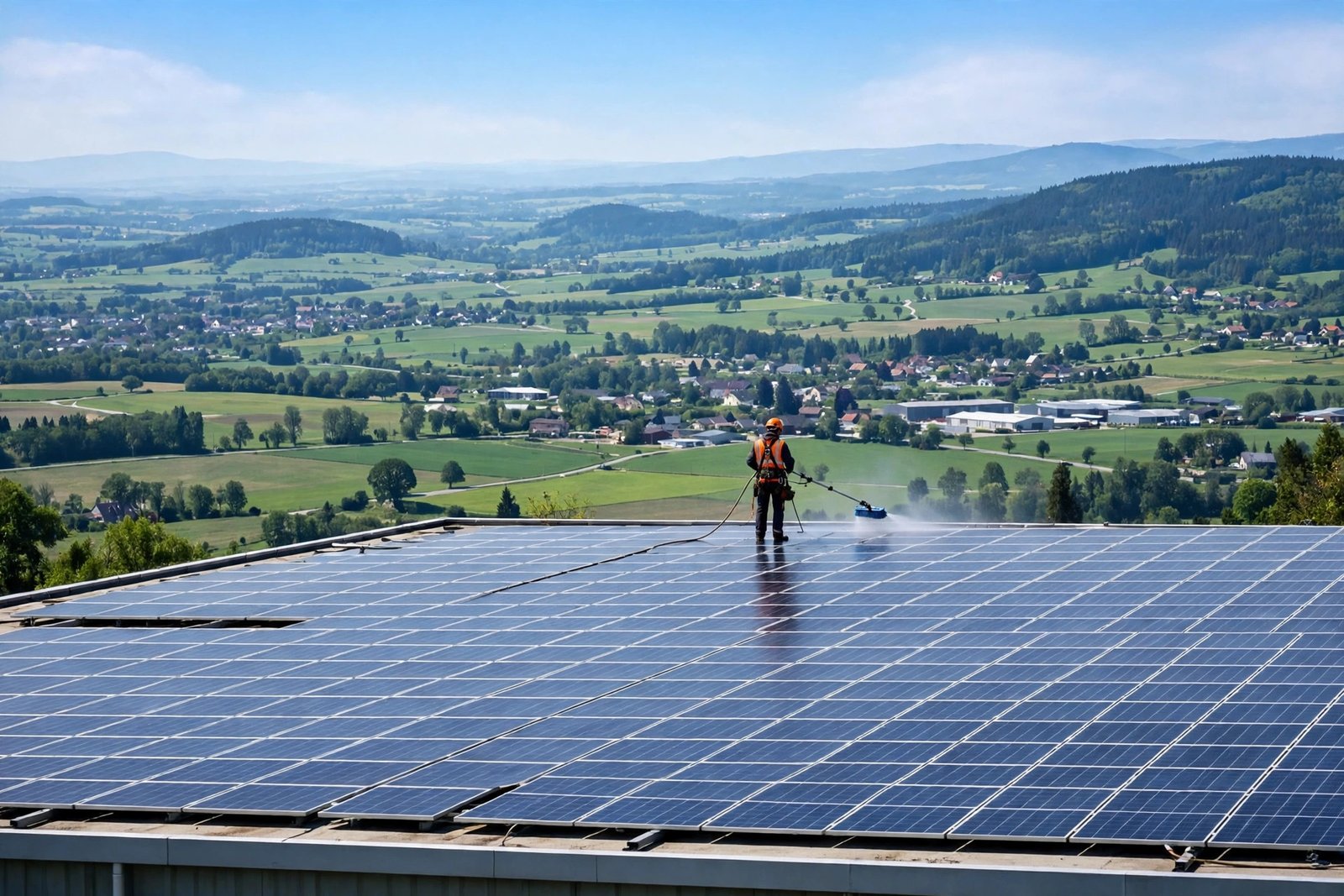
- You have a large array — a professional with a water-fed pole system will do it faster and more safely.
- You have a physical limitation that makes ladder or roof work unsafe.
- Your installer or manufacturer requires professional cleaning to keep the warranty valid.
A professional cleaner should use deionised water and soft brushes, and should not use a pressure washer. Ask what equipment they use before you book — if they mention a pressure washer, find another cleaner.
When to Call a Professional
Cleaning is a homeowner job, but some problems you find while cleaning are not. Call a qualified solar technician or electrician if:
- You find a cracked or shattered panel, or a panel with burnt or discoloured patches.
- You see damaged, loose or exposed wiring, or a loose MC4 connector.
- Output does not recover after cleaning, or the system shows an error. Testing solar panel voltage with a multimeter is a job for someone trained to work with live DC circuits — do not attempt it without the right knowledge and equipment.
- Water is getting into the roof around the mounts, or you see staining on the ceiling below the array. A roof leak around solar panel mounts needs a roofer or solar installer, not a cleaning brush.
- The panels are very hot, smell of burning, or show scorch marks. Switch the system off and call a professional immediately.
FAQs
Can I clean my solar panels with a pressure washer?
No. Pressure washers can force water under the frame and into the seals, crack the glass, and damage the panel. Use a garden hose on a gentle spray setting instead.
What is the best time of day to clean solar panels?
Early morning or late evening, when the panels are cool. Cleaning hot panels in midday sun can cause thermal shock, and the water dries too quickly, leaving streaks and mineral deposits.
Can I use dish soap to clean solar panels?
A small amount of mild dish soap is acceptable if plain water is not enough, but rinse very thoroughly afterwards. Soap residue left on the glass dries into a film. Never use abrasive cleaners, bleach, ammonia or solvents.
How often should I clean my solar panels?
Inspect them every three to six months and clean only when they are visibly dirty or output has dropped. Rainy areas may need one clean a year or none; dry, dusty areas or homes near trees may need cleaning several times a year.
Will cleaning my solar panels increase their output?
Yes, if dirt was blocking light. Light dust usually costs only a small amount of output, so the gain may be modest. Heavy soiling, bird droppings or sap can cost much more, and cleaning those off can restore a noticeable amount of power.
Is it safe to walk on solar panels while cleaning them?
No, never walk on solar panels. They are not designed to carry your weight, and walking on them can crack the glass and damage the cells underneath. It can also void your warranty. Always clean from the ground, a ladder, or hire a professional.
Conclusion
Cleaning solar panels is a simple, gentle job — and that is the whole secret. Rinse first, wash with clean water and a soft brush, rinse again, and let the panels dry. Avoid pressure washers, abrasive tools and harsh chemicals, clean when the panels are cool, and never walk on them or climb a roof you cannot work on safely. Inspect your panels every few months, clean them when they are actually dirty, and call a professional for anything you find that looks like damage rather than dirt. Looked after this way, your panels will keep producing clean power for years without a single scratch.