
Quick answer: To use solar power at night without draining your battery, charge the battery fully before sunset, keep a reserve of 20–30% that you never use, and move heavy jobs like washing and water heating into the daytime. Run only light loads at night — LED lights, the fridge, phone charging and the television — and switch off standby devices. Check your battery level on your monitoring app before bed, and on cloudy winter days, use less in the evening so the battery lasts until morning. If your battery is empty before midnight, you are using too much at night or your battery is too small for your evening loads.
Table of Contents
- Why Night Use Drains a Solar Battery So Fast
- How Much Power Do You Actually Need at Night?
- Charge Your Battery Fully Before Sunset
- Set a Reserve You Never Use
- Cut Your Night Loads to the Essentials
- Shift Heavy Jobs to the Daytime
- Use Your Inverter Settings to Protect the Battery
- Plan for Cloudy Days and Winter
- Safety Reminders
- When to Call a Professional
- FAQs
- Conclusion
Why Night Use Drains a Solar Battery So Fast
Your solar panels stop producing power when the sun goes down, so everything your home uses at night comes from one of two places: your battery or the grid. If you have a battery, it is the only store of solar power you have until sunrise, and it is usually much smaller than people expect. A typical home battery holds enough energy for a few hours of normal evening use — not a full night of heavy appliances.
Many solar owners are surprised when their battery is empty by 10pm. The cause is rarely a faulty battery. It is usually a mismatch between what the battery can hold and what the household uses in the evening: cooking, hot water, heating or cooling, the washing machine, and the television all running at the same time. Each one is normal on its own, but together they can drain a battery in a few hours.
The other common cause is starting the night with a battery that was never fully charged. If the battery only reached 60% during the day — because the washing machine and dishwasher used the solar power first — there is simply less to use at night. The fix is a mix of charging the battery properly during the day and using less in the evening. For more ways to cut the grid power you buy, see our guide on how to reduce your electricity bill with solar.
How Much Power Do You Actually Need at Night?
Before you can protect your battery, you need to know what your home uses after dark. The evening loads in most homes are:
- Fridge and freezer: they run all night, but they cycle on and off and use a modest amount of power.
- Lights: LED bulbs use very little; old halogen or incandescent bulbs use far more.
- Television and internet: a modern television and a router use a small amount of power together.
- Phone and laptop charging: small loads, but they add up if several devices charge at once.
- Heating or cooling: this is often the biggest night load. A space heater or air conditioner can drain a battery quickly.
- Cooking: an electric oven, kettle or microwave used in the evening is a heavy, short load.
A simple way to measure your night use is to check your monitoring app or smart meter. Look at how much energy your home used between sunset and sunrise over the last few nights. Compare that number with your battery’s usable capacity, which is written on the battery or in its manual. If your night use is bigger than the usable capacity, the battery will run out before morning — and the answer is to cut loads, not to blame the battery.
Charge Your Battery Fully Before Sunset
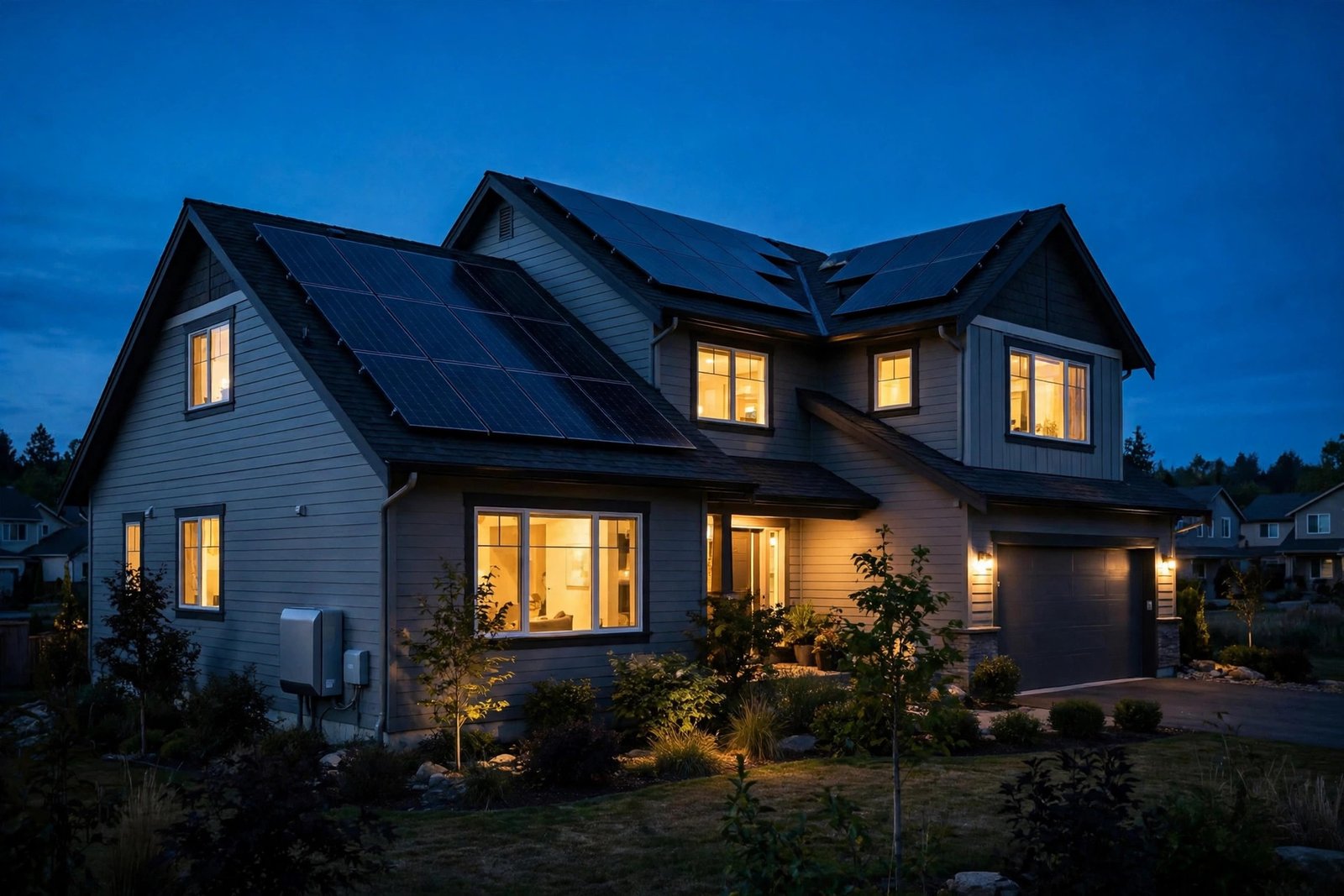
The single most important habit is to let the battery charge fully during the day. Many owners run heavy appliances at midday and leave the battery to charge with whatever is left, which means it often enters the evening only partly charged. Reverse the order on days when you need a full battery: let the battery charge first, then run the big jobs with the remaining solar power.
Most modern inverters let you choose a charging priority. A common setting is “charge battery first” or “solar to battery priority” in the late afternoon. If your system has this option, use it in the last two hours before sunset so the battery tops up before the sun goes down. If you are unsure how to change the setting, check the inverter manual — and do not open the inverter or change wiring yourself.
Also keep the battery itself in good condition, because a neglected battery holds less charge. Clean terminals and correct water levels matter for lead-acid batteries — see our guides on cleaning solar battery terminals and checking lead-acid battery water levels, and on equalization charging for keeping older batteries healthy.
Set a Reserve You Never Use
Every battery has a limit on how far it should be discharged. Draining a battery to zero again and again shortens its life, and for lead-acid batteries it can cause real damage. Most systems let you set a minimum level — a reserve — below which the battery stops supplying power and the home switches to the grid.
A sensible reserve for most homes is:
- Lithium batteries: keep at least 10–20% in reserve.
- Lead-acid batteries: keep at least 40–50% in reserve, because deep discharge wears them out much faster.
These are general guides, not rules for every battery. Your battery manual or your installer will state the safe minimum for your exact model — follow that number, not a guess. Setting a reserve does two things: it protects the battery’s lifespan, and it keeps a small amount of power in hand for an overnight emergency, such as a power cut.
If your battery reaches its reserve level every night, that is a clear signal. Either your night loads are too big, or your battery is too small for the way you live. Both problems have solutions, but they are different ones — cutting loads is free, while a bigger battery costs money.
Cut Your Night Loads to the Essentials
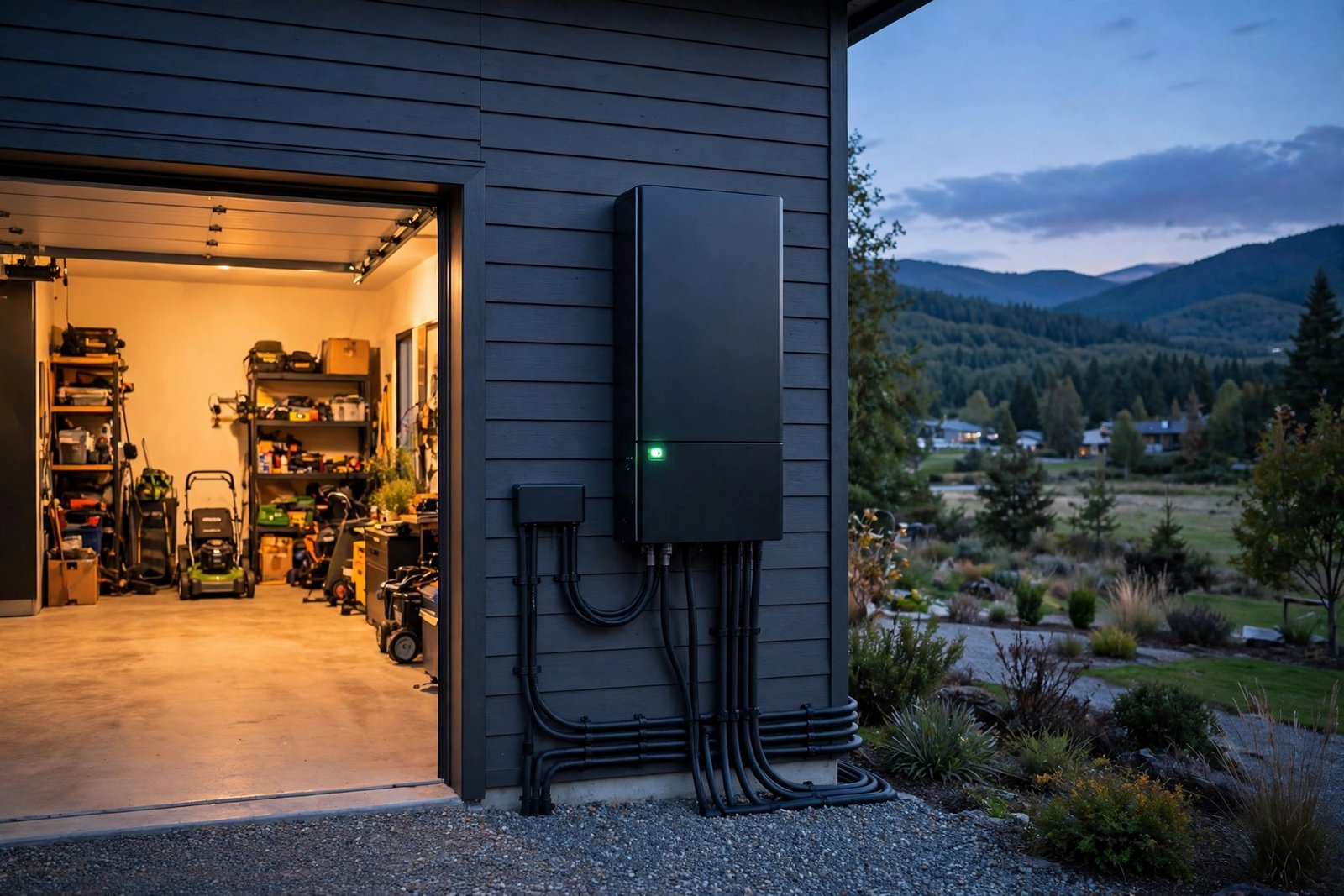
The cheapest way to make your battery last the night is to use less after dark. These changes cost little or nothing:
Switch to LED lighting
If any room still uses old halogen or incandescent bulbs, replace them with LEDs. An LED uses a fraction of the power for the same brightness, and in a home with many lights the saving is real. Turn off lights in empty rooms — it sounds obvious, but it is the most common waste at night.
Kill standby loads
Televisions, game consoles, chargers and set-top boxes keep drawing power in standby. Together, these “vampire loads” can use a noticeable amount of electricity overnight. Switch them off at the wall, or plug them into a power strip you can switch off with one button before bed.
Cook earlier or cook smart
If you can, cook the main meal before sunset while the panels are still producing. If dinner has to be in the evening, use the microwave or a slow cooker instead of the oven where possible — a slow cooker uses far less power over a long period than an oven does for an hour.
Delay the dishwasher and washing machine
Never run the dishwasher or washing machine at night on battery power. Use the delay-start function so they run at midday on solar power instead. Our guide on the best times to run heavy appliances on solar power explains how to plan the whole day around your peak sun hours.
Keep heating and cooling modest
A single electric space heater can use more power in an hour than all your lights and television use in a whole evening. If you heat or cool at night, set the thermostat a degree or two lower in winter or higher in summer, close doors to rooms you are not using, and use blankets or fans instead of running a heater or air conditioner all night.

Shift Heavy Jobs to the Daytime
Night use is only half the problem. The other half is what you do during the day. Every unit of solar power used by a heavy appliance at midday is a unit that cannot go into the battery for the evening. So plan your day around two goals: run the big jobs when the sun is strongest, and leave enough solar power to fill the battery before sunset.
A practical daytime routine looks like this:
- Morning: load the washing machine and dishwasher, but do not start them yet.
- 10am–2pm: run the washing machine, then the dishwasher, using delay-start timers.
- 2pm–4pm: heat water if you have an electric water heater, and let the battery top up.
- Before sunset: check the battery level. If it is not full, switch off any remaining heavy loads and let the last sunshine go into the battery.
Timers and smart plugs make this easy. Load the machines in the morning, set the timer, and the house does the rest while you are out. The habit costs nothing and it is the difference between a battery that lasts until morning and one that gives up at 10pm.
Use Your Inverter Settings to Protect the Battery
Most modern inverters and hybrid systems have settings that help at night. Worth checking in your manual or monitoring app:
- Discharge limit: set the lowest level the battery is allowed to reach, as described above.
- Night or eco mode: some inverters reduce their own standby power use at night. If yours has this mode, turn it on.
- Time-of-use settings: if your electricity tariff has cheap overnight grid power, you can set the system to use cheap grid power at night and save the battery for a power cut. That is a good option when the battery is small.
- Charge from grid: on a cloudy winter day, some systems can top up the battery from cheap overnight grid power so you start the next day with a full battery. Only use this if your tariff makes it worthwhile.
Do not guess at settings you do not understand, and never open the inverter or battery cabinet to change wiring. If a setting is unclear, ask your installer or a qualified solar technician. Wrong settings can damage the battery or leave your home without power when you need it.
Plan for Cloudy Days and Winter
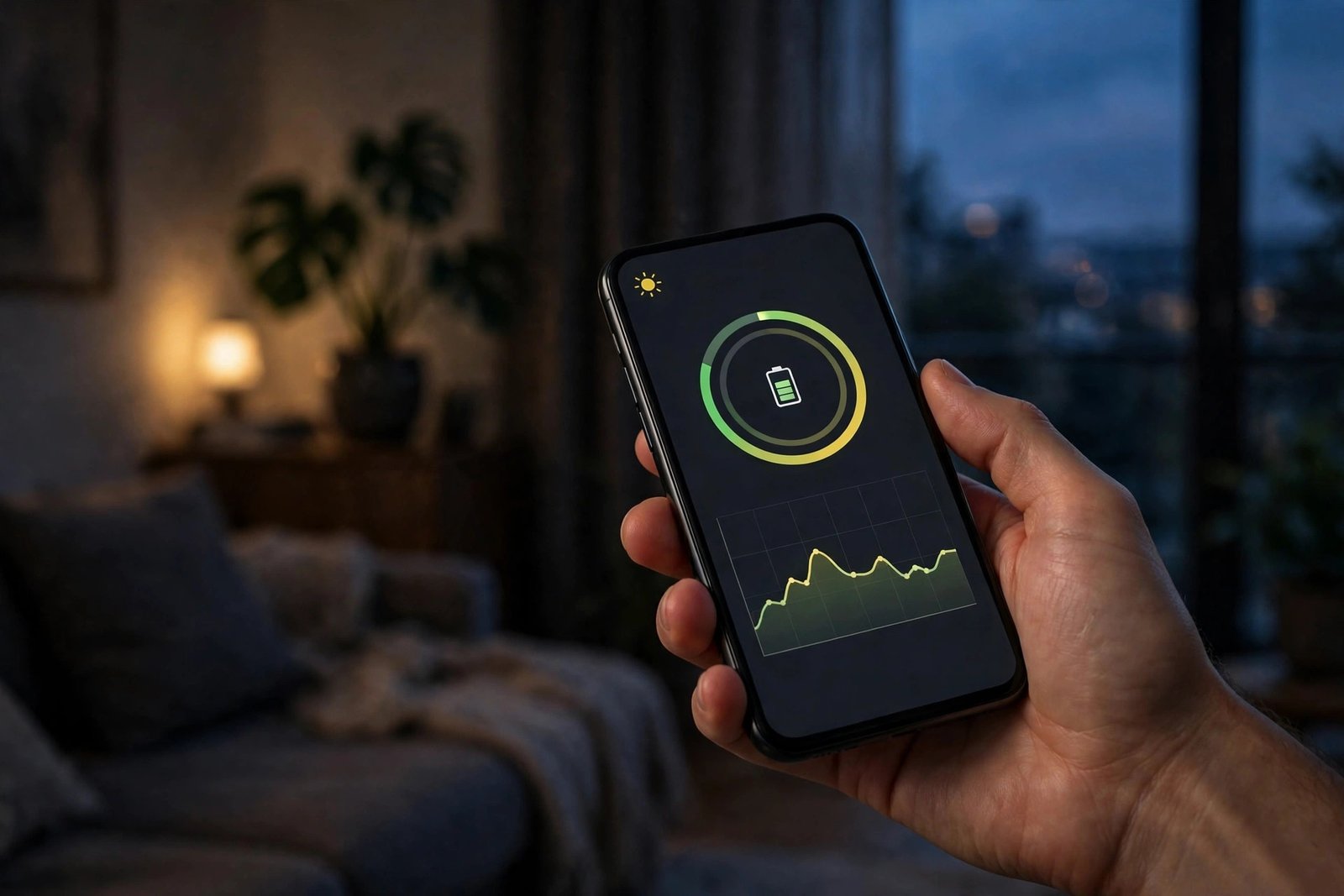
On a bright summer day your battery will usually charge fully and last the night with careful use. On a cloudy day or in winter, production can be far lower and the battery may only reach half charge. On those days you need a different plan:
- Use even less in the evening — keep it to lights, the fridge and one screen.
- Skip the tumble dryer and the dishwasher that day, or run them on cheap overnight grid power if your tariff allows it.
- Charge phones and laptops during the day while the panels are producing, not at night.
- Check the weather forecast in the morning. If tomorrow looks cloudy too, save battery power tonight instead of using it all.
Winter is the hardest season for night use because the days are short and the nights are long. If your battery runs out every winter night even with careful use, your battery may simply be too small for winter evenings — and that is a sizing question for a professional, not a fault to fix yourself.
Safety Reminders
Using solar power at night is safe when the system is set up properly, but batteries and inverters store a large amount of energy. Keep these points in mind:
- Never open a battery, inverter or consumer unit to change settings or wiring you do not understand. Solar equipment can carry live DC voltage even at night, because the battery is still charged.
- Keep the area around your battery clear and ventilated, and follow the manufacturer’s guidance on ventilation — this matters most for lead-acid batteries.
- If you smell burning, hear buzzing from the inverter, or see swelling or leaking on a battery, switch the system off at the isolator if you know how to do so safely, and call a professional. Do not touch a leaking or swollen battery.
- Do not run several heavy appliances from one extension lead at night. Use fixed wall sockets and check that plugs and sockets are in good condition.
When to Call a Professional
Call a qualified electrician or solar technician if your battery runs out before midnight even when you use very little at night, if the battery level drops suddenly or the inverter shows a fault, or if the battery is swelling, leaking or very hot. These can be signs of a failing battery, a faulty inverter, or a system that was never sized correctly for your home.
Also call a professional if you want to add a second battery, change discharge settings you do not understand, or set up time-of-use charging from the grid. A technician can check whether your battery is healthy, whether your wiring can handle more capacity, and what size battery your evening use actually needs. If you are unsure whether a job is safe to do yourself, read our guide on DIY solar repair vs hiring a pro first. For any work on live equipment, use the right protective gear — see essential safety gear for DIY solar owners.
FAQs
Can I use solar power at night?
Yes, but only the power stored in your battery. Solar panels produce nothing at night, so everything you use after dark comes from the battery or from the grid. A full battery with light evening loads will usually last until morning.
Why does my solar battery drain so fast at night?
Usually because evening loads are too big for the battery, or the battery did not charge fully during the day. Heaters, ovens, washing machines and dishwashers are the biggest drains. Check your night use on your monitoring app and compare it with your battery’s usable capacity.
Should I drain my solar battery to zero every night?
No. Draining a battery to zero regularly shortens its life, and for lead-acid batteries it can cause serious damage. Set a reserve — around 10–20% for lithium and 40–50% for lead-acid — and let the home switch to the grid below that level.
What should I run at night on battery power?
Lights (LED), the fridge and freezer, the television, the router and phone charging. Avoid washing machines, dishwashers, tumble dryers, ovens and space heaters at night — run those during the day on solar power.
Is it better to charge the battery first or run appliances first?
Run the heavy appliances first during peak sun, then let the battery charge with the afternoon sun. But in the last hour or two before sunset, let the battery top up to full so it starts the night at 100%.
How do I know if my battery is too small?
If the battery runs out before midnight even when you only run lights, the fridge and the television, and it was fully charged at sunset, it is probably too small for your evening use. A technician can measure your actual night consumption and recommend the right size.
Can I charge my solar battery from the grid overnight?
Some hybrid systems can do this. It makes sense only if you have a cheap overnight electricity tariff. Otherwise you are buying grid power to store it, which costs more than using the grid directly.
Conclusion
Using solar power at night without draining your battery comes down to three habits: charge the battery fully before sunset, keep a reserve you never use, and keep night loads light. Run the washing machine, dishwasher and water heater during the day, switch off standby devices, use LED lighting, and check your battery level before bed. On cloudy days and in winter, use even less in the evening. If your battery still runs out early every night despite careful use, it may be too small or wearing out — and that is a job for a qualified technician, not a setting to guess at. Get the routine right and your stored solar power will carry you comfortably through the night.