
Quick answer: To reduce your electricity bill with solar, use as much of your own solar power as possible while the sun is shining. Run heavy appliances such as the washing machine, dishwasher and water heater during peak sun hours, usually between late morning and mid-afternoon. Cut wasted energy first — fix vampire loads, switch to LED lighting and stop heating or cooling empty rooms. Then shift the remaining usage into daylight hours, keep your panels and battery healthy, and check your monitoring app regularly so you can see what is actually using power. Small daily changes add up: the less grid electricity you buy, the lower your bill.
Table of Contents
- Why Is My Electricity Bill Still High With Solar?
- Tip 1: Run Heavy Appliances When the Sun Is Shining
- Tip 2: Find and Stop Vampire Loads
- Tip 3: Heat Water With the Sun, Not the Grid
- Tip 4: Switch to LED Lighting Throughout the Home
- Tip 5: Use Your Battery Wisely
- Tip 6: Heat and Cool Smarter
- Tip 7: Check Your Monitoring App Every Week
- Tip 8: Keep Your Panels Clean and Shaded-Free
- Tip 9: Use Timers and Smart Plugs to Automate Saving
- Tip 10: Review Your Tariff and Export Deal
- A Simple Daily Routine That Saves Money
- Safety Reminders
- When to Call a Professional
- FAQs
- Conclusion
Why Is My Electricity Bill Still High With Solar?
Many homeowners are surprised when their first bill after installing solar panels is higher than they expected. The panels are working, the sun is shining — so where is the saving? The answer is usually timing. Solar panels only produce power during daylight, and most homes use most of their electricity in the morning and evening, when the panels produce little or nothing. If you run the washing machine at 7am and cook dinner at 7pm, you are buying grid electricity for both, even though your panels produced plenty of free power in between.
The second reason is that some of the power your panels produce goes to waste. If your system exports surplus electricity to the grid, you are usually paid far less for it than the price you pay to buy electricity back later. Every unit of solar power you use yourself is worth more than a unit you export. So the goal is simple: use your own solar power directly, as much as possible, and buy as little grid electricity as you can.
The third reason is waste you cannot see. Standby power, old inefficient appliances, poor insulation and habits like leaving lights on in empty rooms all add up. Solar panels cannot fix waste — they only make the waste cheaper to run. Cut the waste first, then shift what is left into daylight hours. That is how the bill comes down.

Tip 1: Run Heavy Appliances When the Sun Is Shining
This is the single most effective change most solar households can make, and it costs nothing. Washing machines, dishwashers, tumble dryers, ovens and vacuum cleaners are the biggest electricity users in most homes. If you run them while your panels are producing, they run on free solar power. If you run them in the evening, they run on grid power you pay for.
Peak solar production is usually between late morning and mid-afternoon — roughly 10am to 4pm in summer, with a shorter window in winter. That is the time to do your laundry, run the dishwasher and vacuum the house. It helps to build a simple habit: load the washing machine in the morning and start it before lunch, rather than in the evening.
A few practical ways to make this easy:
- Use delay-start timers. Most modern washing machines and dishwashers have a delay-start button. Load them at night and set them to run at midday.
- Do one big load, not several small ones. A full washing machine uses far less electricity per item than two half loads.
- Wash at lower temperatures. Heating water is what makes washing expensive. A cold or 30-degree wash cleans everyday laundry well and uses much less energy.
- Skip the tumble dryer when you can. Line-drying is free, and it is the easiest saving of all on a sunny day.
Do not try to run everything at once. If the washing machine, dishwasher and oven all run together at noon, their combined demand can still exceed what your panels produce, and the rest comes from the grid. Spread heavy jobs across the solar window instead.
Tip 2: Find and Stop Vampire Loads
Vampire loads — also called standby power — are appliances that keep using electricity even when they look switched off. Televisions, games consoles, set-top boxes, phone chargers, microwaves with clocks, printers and old stereos all draw a small amount of power around the clock. Each one is small, but a house can easily have a dozen of them, and together they run 24 hours a day, including all night when your panels produce nothing.
Finding them is simple. Walk around the house in the evening and look for standby lights, glowing displays and warm chargers. Anything with a red or green light, a clock display or a power brick that feels warm is drawing power. The fix is equally simple:
- Switch off at the wall. The only way to stop standby power completely is to switch the socket off or unplug the device.
- Use switchable power strips. Put the TV, console and set-top box on one strip and switch the whole strip off with one button when you go to bed.
- Unplug chargers. A phone charger left in the socket keeps drawing power even with no phone attached.
- Check old appliances. Older devices often draw far more standby power than modern ones. If an old TV or stereo is always warm, consider replacing it.
Overnight standby loads are the worst kind for a solar home, because they drain your battery while the panels are dark. If your battery keeps running low overnight, standby loads are one of the first things to check — see our guide on how to fix rapid solar battery drain overnight.
Tip 3: Heat Water With the Sun, Not the Grid
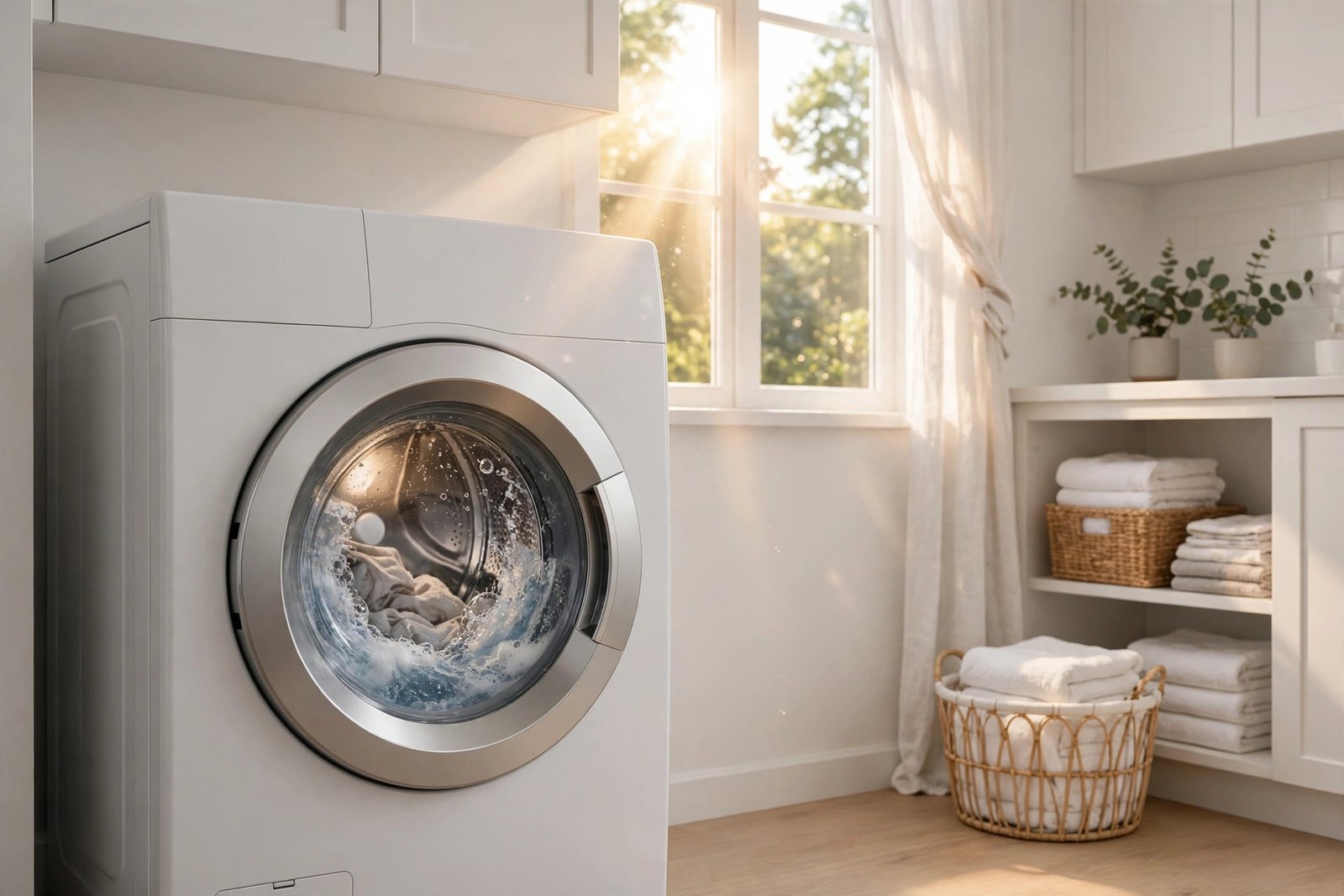
Heating water is one of the most expensive jobs in any home. Electric water heaters, immersion heaters and electric showers use a lot of power, and they often run at exactly the wrong time — early morning and evening, when the panels are not producing. Shifting water heating into the solar window can make a real difference to your bill.
If you have an electric water heater or immersion heater, put it on a timer so it heats during the middle of the day. The hot water stays hot in a well-insulated tank for the evening, so you lose nothing and gain free heating. Some solar systems include a device that automatically sends surplus solar power to the water heater — if yours has one, make sure it is switched on and set up correctly. If you are considering adding one, ask your installer about it; it is one of the cheapest ways to use surplus solar power instead of exporting it.
Shorter showers and a lower water temperature also help. Every minute less under a hot shower is electricity saved, and a water heater set a few degrees lower still gives you a comfortable shower while using less power to stay hot all day.
Tip 4: Switch to LED Lighting Throughout the Home
Lighting is a small part of most bills, but it is one of the easiest wins. Old incandescent and halogen bulbs turn most of their electricity into heat, not light. LED bulbs use a fraction of the power for the same brightness and last far longer. Replacing the bulbs in the rooms you use most — the kitchen, living room and hallways — is cheap and takes minutes.
Do not forget the outside lights. Garden lights, porch lights and security lights are often left on all night, which means they run entirely on battery or grid power. Switch them to LED, put them on a motion sensor or a timer, and make sure they switch off at dawn. A security light that stays on all night is pure waste.
Also make a habit of switching lights off in empty rooms. It sounds obvious, but in a busy household lights get left on in bedrooms, bathrooms and hallways all day. A quick check before you leave a room costs nothing and saves power every single day.
Tip 5: Use Your Battery Wisely
If your system has a battery, it is there to cover your evening usage with the solar power you stored during the day. But a battery only helps if it is charged and healthy. A battery that is drained by standby loads overnight, or one that never gets a full charge because of a fault, will not save you anything.
Keep these points in mind:
- Let the battery charge fully during the day. If you run every heavy appliance at noon, there may be little left to charge the battery for the evening. Balance the two: run the essentials on solar, and leave enough surplus to fill the battery.
- Save the battery for the evening peak. The most expensive grid electricity is usually bought in the early evening, when everyone cooks, watches TV and runs lights. That is exactly when your stored solar power is most valuable.
- Keep the battery maintained. Dirty terminals, low water levels in lead-acid batteries and sulphation all reduce the capacity you can actually use. See our guides on cleaning solar battery terminals, checking battery water levels and equalization charging.
- Watch for charging problems. If the battery is not charging properly, or it drains far faster than it used to, there may be a fault. See our guide on solar battery charging problems.
If you do not have a battery yet, do not rush to buy one purely to cut your bill. Batteries are expensive, and for many homes the cheaper first step is simply shifting usage into daylight hours. A battery makes most sense when you already use most of your daytime solar power and still buy a lot of electricity in the evening.
Tip 6: Heat and Cool Smarter
Heating and cooling are usually the biggest energy costs in a home, and they are also the easiest to waste. A few simple changes can cut them down without making the house uncomfortable.
- Heat or cool only the rooms you use. Close the doors of empty rooms and turn their radiators or vents down. Heating an empty spare bedroom all day is wasted energy.
- Use a programmable thermostat. Set the heating to come on shortly before you wake up and to drop back when you leave the house or go to bed. A degree or two lower than you are used to is barely noticeable, and it saves power every hour the heating runs.
- Block draughts and insulate. Draughts around doors and windows, a poorly insulated loft and thin curtains all let heat escape. Draught strips, thick curtains and loft insulation are cheap compared with the energy they save year after year.
- Time electric heaters and air conditioning with the sun. If you use a portable electric heater or an air conditioner, run it during the solar window where possible. Cooling the house in the afternoon with solar power means you need less cooling in the evening.
- Service heating and cooling equipment. A clogged filter in an air conditioner or a heat pump makes it work harder for the same result. Clean or replace filters regularly, following the manufacturer’s instructions.
Never block ventilation openings or cover heaters, and never use a gas heater indoors without proper ventilation. If your heating system is old or faulty, a qualified technician can check whether it is running efficiently and safely.
Tip 7: Check Your Monitoring App Every Week
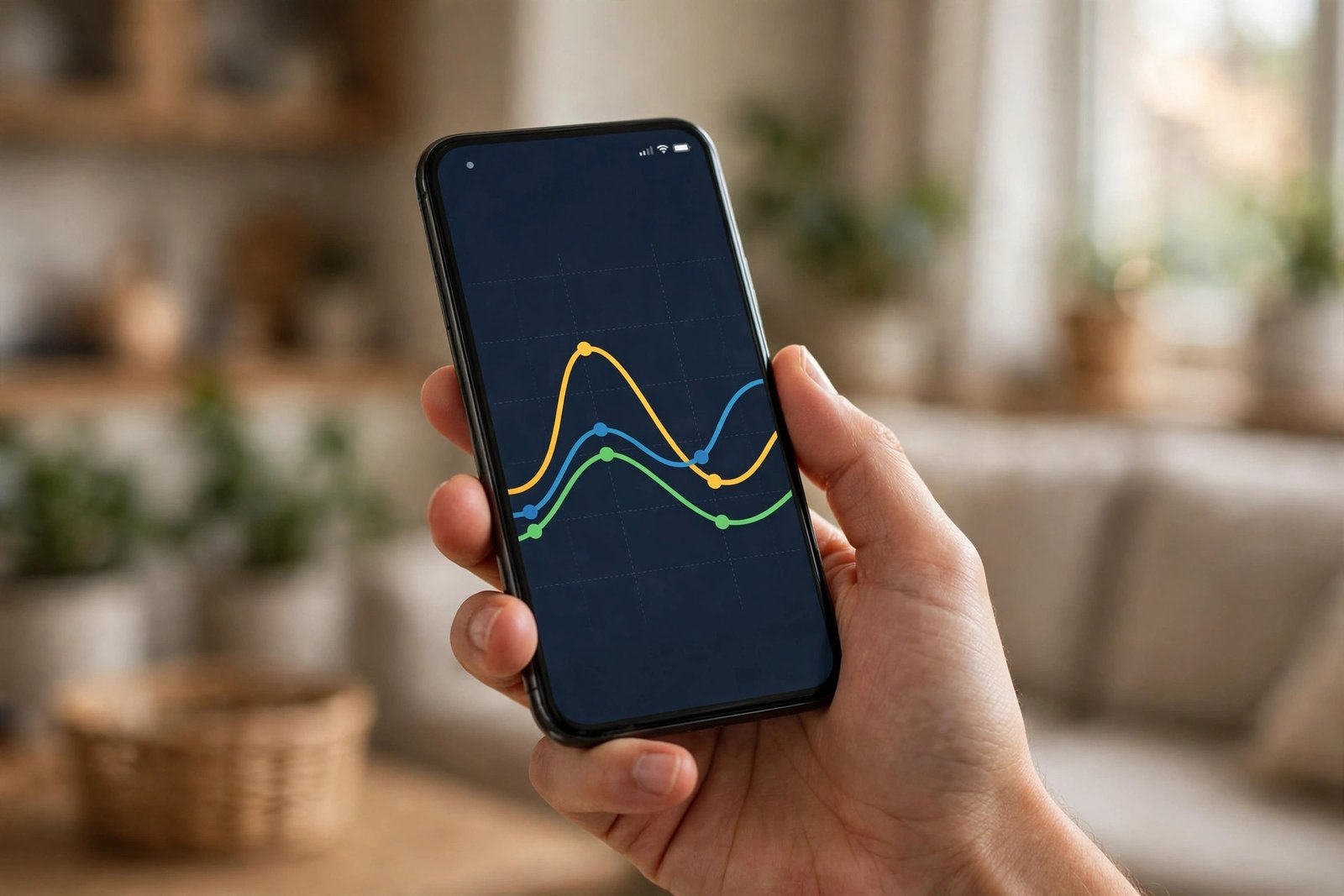
Most solar systems come with a monitoring app or a web portal that shows how much power your panels produce, how much your home uses and how much goes to the grid. Many owners check it once, then never look at it again. That is a missed opportunity — the app is the best tool you have for finding waste.
Set aside five minutes once a week to look at three things:
- Daily production. Is it roughly what you expect for the season? A sudden drop can mean dirty panels, new shading or a fault.
- Evening grid use. How much electricity are you buying after sunset? If it is high, something is running overnight that should not be.
- Export. How much solar power are you sending to the grid? If you export a lot every day, you have free power going to waste — shift more usage into daylight hours to use it yourself.
If the app shows an error, a panel producing nothing, or numbers that do not make sense, do not ignore it. Check our troubleshooting guides, or call your installer. A small fault left for months can cost far more in lost production than the repair itself.
Tip 8: Keep Your Panels Clean and Shaded-Free
Dirty panels produce less power, and less power means more grid electricity to buy. Dust, bird droppings, leaves and pollen all block sunlight. In most areas, rain washes panels reasonably well, but if you live near a busy road, a farm or the sea, grime builds up faster and a gentle clean a few times a year can help. Clean only when the panels are cool — early morning is best — and never use abrasive materials or a high-pressure washer, which can damage the glass. If your roof is steep or high, do not climb up yourself; hire a professional cleaner.
Shading is just as important. A tree that has grown over a panel, a new satellite dish or even a washing line can cut output far more than most owners expect, because one shaded panel can drag down a whole string. Walk around your home once a season and check whether anything new is casting shade on the panels, and trim back any branches that have grown over them.
Also check for damage after storms: cracked glass, loose frames or debris on the roof can all reduce output and may need a professional repair.
Tip 9: Use Timers and Smart Plugs to Automate Saving
Good habits save money, but habits slip. Timers and smart plugs do the job even when you forget. A smart plug lets you schedule an appliance to switch on during the solar window and off again afterwards, and many of them also measure how much power the appliance uses, so you can see which devices cost the most to run.
Useful things to automate:
- Water heater or immersion heater — on at midday, off before evening.
- Pool pump or pond pump — run during daylight hours only.
- Dehumidifier — run in the afternoon, not overnight.
- Electric vehicle charging — if you charge at home, set it to charge during peak sun hours whenever you can.
- Entertainment standby — a smart plug can cut power to the TV and console completely overnight.
Start with one or two devices and see the difference on your monitoring app before adding more. Smart plugs are inexpensive, but you do not need a smart plug on everything — focus on the big users first.
Tip 10: Review Your Tariff and Export Deal
Even with perfect habits, the wrong tariff can keep your bill high. Electricity tariffs, export payments and time-of-use rates differ between suppliers and countries, and they change over time. Once a year, check the following:
- Your import tariff. Are you on the cheapest suitable tariff for a solar home? Some tariffs charge more at peak evening times — which makes shifting usage into the day even more valuable.
- Your export payment. Find out what you are actually paid for exported electricity. In many places it is far less than the import price, which is why using your own power is worth more than exporting it.
- Time-of-use tariffs. Some suppliers offer cheaper electricity overnight or at off-peak times. If you have a battery, you may be able to charge it cheaply overnight and use it in the evening — but check the numbers carefully first, and ask your supplier or installer if you are unsure.
- Your direct debit or billing estimate. If your supplier is still charging you based on old pre-solar usage estimates, your monthly payment may be far higher than your actual use. Send regular meter readings or check your smart meter data so the bill reflects what you really use.
Do not switch tariffs on the basis of a single comparison site alone if the terms are unclear — read the export and peak-rate terms, and ask the supplier directly if anything is confusing.
A Simple Daily Routine That Saves Money
You do not need to follow all ten tips at once. Start with this simple routine and build from there:
- Morning: Load the washing machine and dishwasher. Check the weather — if it will be sunny, set delay-start for midday.
- Midday: Heavy appliances run on solar. Heat water if you have an immersion heater. Charge devices and run the vacuum.
- Afternoon: Check the monitoring app once. If the battery is full and you are still exporting a lot, that is a sign to shift another job into daylight.
- Evening: Cook and relax on stored battery power. Switch the TV strip off before bed.
- Night: Nothing running except the fridge and essential devices. No standby lights glowing around the house.
- Weekly: Five minutes on the monitoring app, and a quick walk around the house to switch off anything left on.
Safety Reminders
All of the tips in this article are about how you use electricity in your home — none of them require you to open your inverter, battery or consumer unit, and you should not do so. Solar equipment carries dangerous voltages even when the sun is not shining, because batteries store energy. Never open live electrical equipment, touch exposed wiring or work on the roof yourself. If you need to clean panels on a high or steep roof, hire a professional. Wear suitable safety gear for any basic maintenance you do yourself — see our guide on essential safety gear and tools for DIY solar owners.
When to Call a Professional
Call a qualified solar technician or electrician if:
- Your monitoring app shows a panel or string producing nothing, or production has dropped sharply and cleaning does not fix it.
- Your battery drains far faster than it used to, swells, leaks, smells unusual or feels hot.
- You smell burning, see scorch marks, or hear buzzing from the inverter, battery or consumer unit — switch the system off if you can do so safely and call a professional immediately.
- You want to add a battery, a water-heating diverter or a smart tariff setup and are unsure whether your system supports it.
- Your roof needs work, panels need removing, or anything involves working at height or with live wiring.
- You are unsure whether a fault is safe to investigate yourself. Our guide on DIY solar repair vs hiring a pro explains what you can and cannot safely fix yourself.
FAQs
Why is my electricity bill still high after installing solar panels?
Usually it is a timing problem. Panels produce power during the day, but most homes use most electricity in the morning and evening. Shifting heavy appliances into daylight hours and cutting standby waste usually brings the bill down. If the bill stays high after that, check the monitoring app for faults or a battery problem.
What time of day should I run appliances on solar?
Peak production is usually between late morning and mid-afternoon — roughly 10am to 4pm in summer, with a shorter window in winter. That is the best time to run the washing machine, dishwasher and other heavy appliances.
Is it better to use solar power or export it to the grid?
In most cases, using your own solar power is worth more than exporting it, because the price you are paid for exported electricity is usually far lower than the price you pay to buy electricity back. Use as much as you can yourself first.
Do I need a battery to save money with solar?
No. A battery helps by storing daytime solar power for the evening, but the cheapest saving comes from shifting your usage into daylight hours, which needs no battery at all. Consider a battery only after you have done that and still buy a lot of evening electricity.
How much can I save by switching to LED bulbs?
LED bulbs use far less power than old incandescent or halogen bulbs for the same brightness, and they last much longer. The saving per bulb is small, but across a whole house and over years it adds up — and the bulbs themselves are inexpensive.
Can I run my washing machine and dishwasher at the same time on solar?
It depends on the size of your system. If both together use more power than your panels are producing at that moment, the extra comes from the grid. Spread heavy jobs across the solar window instead of running them all at once.
Why does my battery run out every night?
Common causes are high evening usage, standby loads running all night, or a battery that is no longer holding a full charge. Check for vampire loads first, then look at our guide on rapid overnight battery drain.
Conclusion
Reducing your electricity bill with solar is mostly about timing, not new equipment. Use your own solar power while the sun is shining, cut the waste you cannot see, keep your panels and battery healthy, and check your monitoring app regularly. Start with the free changes — run heavy appliances at midday, switch off standby loads, wash at lower temperatures — and add timers and smart plugs once the habit is in place. Review your tariff once a year so the deal you are on still works for a solar home. Do these things consistently, and your panels will do what you bought them for: cut the amount of electricity you have to buy.
Pingback: Best Times to Run Heavy Appliances on Solar Power - Solar Fixing Guide
Pingback: How to Use Solar Power at Night Without Draining Your Battery - Solar Fixing Guide