Quick answer: A solar inverter usually fails to turn on because its AC or DC isolator is off, a breaker has tripped, the panels are not supplying DC power, or the inverter has shut itself down after a fault. Start with the safe checks: confirm both isolators are on and check the solar breaker. If the inverter stays dead, or you see damage, a burning smell or exposed wiring, switch everything off and call a qualified solar technician.
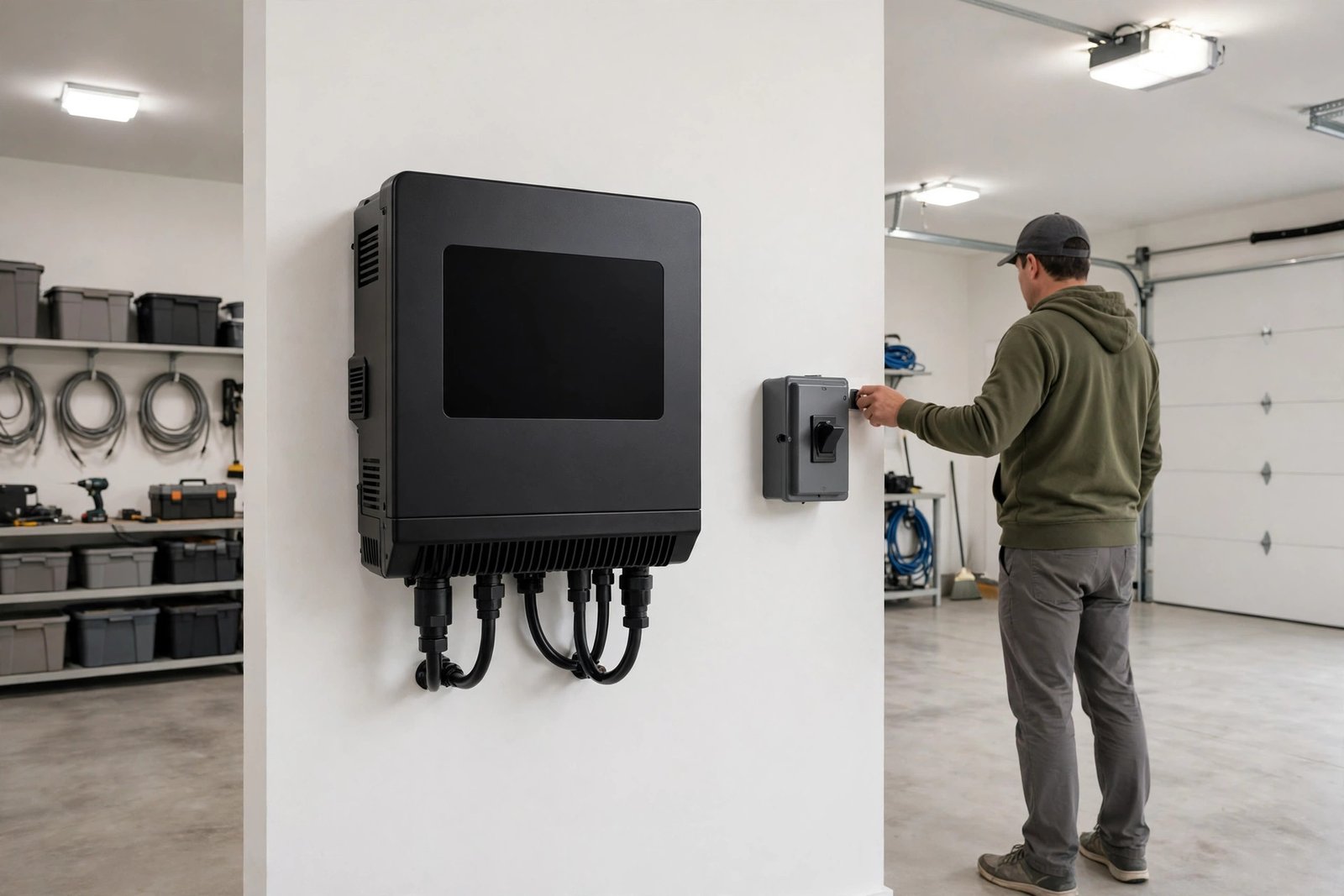
⚠️ Safety warning. Solar inverters and their wiring carry high voltage, and panels keep producing DC voltage whenever light hits them. Never open an inverter, touch exposed wiring, or bypass a fuse, breaker or safety device. Before any inspection, switch off the AC and DC isolators and follow your inverter brand’s manual. If unsure, stop and call a qualified electrician or solar technician.
Why Won’t My Solar Inverter Turn On?
An inverter converts the direct current (DC) from your panels into the alternating current (AC) your home uses. When it does not turn on at all — no display, no lights, no sound — the cause is usually lost power, a safety device that switched it off, or an internal fault. Work through the seven causes below in order. Most grid-connected inverters do not run at night, so a dark display after sunset is normal — if the inverter is off during daylight, something is wrong.
7 Common Causes of a Solar Inverter Not Turning On
1. The AC or DC Isolator Is Switched Off
This is the most common cause. Your system has isolator switches that cut power to the inverter — usually a DC isolator near the inverter and an AC isolator near the inverter or your consumer unit. If either is off, the inverter cannot start. They are sometimes switched off after maintenance, a roof repair or a power cut.
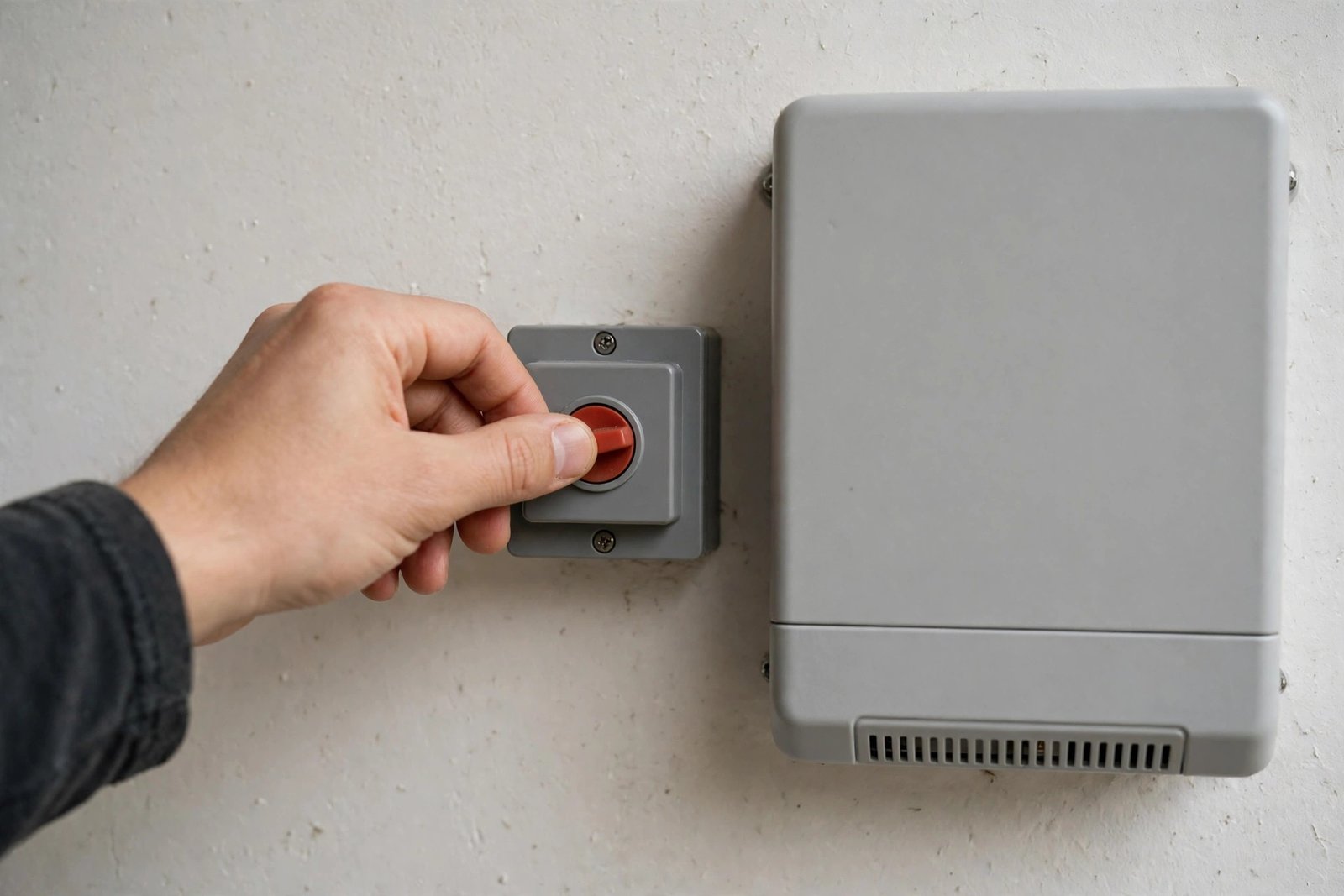
- Find the DC isolator (often a rotary switch labelled “DC isolator” or “PV isolator”) and the AC isolator, and check each one.
- If either is off, switch it on — DC first, then AC, unless your manual says otherwise.
- Wait a few minutes for the inverter to run its start-up checks.
If an isolator trips back off, or you smell burning, leave it off and call a professional.
2. A Tripped Breaker or Blown Fuse
Your inverter is protected by a dedicated breaker in your consumer unit (UK) or breaker panel (USA). If it has tripped — after a surge, a storm or a fault — the inverter loses its AC connection and will not start.
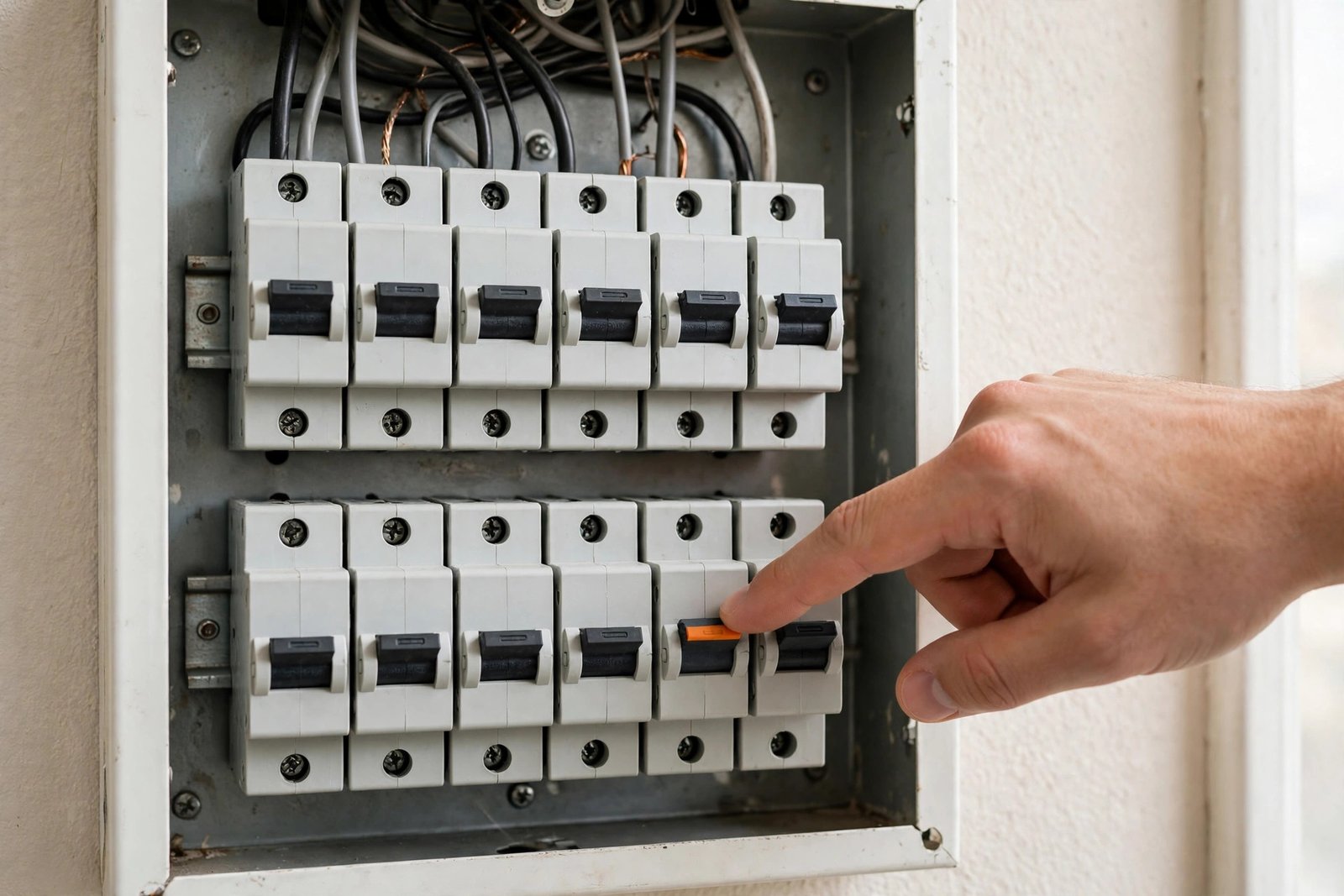
- Find the breaker labelled for the solar system — usually a labelled MCB or RCBO in the UK, or a dedicated double-pole breaker in the USA.
- If it is tripped, switch it fully off and then back on.
- Wait a few minutes and check whether the display wakes up.
If the breaker trips again straight away, do not keep resetting it — leave it off and call a qualified electrician. Replace a blown fuse only with the exact same type and rating, and never bridge a fuse with wire or foil.
3. No DC Power Reaching the Inverter
An inverter cannot start without DC power from the panels. Common reasons include a damaged DC cable, a failed connector, heavy shading, or panels covered in snow, leaves or thick dirt.
- Check that it is daylight and the panels are not fully covered — a panel buried under snow or debris produces little or no power.
- From the ground, look at the DC cables and connectors you can see. Do not climb onto the roof. If a cable hangs loose or a connector looks damaged, do not touch it — report it to a technician.
- If the display is partly alive, check for a DC voltage reading — zero in bright daylight points to a problem between the panels and the inverter.
A suspected DC fault is a job for a professional — DC faults can arc and cause fires, and cables stay live in daylight even when the inverter is off.
4. The Inverter Is in Standby or Waiting for the Grid
Grid-connected inverters will not start without a healthy grid supply. After a power cut, the inverter waits for the grid to return to normal — a safety feature that stops it feeding power into a dead grid while engineers work on it.
- Check whether your home has power. If it does not, the inverter is probably waiting for the grid and should restart by itself once power returns.
- Check whether neighbours have power. If the whole street is out, the problem is the grid, not your inverter.
- Once power returns, give the inverter several minutes — most models run a grid-check period before reconnecting.
In the UK and the USA, inverters must disconnect during outages (anti-islanding protection). This behaviour is normal — do not try to override it.
5. The Inverter Has Detected a Fault and Shut Down
Sometimes the inverter is not dead — it has shut itself down after detecting a fault, such as an isolation fault, overvoltage or overheating. You may see a red light, a flashing light or an error message. If the display is completely blank, this cause is less likely.
- Look at the indicator lights. A red light, flashing light or error code means the inverter has logged a fault.
- Write down the exact message or code — this is very useful for a technician.
- Follow your inverter brand’s manual for a safe restart if it gives one.
If the same fault returns, do not keep restarting it — note the code and call a qualified solar technician. For a red light, see our guide on how to fix a solar inverter red light; for a specific code, see our guide to common solar inverter error codes.
6. Loose, Corroded or Damaged Wiring
Loose or corroded connections can interrupt the power reaching your inverter — more common on older systems, in coastal areas where salt air speeds up corrosion, or where connectors were poorly fitted.
- From a safe position, look for discoloured or melted connectors, green or white corrosion, loose cables, or a burning smell.
- Do not tug, tighten or open any connection yourself. Connections on a live solar system must only be handled by a qualified person with the system properly isolated.
- If you see damage, a burning smell or melted plastic, switch the isolators off and call a solar technician the same day.
Never repair wiring or connectors while the system is live — DC cables can still be live in daylight even with the inverter off.
7. The Inverter Itself Has Failed
If every check above is fine — isolators on, breaker on, DC power present, grid healthy, no fault code — the inverter itself may have failed. Signs include a completely dead display in bright daylight, a burning smell, or repeated shutdowns no restart fixes.
- Confirm the basics once more: isolators on, breaker on, daylight on the panels, home power working.
- Check whether the inverter is still under warranty — most run for a number of years. Find your installation paperwork and note the installation date.
- Contact your original installer first; they may diagnose it under warranty. If they are no longer in business, contact the manufacturer or a qualified local solar technician, with the model and serial number ready.
Do not open the inverter case — there are no user-serviceable parts inside, opening it can void the warranty, and capacitors inside can hold a dangerous charge even after the power is off.
Preventive Tips to Keep Your Inverter Running
- Check the display weekly. A quick look at the inverter or monitoring app helps you spot falling output early.
- Keep the area clear. Inverters need airflow to stay cool — do not stack boxes against them or cover the vents.
- Keep panels clean and unshaded where you safely can. Dirt, leaves or bird droppings cut the DC power reaching the inverter.
- Keep your paperwork together — manual, warranty and installer details — so it is easy to find.
When to Call a Professional
Call a qualified electrician or solar technician if any of the following apply:
- The inverter stays dead after you have checked the isolators, breaker and grid.
- A breaker trips again immediately after you reset it.
- You see a red light, fault code or error message that returns after a restart.
- There is a burning smell, scorch marks, melted plastic or damaged wiring.
- You suspect a DC wiring fault, or the panels may be damaged.
- The inverter is under warranty and may need a manufacturer repair.
- You feel unsure about any step.
Frequently Asked Questions
Why is my solar inverter not turning on?
The most common reasons are an isolator switched off, a tripped breaker, no DC power from the panels, the inverter waiting for the grid after an outage, or a fault that made it shut down.
How do I reset my solar inverter?
If your manual allows it, switch off the AC isolator, then the DC isolator, wait a few minutes, then switch the DC isolator back on followed by the AC isolator. Reset only once — if the fault returns, call a professional.
Should a solar inverter be on at night?
No. Most grid-connected inverters shut down at night because the panels produce no DC power without sunlight. A dark display after sunset is normal.
Can a tripped breaker stop my inverter from turning on?
Yes. If the dedicated solar breaker has tripped, the inverter loses its AC connection and will not start. Reset it once; if it trips again immediately, leave it off and call a qualified electrician.
How long do solar inverters last?
Lifespan varies by brand, model and conditions. Check your model’s warranty and manual for the figures that apply to your unit — a technician can advise whether repair or replacement makes more sense.
Conclusion
A solar inverter that will not turn on is worrying, but the cause is often simple: an isolator that is off, a tripped breaker, or a temporary grid problem. Work through the seven causes in order and give the inverter a few minutes to start after each change.
If the inverter stays dead, a breaker will not stay on, or you see damage or a fault code, stop and call a qualified solar technician — solar systems carry high voltage, and the safest fix is done by someone trained to work on them.