
Quick answer: Yes, sometimes — but only for minor surface cracks. A small crack in the glass that has not reached the solar cells can often be sealed with clear waterproof tape or a UV-stable sealant as a temporary fix, and the panel may keep working for a while. A deep crack, a shattered panel, exposed cells, or any sign of burning, arcing, or water inside the panel cannot be repaired safely — the panel must be replaced. Never touch a cracked panel’s wiring or work on a rooftop array while it is live, and always check your warranty before attempting any DIY repair.
Table of Contents
- Safety First: Read This Before Touching a Cracked Panel
- Why Solar Panels Crack
- Types of Cracks — and What Each One Means
- Can a Cracked Solar Panel Still Work?
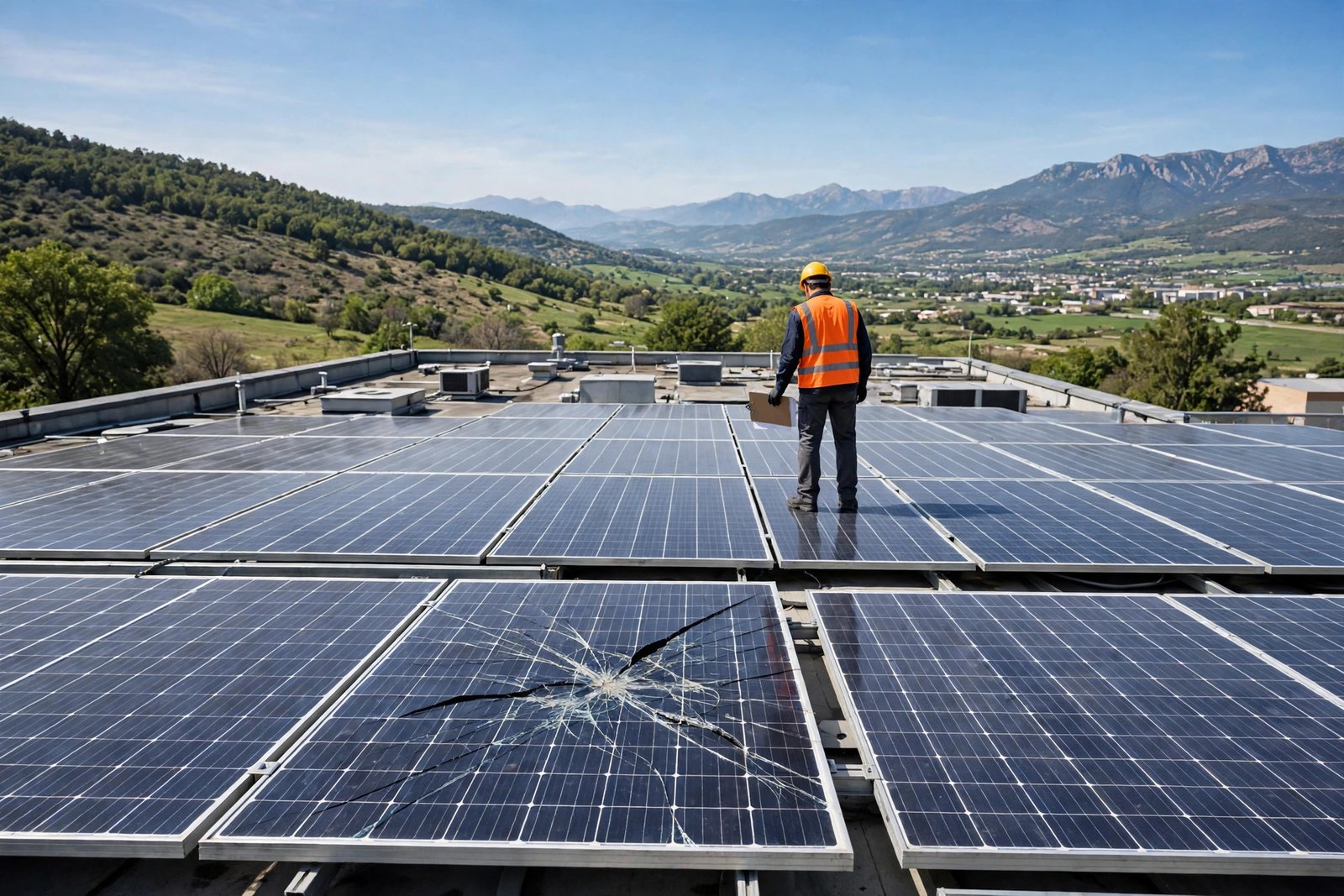
- How to Inspect the Damage Safely
- DIY Repair: Sealing a Minor Surface Crack
- When Replacement Is the Only Safe Option
- What Replacement Costs — and What Your Warranty May Cover
- How to Prevent Cracks in the Future
- When to Call a Professional
- FAQs
Safety First: Read This Before Touching a Cracked Panel
- A cracked panel can still be live. Solar panels generate electricity whenever light hits them — even a cracked one. Treat every panel as energised until the system is properly isolated.
- Do not touch exposed wiring or cell material. If the crack has exposed the cells or the backsheet, or you can see burnt or discoloured areas, do not touch the panel. Moisture reaching live cells can cause arcing or an electric shock.
- Isolate the system first. Switch off the inverter and the DC isolator before inspecting the array closely. If you are not sure how to isolate your system safely, stop and call a qualified solar technician.
- Roof work is dangerous. Never climb onto a roof in wet, windy, or icy conditions, and never work alone on a roof. A cracked panel is never worth a fall.
- Check your warranty before any DIY repair. Applying tape, sealant, or adhesive to a panel can void the manufacturer’s product warranty. Read the warranty terms first — a free replacement may be available.
Why Solar Panels Crack
Solar panels are built to survive decades outdoors, and their tempered glass is designed to take hail, wind, and temperature swings. When a crack appears, one of these causes is usually behind it:
- Hail and falling debris. Large hailstones, falling branches, or stones thrown up by a lawn mower are the most common causes of cracked panel glass.
- Thermal stress. Repeated heating and cooling can stress the glass and frame, especially if the panel was installed with too little clearance for expansion.
- Heavy snow or foot traffic. Walking on panels, or the weight of deep snow and ice, can flex the glass beyond its limit.
- Manufacturing or transport damage. A hairline crack can start during shipping or handling and only become visible months later, sometimes after a hot day makes it spread.
- Loose mounting hardware. A panel that flexes in the wind because its clamps or racking are loose is more likely to crack at the frame edges.
Knowing the cause matters: a one-off hail strike is bad luck, but cracks caused by loose mounting or thermal stress may affect other panels too, so the whole array deserves an inspection.
Types of Cracks — and What Each One Means
Not all cracks are equal. What you can do depends on how deep the damage goes:
Hairline surface crack
A thin, shallow line in the glass, often only visible at certain angles. The cells underneath are usually undamaged, and the panel often keeps producing close to its normal output. This is the only type of crack that a DIY seal may help with — and even then it is a temporary measure.
Spiderweb crack
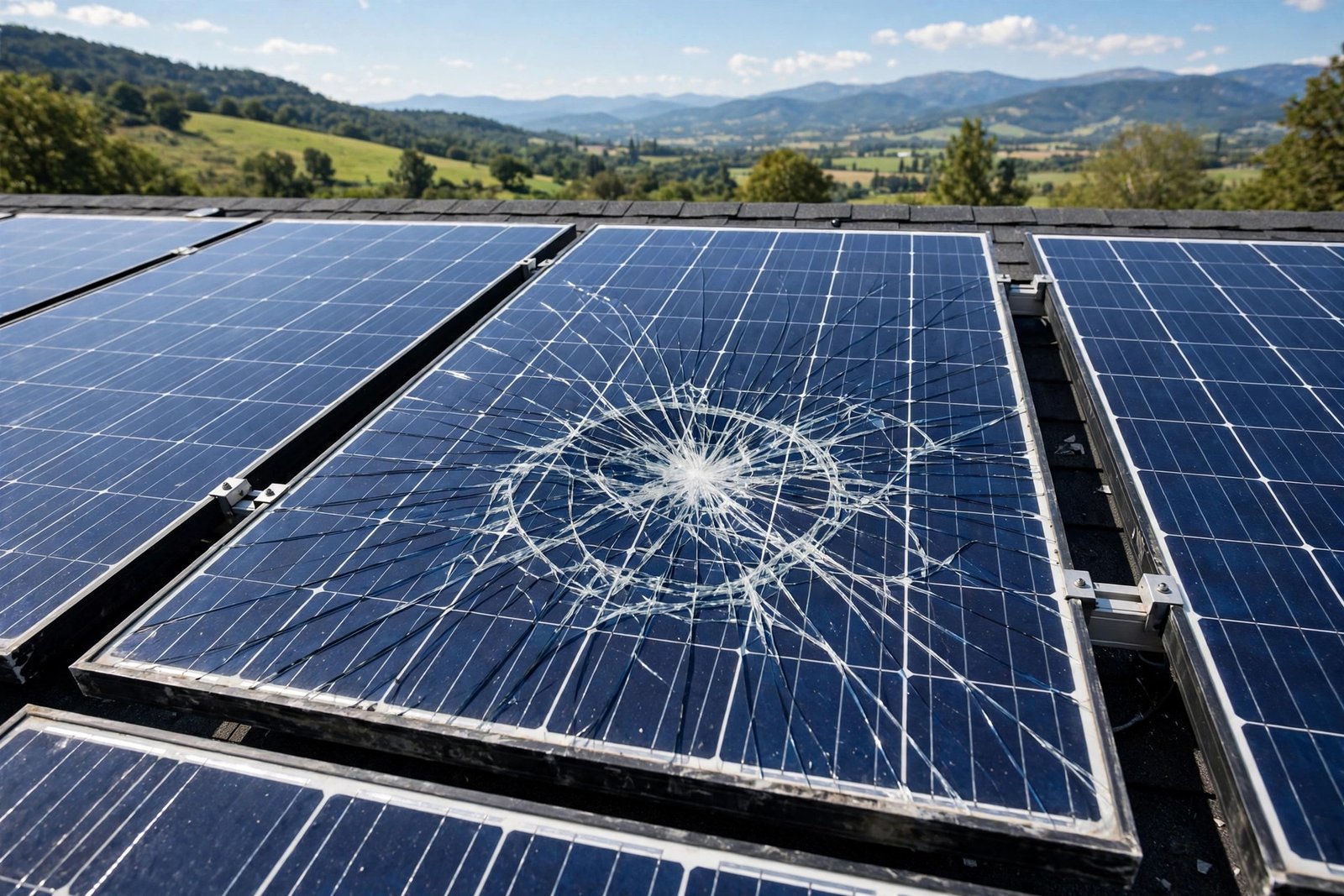
A star-shaped pattern spreading from a single impact point. The glass is broken across a wider area but usually still in one piece. Output often drops, and water can get in over time. A seal may buy you time, but plan for replacement.
Shattered or caved-in glass
Large areas of broken glass, loose shards, or a panel that has caved in. The cells are almost certainly damaged. This panel must be replaced — do not try to repair it, and do not leave it connected.
Crack with burnt or discoloured cells
Brown or black marks under the glass, or a smell of burning near the panel, point to a hotspot or arcing inside the panel. Switch the system off and call a professional immediately — this is a fire risk.
| Crack type | Panel still works? | DIY repair? | Action |
|---|---|---|---|
| Hairline surface crack | Usually yes | Seal as a temporary fix | Monitor output; plan replacement |
| Spiderweb crack | Often, at reduced output | Seal to keep water out | Replace soon |
| Shattered glass | Rarely, and unsafely | No | Isolate and replace |
| Crack with burnt cells | No — dangerous | No | Switch off, call a professional |
Can a Cracked Solar Panel Still Work?
Often, yes — at least for a while. The glass is a protective layer; the electricity is made by the silicon cells underneath. If the cells and their connections are intact, a panel with a cracked glass layer can still generate power, though usually less than before. The crack scatters light, and the damaged area may stop contributing to output — similar to how shading cuts output from part of a panel.
That does not mean the panel is fine. The real danger of a cracked panel is what happens over time: rain and condensation seep through the crack, corrode the cell connections, and can create hotspots or arcing. A panel that works today can become a fire risk in a few months if water gets inside. So a cracked panel is a panel on borrowed time — even if your monitoring app still shows normal numbers, check the damaged panel regularly and have a replacement plan.
If your system suddenly shows much lower output, or a single panel’s string is producing zero watts, a cracked panel may be the cause — or the crack may be a symptom of a wider problem. Either way, measure before you decide.
How to Inspect the Damage Safely
- Isolate the system. Turn off the inverter and the DC isolator. Wait for the inverter display to go dark.
- Look from the ground first. Use binoculars or your phone’s camera zoom to inspect the crack before climbing up. If you can see the full extent of the damage from the ground, you may not need to climb at all.
- Check for moisture and burn marks. Look for condensation, fogging, or water stains under the glass, and for brown or black discolouration around the crack. Any of these means the panel should be isolated and replaced, not repaired.
- Look at the backsheet and frame. From underneath, check whether the crack runs through to the back of the panel or the frame is bent. Frame damage usually means the panel took a hard impact and the cells are likely damaged too.
- Test the output. Once the system is back on, compare the cracked panel’s string output with the other strings in your monitoring app. If you are comfortable with a multimeter, you can test the panel with a multimeter — but only after checking your system’s safety instructions, and never while the panel is wet.
- Photograph everything. Take clear photos of the crack, the whole panel, and the surrounding array. You will need them for a warranty or insurance claim.
DIY Repair: Sealing a Minor Surface Crack
This method is only for a hairline or small spiderweb crack in the glass, with no exposed cells, no moisture inside, and no burn marks. It is a temporary weatherproofing fix — it will not restore lost output, and it will not make the panel as good as new.
- Isolate the system and wait for a dry, calm day. Never work on a wet roof or a wet panel.
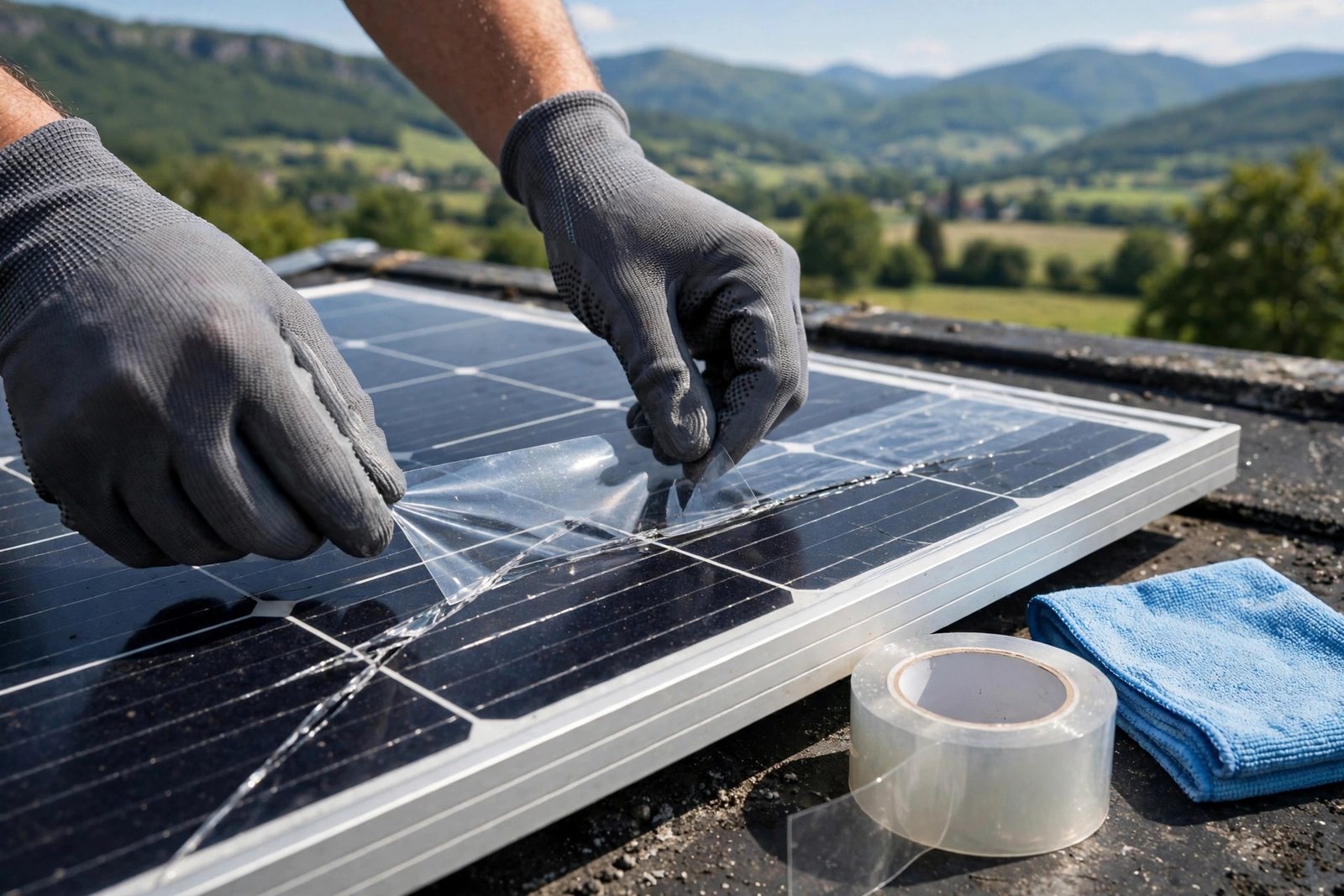
- Clean the glass around the crack with water and a soft cloth, and let it dry completely. Dirt or moisture under the tape will stop it sticking.
- Apply clear, UV-stable repair tape over the crack, pressing it flat with no air bubbles. Use a tape made for outdoor or solar use — ordinary packing tape will peel off within weeks. Overlap the tape at least a few centimetres past each end of the crack.
- Alternatively, use a clear silicone or polyurethane sealant designed for outdoor glass. Apply a thin, even layer along the crack with a sealant gun, smooth it with a gloved finger, and let it cure fully before switching the system back on.
- Switch the system back on and check the output over the next few days. If output keeps falling, or moisture appears under the glass, the seal has not held — plan a replacement.
What not to use: do not pour epoxy resin over a large area, do not use superglue, and do not try to replace the glass yourself. The glass is laminated to the cells under heat and pressure in a factory — it cannot be swapped in the field, and adhesives can trap heat and make hotspots worse.
When Replacement Is the Only Safe Option
Replace the panel — do not attempt a repair — if any of these apply:
- The glass is shattered, caved in, or has loose pieces.
- You can see the solar cells, wiring, or backsheet through the crack.
- There is moisture, fogging, or water staining under the glass.
- The cells look burnt, brown, or discoloured, or you smell burning.
- The panel’s output has dropped sharply or the string has stopped producing.
- The frame is bent or the panel has moved in its mounting.
- The crack keeps growing, or new cracks appear in the same panel.
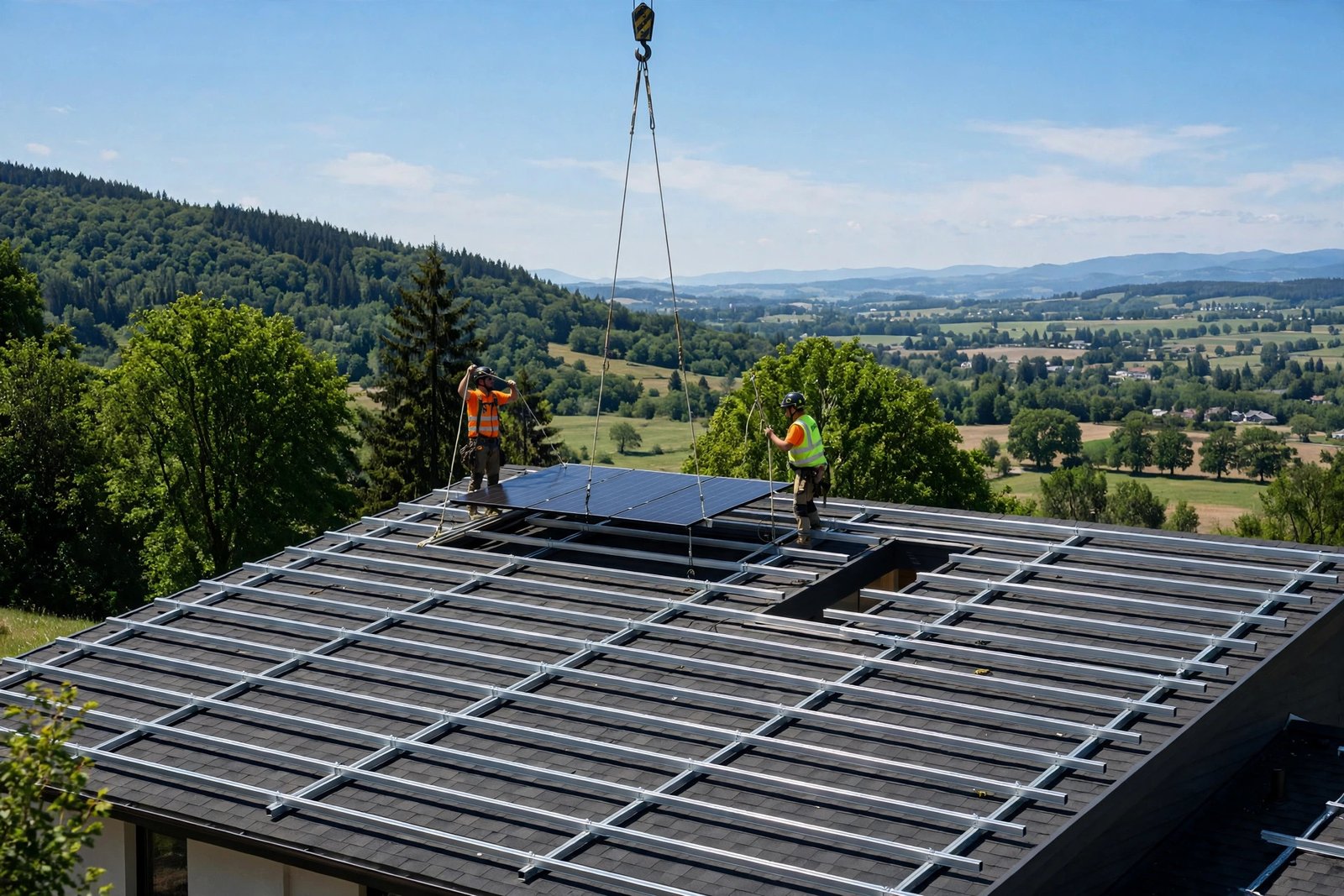
Replacement is a job for a qualified solar installer: they will isolate the string, remove the damaged panel, fit a matching replacement, and check the rest of the array. A replacement panel should match the wattage and electrical characteristics of the others in the same string — mixing very different panels can drag down the whole string’s output.
While you wait for a replacement, leave the damaged panel isolated if it shows any of the danger signs above. If it is only a hairline crack with no moisture, a sealed panel can usually stay connected until the replacement arrives.
What Replacement Costs — and What Your Warranty May Cover
Costs vary by country, panel size, and installer, so treat these as rough planning figures rather than quotes. A single replacement panel typically costs a few hundred dollars or pounds for the panel itself, plus labour for removal and installation, which often adds a similar amount again. If the panel is an older model that is no longer made, your installer may need to source a compatible alternative, which can add time and cost.
Before paying anything, check two things:
- Product warranty. Most panels carry a 10–12 year product warranty (some longer) that covers manufacturing defects — and sometimes impact damage depends on the terms. A crack caused by a manufacturing fault may be covered; a crack from a fallen branch usually is not.
- Home insurance. Many home insurance policies cover solar panels against storm and impact damage. Photograph the damage, keep the installer’s report, and contact your insurer before ordering a replacement.
Always get a written quote from your installer before work starts, and ask whether the price includes removing and disposing of the damaged panel.
How to Prevent Cracks in the Future
- Trim overhanging branches so nothing can fall onto the array in a storm.
- Keep the mounting tight. Ask your installer to check clamps and racking during routine maintenance — a panel that cannot flex in the wind is less likely to crack.
- Clear heavy snow promptly with a soft roof rake from the ground, rather than letting a thick load sit on the panels.
- Keep lawn equipment away. Never mow or use a strimmer close to ground-mounted panels, and keep children from throwing balls near the array.
- Inspect after storms. A quick visual check after hail or high winds catches small cracks before water gets in.
When to Call a Professional
Call a qualified solar technician or electrician if:
- The crack is more than a hairline, or the glass is shattered.
- You see moisture, burn marks, or exposed wiring.
- The panel’s output has dropped or the inverter shows a fault — try to reset your inverter only after the damaged panel is isolated.
- You are not comfortable working on a roof or isolating the system.
- The panel is still under warranty — a professional report strengthens your claim.
A cracked panel is usually a straightforward fix for a professional, but the electrical and roof-safety risks make it a poor first DIY project. If in doubt, get a quote — most installers will inspect and advise for a modest call-out fee.
FAQs
Can a cracked solar panel still work?
Yes, often it can — if only the glass is cracked and the cells underneath are intact, the panel may keep producing power at reduced output. But water can seep in over time and cause corrosion or hotspots, so a cracked panel should be monitored closely and replaced sooner rather than later.
Is it safe to use a cracked solar panel?
A panel with a small hairline crack and no exposed wiring is usually safe to keep running while you arrange a repair or replacement. A shattered panel, or one with exposed cells, moisture inside, or burn marks, is not safe — isolate it and call a professional.
Can you repair cracked solar panel glass yourself?
You can seal a minor surface crack with clear UV-stable repair tape or outdoor silicone sealant as a temporary weatherproofing measure. You cannot replace the glass itself — it is laminated to the cells in the factory. Deep cracks and shattered panels must be replaced.
How much does it cost to replace a cracked solar panel?
It varies by panel model and location, but expect a few hundred dollars or pounds for the panel plus a similar amount for labour. Check your product warranty and home insurance first — storm or impact damage is often covered.
Does a cracked solar panel void the warranty?
Not automatically. A crack caused by a manufacturing defect is usually covered by the product warranty. Damage from hail, falling objects, or impact is usually not covered by the manufacturer, but may be covered by home insurance. Applying tape or sealant yourself can void the warranty, so check the terms before any DIY repair.
A cracked solar panel is stressful to discover, but it is rarely an emergency if you act sensibly: isolate the system, inspect the damage, seal only a minor crack, and replace the panel when the damage is serious. Keep the panel dry, keep yourself off the roof in bad weather, and let a professional handle anything that involves exposed wiring or a shattered panel. With a quick inspection and the right call, most cracked panels are fixed with one replacement — and a few simple precautions will protect the rest of your array for years.
Pingback: Repairing Storm and Hail Damage on Rooftop Solar Arrays - Solar Fixing Guide