
Quick answer: Equalization charging is a controlled overcharge given to flooded lead-acid solar batteries to fix uneven cells, break down sulphation and mix the electrolyte. It is done by raising the charging voltage above normal for a few hours, usually through your solar charge controller’s equalization setting. Only flooded (wet-cell) lead-acid batteries should ever be equalized — never AGM, gel or lithium batteries. Do it only when the battery shows clear signs of imbalance, such as weak cells or a big gap in hydrometer readings, and only after checking the water level first. Equalize in a ventilated area, with gloves and eye protection, and never leave the battery unattended. If your battery is old, damaged or you are unsure of the correct voltage, let a professional handle it.
Table of Contents
- What Is Equalization Charging?
- Why Lead-Acid Batteries Need It
- Which Batteries Can Be Equalized?
- Signs Your Battery Needs Equalization
- Safety First: Read This Before You Start
- What to Check Before You Equalize
- How to Equalize: Step by Step
- How Often Should You Equalize?
- After Equalization: What to Check
- Common Mistakes to Avoid
- When to Call a Professional
- FAQs
- Conclusion
What Is Equalization Charging?
Equalization charging — sometimes just called “equalizing” — is a deliberate, controlled overcharge of a flooded lead-acid battery. During normal charging, the charger stops when the battery reaches its full voltage. During an equalization charge, the charger keeps going: it holds the battery at a higher voltage than normal for a set period, usually one to three hours. This forces all the cells in the battery to reach full charge, including the weakest ones that normally lag behind.
Think of it as a deep clean for the inside of your battery. A normal charge tops the battery up; an equalization charge works through the problems that build up over months of ordinary use. It is not something you do every day — it is a maintenance procedure, done occasionally, when the battery needs it. Most modern solar charge controllers have an equalization mode built in, so you usually only need to switch it on and let the controller manage the voltage and timing.
Equalization is only for one battery type: the flooded lead-acid battery. If you try it on the wrong battery, you can destroy it in a single session. The section below explains exactly which batteries qualify.
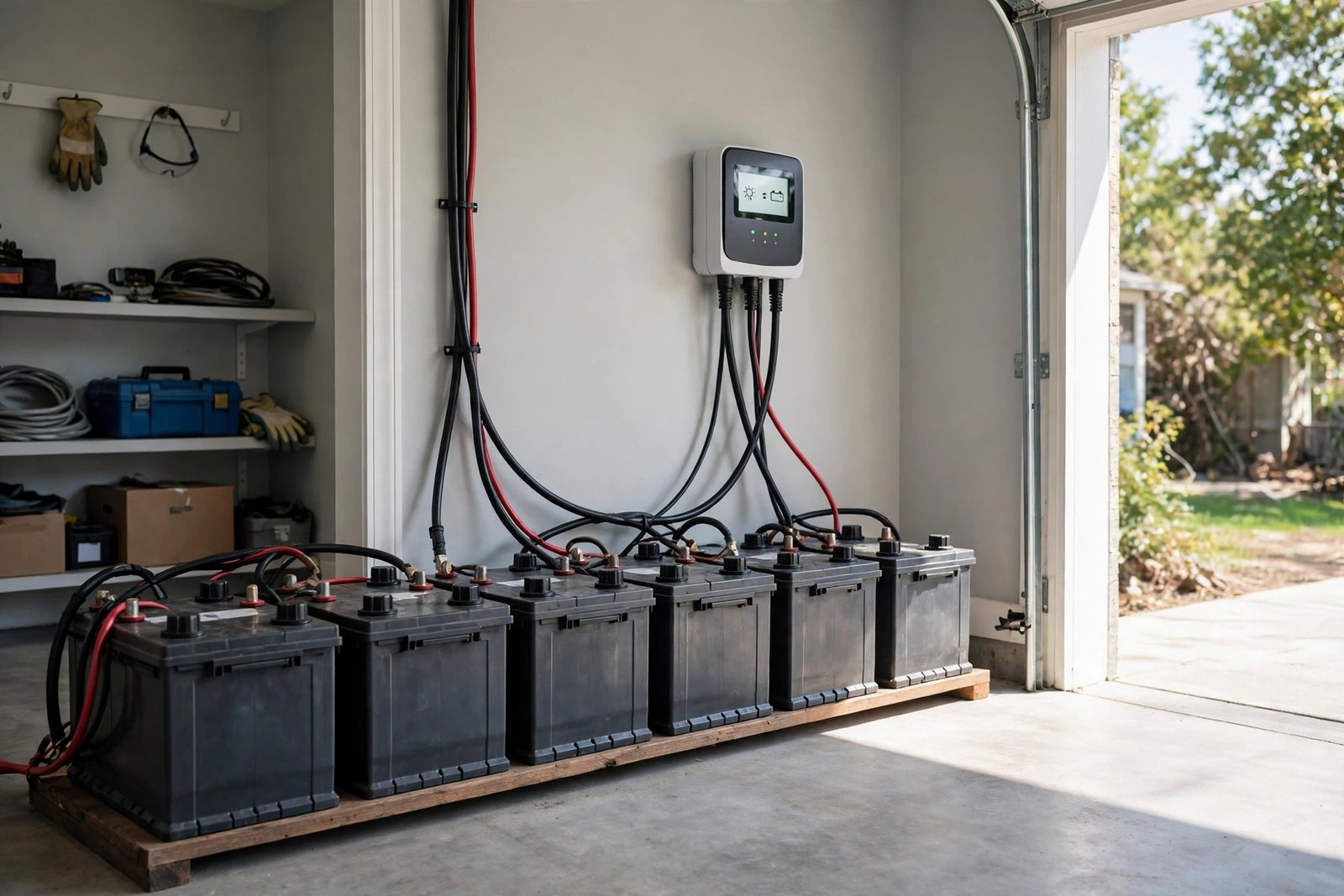
Why Lead-Acid Batteries Need It
Two slow problems build up inside a flooded lead-acid battery during normal use, and equalization charging fixes both of them.
Sulphation
Every time a lead-acid battery discharges, soft lead sulphate crystals form on the plates. Normal charging dissolves most of them again. But when a battery sits partly charged for a long time — during cloudy weeks, in winter, or in a system that rarely reaches full charge — some of those crystals harden into a tough coating that normal charging cannot remove. This is called sulphation. It covers the plates, reduces the area that can react, and slowly shrinks the battery’s capacity. An equalization charge pushes the voltage high enough to break down some of this hardened sulphate and restore part of the lost capacity. It cannot undo years of heavy sulphation, but it can help a battery that has started to weaken.
Stratification
The second problem is stratification. Inside a flooded battery, the electrolyte is a mix of acid and water. Over time, the heavier acid sinks to the bottom of each cell and the lighter water rises to the top. The bottom of the plates then sits in strong acid while the top sits in weak, watery electrolyte. The battery charges unevenly and its capacity drops. The vigorous bubbling produced during an equalization charge stirs the electrolyte and mixes it back together. This is one of the main reasons equalization exists.
Equalization also brings weak cells back in line. In a battery bank, no two cells are exactly alike. Some charge faster, some slower. After many charge cycles, the gap grows: strong cells finish early and weak cells never quite get full. The extra voltage during equalization forces the weak cells to catch up, so the whole battery works evenly again.
Which Batteries Can Be Equalized?
This is the most important rule in the whole article: equalize only flooded lead-acid batteries. If your battery has removable caps on top of each cell and you top up the water, it is a flooded battery and it can be equalized.
Never equalize these battery types:
- AGM batteries. The electrolyte is held in glass fibre mats. An equalization voltage dries the mats out and permanently damages the battery.
- Gel batteries. The electrolyte is a gel. High voltage creates gas bubbles in the gel that never go away, ruining the battery.
- Lithium batteries (including lithium iron phosphate, LiFePO4). They use a completely different chemistry and a battery management system. Equalization voltages can trigger the protection system, damage cells, or create a fire risk. Never apply an equalization charge to a lithium battery.
If you are not sure what type of battery you have, check the label or the manual. The words “flooded”, “wet cell” or “vented” mean it can be equalized. The words “sealed”, “maintenance-free”, “AGM”, “gel” or “lithium” mean it must not be. If you cannot identify the battery type, ask your installer or a qualified technician before switching on equalization mode. For help identifying your battery type, see our guide on checking lead-acid solar battery water levels.
Signs Your Battery Needs Equalization
Do not equalize on a fixed schedule alone — equalize when the battery shows signs that it needs it. Watch for these:
- Hydrometer readings differ between cells. If you test the electrolyte in each cell and the readings vary widely — one or more cells much lower than the rest — the battery is out of balance. This is the clearest sign that equalization is needed.
- Shorter backup time. The battery runs flat sooner than it used to, even after a full day of sun. Sulphation or stratification may be shrinking its capacity.
- The battery rarely reaches full charge. Your system struggles to get the battery to full voltage, or the charge controller shows the battery finishing its charge unusually fast and then dropping quickly under load.
- Some cells use much more water than others. One cell keeps needing top-ups while the rest stay fine. See our guide on battery water levels for how to check each cell properly.
- The system has spent a long time partly charged. After a cloudy season, a long winter, or a period when the panels were shaded, the battery may have been sitting at a partial charge for weeks. That is when sulphation builds up fastest.
- The charge controller recommends it. Some controllers track the battery’s history and suggest an equalization cycle after a set number of days. If yours does, follow its guidance — but only for a flooded battery.
If the battery is charging normally, holding its charge well and all the cells read evenly, leave it alone. Equalization is a treatment, not a routine, and unnecessary equalization shortens battery life.
Safety First: Read This Before You Start
Equalization charging deliberately pushes a battery beyond its normal voltage. That makes it riskier than ordinary charging, so take these precautions seriously:
- Work in a ventilated area. Equalization produces much more hydrogen gas than normal charging. Open doors and windows, keep the area ventilated, and never smoke or create a spark near the battery bank.
- Wear acid-resistant gloves and safety goggles. The electrolyte can bubble and spray during equalization. Our guide to essential safety gear for DIY solar owners lists what to keep in your kit.
- Disconnect sensitive loads first. The higher voltage during equalization can damage DC appliances and electronics connected directly to the battery. Disconnect DC loads, and check your inverter manual — some inverters should be switched off or disconnected during equalization.
- Remove metal jewellery. Rings, watches and bracelets can short across terminals and cause severe burns.
- Keep baking soda and clean water nearby. Baking soda neutralises acid spills. If electrolyte touches your skin, wash it off with plenty of water straight away. If it gets in your eyes, flush with water for at least 15 minutes and seek medical help.
- Stay nearby and check regularly. Never start an equalization charge and walk away for the day. Check the battery every 30 minutes or so for heat, smell or overflowing electrolyte.
- Do not equalize a damaged battery. If the case is cracked, swollen, leaking, very hot, or smells strongly of rotten eggs, stop and call a professional.
What to Check Before You Equalize
Never start an equalization charge on a battery that has not been prepared. Run through this checklist first:
- Check the water level in every cell. The electrolyte must cover the plates before you start. Equalization uses water, so a low cell can run dry and be ruined during the charge. Top up with distilled water only — never tap water. Our guide on checking and topping up battery water levels shows the full process.
- Clean the terminals. Dirty or corroded terminals cause uneven charging and false readings. Clean them before you start — see our guide on cleaning solar battery terminals.
- Charge the battery fully first. Equalization is the final stage of a full charge, not a substitute for one. Start from a fully charged battery so the equalization voltage works on the imbalance, not on a flat battery.
- Check the charge controller settings. Confirm the equalization voltage and duration match your battery manufacturer’s guidance. If your controller does not have an equalization mode, do not improvise with another charger — ask a technician.
- Check the room temperature and ventilation. Equalization generates heat and gas. A hot, closed room is the wrong place for it.
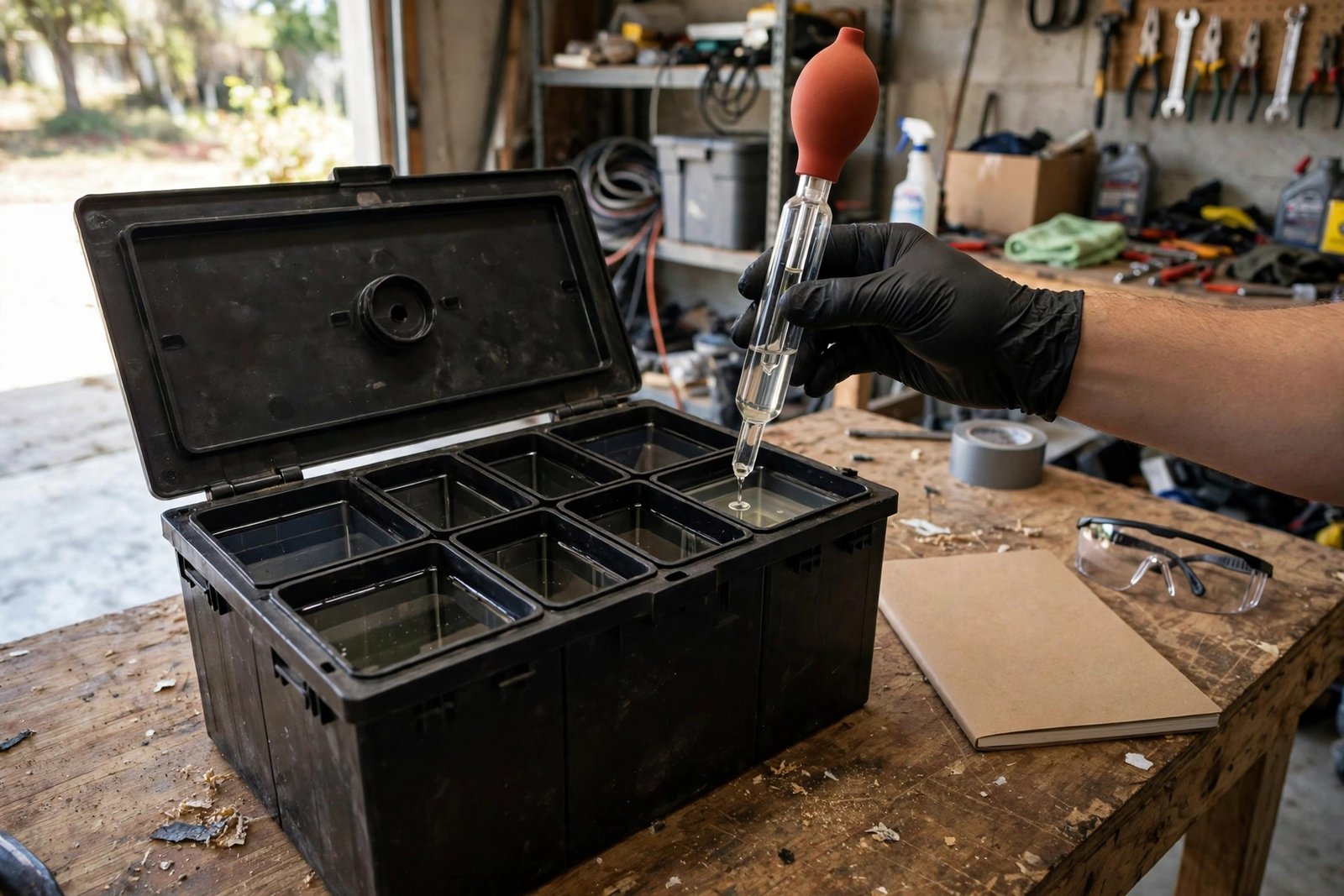
- Note the hydrometer readings. Test each cell before you start and write the readings down. This gives you something to compare against afterwards, so you can tell whether the equalization actually helped.
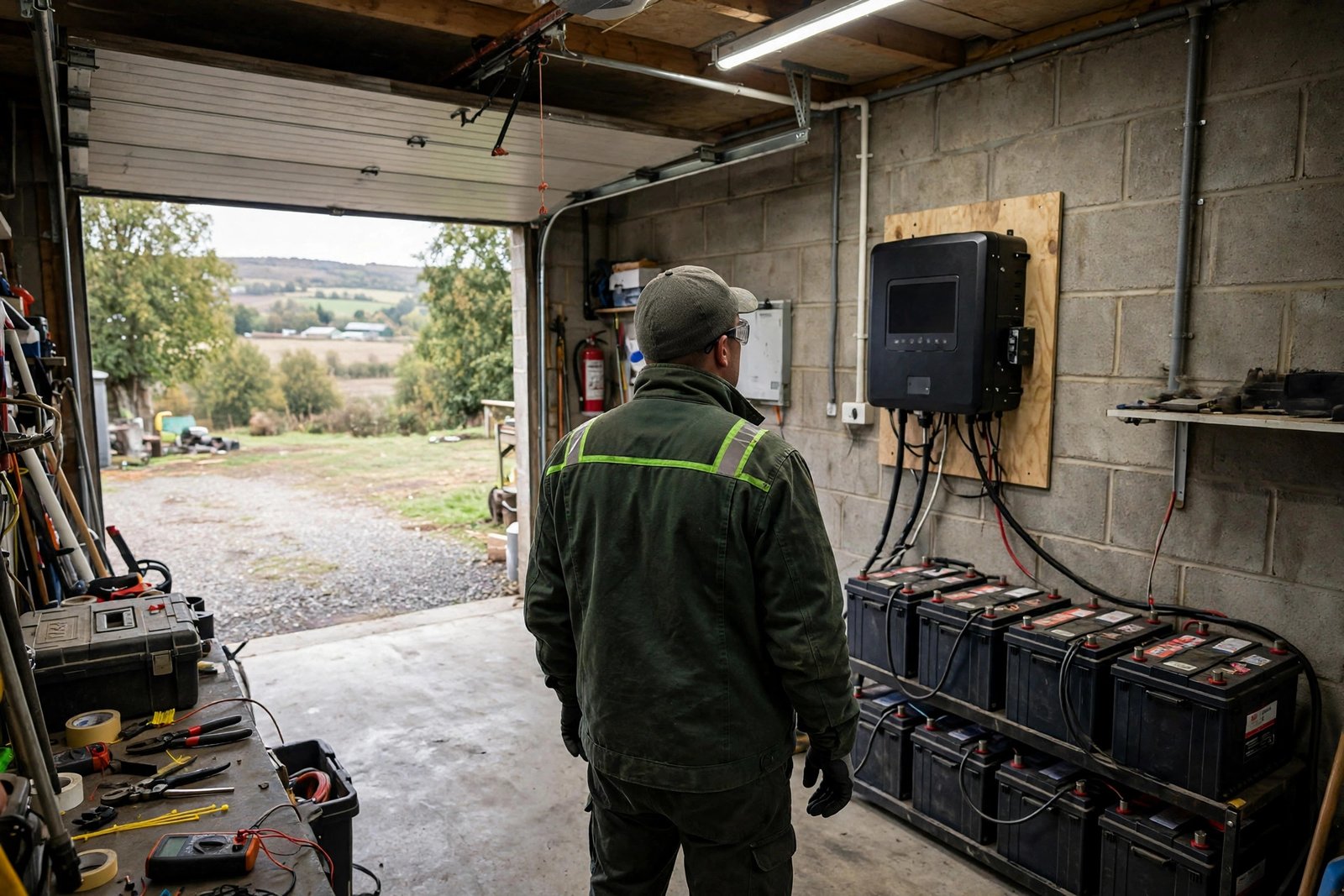
How to Equalize: Step by Step
Step 1: Prepare the battery
Complete the checklist above: water levels checked and topped up with distilled water, terminals clean, battery fully charged, and DC loads disconnected. Put on your gloves and goggles and make sure the area is ventilated.
Step 2: Find the equalization setting
On most solar charge controllers, equalization is a menu option or a button. Open your controller’s manual and find the equalization section. Confirm the voltage and duration it will use — these should match your battery manufacturer’s guidance. If your controller asks you to confirm, check the settings carefully before you proceed. If anything looks wrong — for example a voltage far above what your battery manual allows — stop and ask a professional.
Step 3: Start the equalization cycle
Switch on equalization mode. The controller will raise the charging voltage above normal and hold it there. You will hear or see gentle bubbling from the cells as the electrolyte is stirred. This bubbling is normal and is part of how equalization works. Some bubbling is expected; violent boiling or electrolyte spraying out of the cells is not — if that happens, stop the cycle immediately.
Step 4: Monitor the battery
Stay nearby and check the battery every 30 minutes. Feel the side of each battery case — it should be warm, not hot. If a battery becomes too hot to touch comfortably, stop the cycle and let it cool. Watch the electrolyte level through the filler holes: it should not overflow. Check for any unusual smell. A mild smell is normal during equalization, but a strong rotten-egg smell can mean overcharging or a damaged cell.

Step 5: Let the cycle finish
Let the controller run the full cycle, usually one to three hours. Do not cut it short unless you see a warning sign such as overheating, overflow or a strong smell. The controller will drop the voltage back to normal when the cycle ends, or switch to float charging.
Step 6: Switch the system back to normal
Once the cycle has finished, confirm the controller has returned to normal charging mode. Reconnect the DC loads you disconnected, switch the inverter back on, and check the monitoring display: voltage should settle to its normal level. If the controller shows a warning light after the cycle, see our guide on charge controller error lights.
How Often Should You Equalize?
There is no single answer, because it depends on how your system is used. As a general guide for flooded lead-acid batteries in a home solar system:
- Every one to three months is a common interval for batteries in regular daily use, especially off-grid systems that cycle deeply every day.
- More often — monthly — if your system rarely reaches full charge, if you live in a cloudy climate, or if the battery has already shown signs of imbalance.
- Less often — every three to six months — if your system reaches full charge almost every day and the cells stay evenly balanced.
- Never on a timer alone. Always check the hydrometer readings and the battery’s behaviour first. If the cells are balanced and the battery performs well, skip the equalization. Each cycle wears the plates slightly and uses water, so unnecessary equalization shortens the battery’s life.
Some charge controllers can be set to equalize automatically on a schedule. If yours does, review the interval it uses and make sure it matches your battery type and your manufacturer’s guidance. An automatic monthly cycle is fine for many systems, but it is still worth checking the battery yourself rather than trusting the timer blindly.
After Equalization: What to Check
The work is not finished when the cycle ends. Check three things:
- Water level. Equalization uses water, so check every cell again once the battery has cooled and top up with distilled water if needed. Never let the plates sit exposed after a cycle.
- Hydrometer readings. Test each cell again and compare with the readings you took before. The readings should be closer together than they were. If one cell is still far below the rest, that cell may be failing — have the battery tested by a professional.
- Performance over the next few days. Watch how the battery behaves: does it hold its charge longer, and does the backup time improve? If there is no improvement after two or three equalization cycles, the problem is probably not sulphation or stratification — it may be a dying battery. See our guide on fixing rapid solar battery drain overnight for other causes of poor performance, and our guide on why a solar battery stops charging properly.
Common Mistakes to Avoid
- Equalizing AGM, gel or lithium batteries. This is the most damaging mistake of all. Equalization is for flooded lead-acid batteries only. Check the battery type first, every time.
- Equalizing a battery with low water. A cell that starts low can run dry during the cycle, exposing the plates and ruining the cell. Always check and top up first.
- Equalizing too often. Every cycle wears the plates a little and uses water. Equalizing weekly “just in case” will shorten the battery’s life instead of extending it.
- Leaving loads connected. The higher voltage can damage DC appliances and electronics. Disconnect them before you start.
- Walking away during the cycle. Overheating or overflow can develop quickly. Check the battery every 30 minutes until the cycle ends.
- Using the wrong voltage. A voltage far above your battery’s guidance can boil the electrolyte and damage the plates. Always confirm the setting matches your battery manufacturer’s guidance.
- Equalizing a damaged battery. A cracked, swollen, leaking or very hot battery should not be equalized. It needs a professional, not a stronger charge.
- Expecting a miracle. Equalization can restore some lost capacity, but it cannot reverse years of heavy sulphation or a dead cell. If the battery does not improve after a few cycles, it may simply be at the end of its life.
When to Call a Professional
Equalization is a safe DIY job for many homeowners with flooded batteries and a charge controller that handles it, but some situations belong to a qualified solar technician or electrician:
- You are not sure what type of battery you have, or you cannot find the correct equalization voltage.
- Your charge controller has no equalization mode and you would need to improvise with another charger.
- The battery case is cracked, swollen, leaking or very hot, or it smells strongly of rotten eggs.
- One cell stays far below the others even after equalization, or a cell keeps losing water much faster than the rest.
- The battery does not improve after two or three equalization cycles.
- You have a large battery bank or a high-voltage system and you are not confident disconnecting loads or working around it safely.
- The battery is still under warranty and the manufacturer requires a technician to perform maintenance — doing it yourself could void the cover.
A professional can test each cell properly, check the charge controller settings, and tell you honestly whether the battery can be saved or needs replacing. If you are unsure about any step, stopping and calling a technician is always the right choice. For general guidance on when DIY ends and professional help begins, see our guide on how to safely reset your solar inverter.
FAQs
Can I equalize an AGM or gel battery?
No. Equalization is only for flooded lead-acid batteries. AGM and gel batteries are sealed, and the high voltage dries out AGM mats or creates permanent gas bubbles in gel. Lithium batteries must also never be equalized. If you are unsure of your battery type, check the label or ask a technician.
How long does an equalization charge take?
Most cycles last one to three hours, depending on the battery and the charge controller’s settings. Let the controller finish the full cycle. Do not cut it short unless you see a warning sign such as overheating, overflowing electrolyte or a strong rotten-egg smell.
Do I need to add water before or after equalization?
Both. Check the water level before you start and top up with distilled water if any cell is low — never start with exposed plates. Then check again after the cycle, once the battery has cooled, because equalization uses water.
Will equalization charging fix a dead battery?
Usually not. Equalization can restore some capacity lost to mild sulphation or stratification, but it cannot fix a dead cell, a shorted plate or years of heavy sulphation. If the battery does not improve after two or three cycles, it is probably at the end of its life.
Is the bubbling during equalization normal?
Yes. Gentle bubbling is expected — it stirs the electrolyte and mixes the acid and water back together. Violent boiling, electrolyte spraying out of the cells, or a strong smell is not normal. Stop the cycle if you see that.
Can I use my solar panels while equalizing?
Yes, the charge controller manages the panels during the cycle. But disconnect DC loads and check your inverter manual first — some inverters should be switched off during equalization because of the higher voltage.
How do I know if equalization worked?
Test each cell with a hydrometer before and after the cycle. The readings should be closer together afterwards. Over the next few days, the battery should also hold its charge longer. If the readings are still far apart, the battery may have a failing cell.
Conclusion
Equalization charging is a useful tool for flooded lead-acid solar batteries — when it is used on the right battery, at the right time, and with the right precautions. It breaks down early sulphation, mixes a stratified electrolyte, and brings weak cells back in line, which can add months or even years to a battery’s working life. But it is a controlled overcharge, not a routine charge, and it can damage the wrong battery or a battery that was not prepared properly.
The rules are simple: equalize flooded batteries only, check the water level first, disconnect sensitive loads, ventilate the area, stay nearby, and check the results with a hydrometer afterwards. If you are ever unsure about the battery type, the voltage, or the condition of the battery, stop and call a professional. A short service visit is far cheaper than replacing a battery bank that was damaged by an equalization cycle it should never have had.
Pingback: Vampire Loads: How to Find and Stop Appliances Draining Your Solar System - Solar Fixing Guide