
Quick answer: A solar battery that drains quickly overnight is usually being used by something you cannot see — standby loads, an inverter running in the background, a fridge or pump cycling, or a battery that has lost capacity and can no longer hold a full charge. Start by checking your monitoring app: if the battery was full at sunset and empty by morning with almost nothing switched on, work through the steps below. The most common fixes are switching off standby loads, correcting the inverter’s standby and depth-of-discharge settings, and replacing an ageing battery. Never open a battery case or touch exposed terminals. If the battery is swollen, hot, leaking, or smells strange, switch the system off and call a qualified solar technician straight away.
Table of Contents
- Safety First
- How Much Overnight Drain Is Normal?
- Step 1: Measure How Fast the Battery Is Draining
- Step 2: Find the Phantom Loads
- Step 3: Check the Inverter’s Night-Time Draw
- Step 4: Check Depth of Discharge and Battery Settings
- Step 5: Check the Battery’s Health and Capacity
- Step 6: Check Temperature and Self-Discharge
- Step 7: Look for Wiring Faults and Earth Leakage
- How to Prevent Overnight Drain
- When to Call a Professional
- FAQs
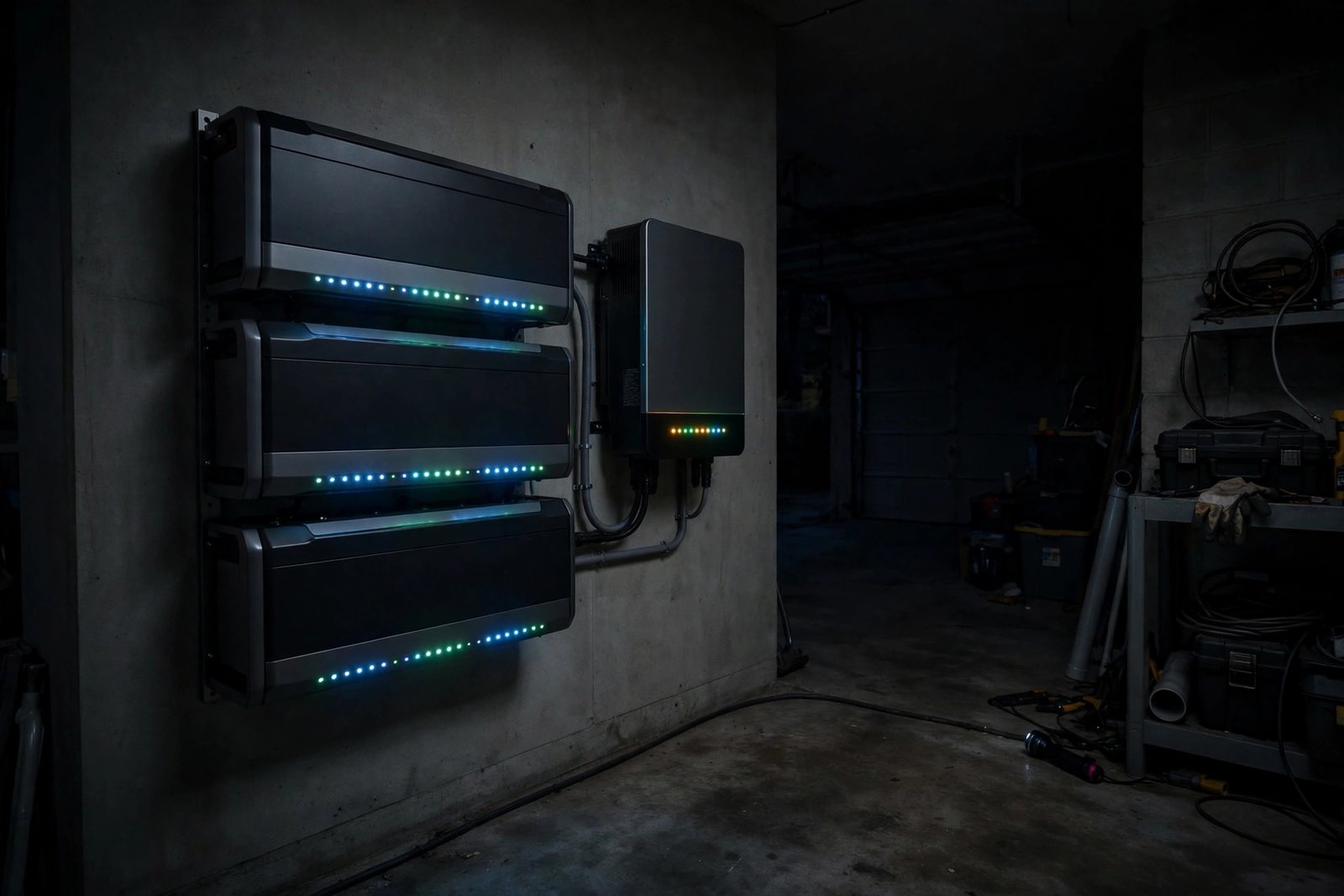
Safety First
- Never open a battery case. Lithium batteries must only be opened by the manufacturer or a qualified technician.
- Do not touch exposed terminals or bare wiring. Wear insulated gloves and eye protection when looking closely at connections.
- Switch off before touching anything. Turn off the inverter and disconnect the solar input at the isolator before inspecting terminals, cables, or fuses.
- Keep the area ventilated. Lead-acid batteries can release flammable hydrogen gas. No smoking, sparks, or naked flames near the battery bank.
- Watch for warning signs. A swollen case, a hot battery, leaking liquid, a strong chemical smell, or hissing means stop, switch off if safe, ventilate the room, and call a professional.
How Much Overnight Drain Is Normal?
Some overnight drain is completely normal. Your battery is supposed to power your home after dark — that is its job. What matters is whether the amount of drain matches what your home actually used.
- A small, steady drain is expected. An inverter in standby, a Wi-Fi router, a fridge, and a handful of devices on standby typically draw a small but constant amount of power all night. Over 10 to 12 hours, that adds up.
- Rapid drain is the warning sign. If the battery drops from full to empty in a few hours with almost nothing switched on, or if it was fine last month and suddenly drains much faster, something has changed — a new load, a wrong setting, or a battery losing capacity.
A useful rule of thumb: a healthy battery should still hold a useful charge at sunrise after a normal night, provided it was fully charged at sunset. If it regularly hits empty before midnight, treat it as a fault to investigate, not as normal behaviour.
Step 1: Measure How Fast the Battery Is Draining
Do not guess — measure. A single night of careful observation tells you more than weeks of wondering.
- Record the battery level at sunset from the monitoring app or the inverter display, then record it again first thing in the morning. Note the times. Repeat for two or three nights.
- Check the overnight load graph. Most monitoring apps show a graph of power use through the night. Look for the pattern: a steady low line means a constant small load; sharp spikes mean something is switching on and off; a steep continuous drop with almost no load means the battery itself may be the problem.
- Switch off everything you can for one test night. Turn off or unplug non-essential loads before bed — television, chargers, standby devices, anything on a timer. Leave only the fridge and the router running. If the battery still drains fast, the cause is the system or the battery, not your appliances.
Step 2: Find the Phantom Loads
Phantom or standby loads are the most common cause of overnight drain — and the easiest to fix.
- Televisions, set-top boxes, and games consoles draw power even when “off” if they are really in standby. A single device may use only a few watts, but ten of them across a house add up to a meaningful load over 12 hours.
- Phone and laptop chargers left plugged in, printers, microwaves with clocks, and smart speakers all sip power continuously.
- Fridges and freezers cycle on and off through the night. An old or faulty fridge with a worn door seal can run far more often than it should. Feel the door seal and listen: if the compressor seems to run almost constantly, the fridge may need servicing.
- Water pumps, aquarium equipment, and outdoor security lights are easy to forget. A pump with a faulty pressure switch can cycle all night.
- Do a circuit-by-circuit test. In the evening, with the battery at a known level, switch off one circuit at a time at the consumer unit and watch the inverter’s load reading. When the load drops noticeably, you have found a circuit worth investigating. Only switch circuits you understand — if you are unsure, ask an electrician.

Step 3: Check the Inverter’s Night-Time Draw
Your inverter itself uses power just by being switched on — even when nothing else is running.
- Standby consumption is real. Every inverter draws a small amount of power to run its own electronics, fans, and monitoring. This is normal, but on a small battery bank it can be a noticeable share of the overnight drain.
- Check the load reading with everything off. In the evening, switch off all household circuits and read the inverter’s load display. If it still shows a significant draw, the inverter itself — or something wired before the consumer unit — is using power.
- Look for power-saving or eco modes. Many inverters have a low-power or search mode that reduces standby draw when the load is very small. Check your inverter’s manual for this setting and enable it if your installer approves.
- Consider switching the inverter off overnight only if your system is designed for it and nothing essential depends on it — no fridge full of food, medical equipment, or security system. If you are unsure, ask your installer first.
- A faulty inverter can drain a battery. If the inverter is hot to the touch at night with no load, makes unusual noises, or shows a fault light, switch it off if safe and call a technician. Our guide on what to do when your inverter will not turn on covers the basic checks.
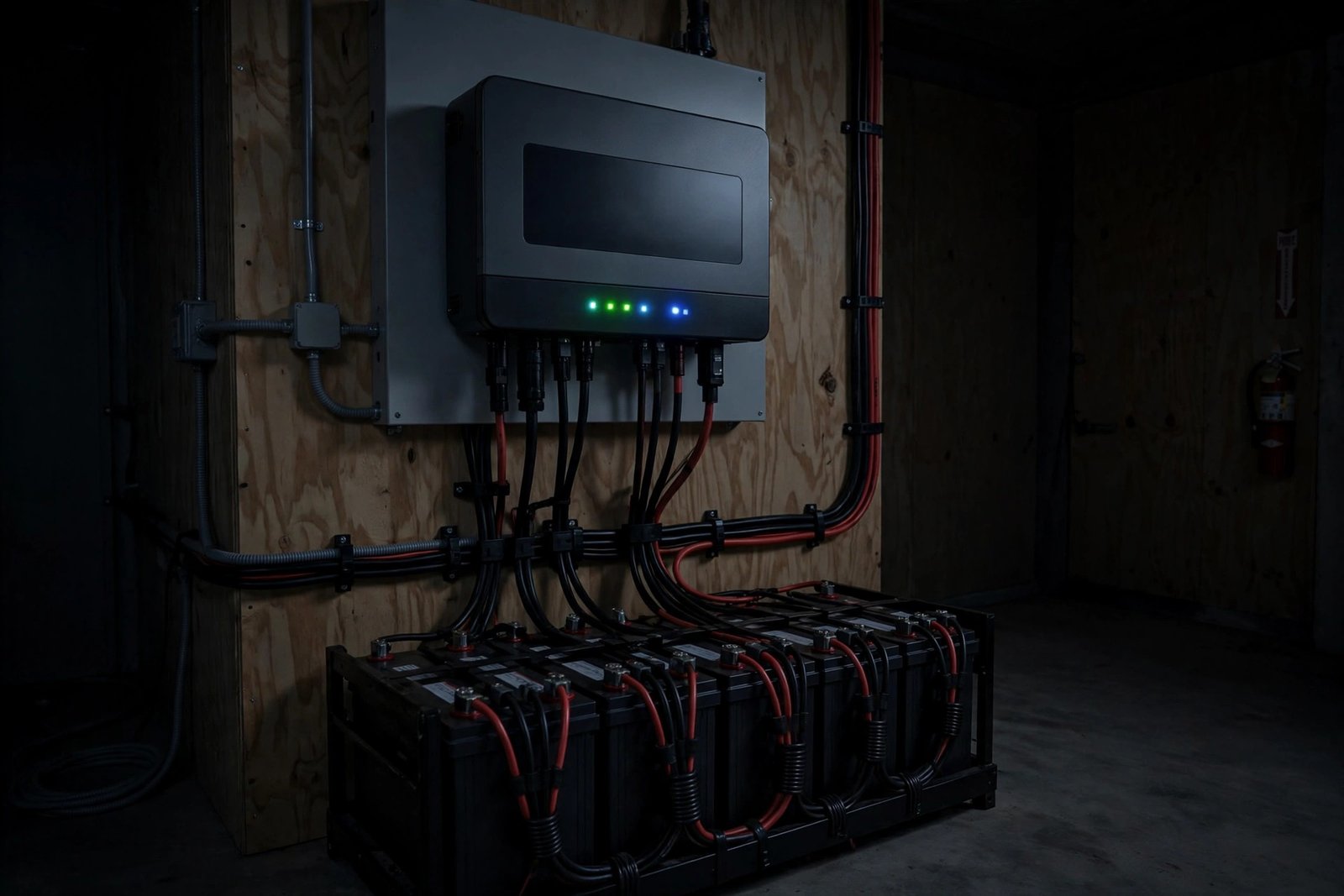
Step 4: Check Depth of Discharge and Battery Settings
Wrong settings can make a healthy battery look as though it is draining fast, because the usable portion of the battery is smaller than you think.
- Depth of discharge (DoD) matters. Lead-acid batteries are normally only discharged to about 50% to protect their lifespan, so half the battery’s capacity is off-limits by design. Lithium batteries can usually be discharged much deeper, often 80–90%. If your system is set to stop at a shallow discharge level, the battery will appear to run out quickly even though it still holds energy.
- Check the low-battery cut-off voltage. If the cut-off is set too high, the inverter shuts down while the battery still has charge left. This setting should match your battery type — check the battery manual, and do not change voltages unless you understand them.
- Confirm the battery type and capacity settings. If the inverter or charge controller thinks you have a smaller battery bank than you actually do — or the wrong battery type — it will manage charging and discharging incorrectly. This is especially common after a battery has been added or replaced.
Step 5: Check the Battery’s Health and Capacity
A battery that has lost capacity behaves exactly like a battery being drained too fast: it charges to “full” quickly and empties just as quickly.
- Age is the first suspect. Lead-acid batteries typically last a few years with daily cycling; lithium batteries last longer, but both lose capacity with age and use. If your battery is old and the drain has grown gradually worse over months, ageing is the likely cause.
- Watch for fast charging as well as fast draining. A battery that reaches 100% unusually quickly and then drops quickly is a classic sign of lost capacity — it is holding far less energy than its rated size.
- Measure the voltage. With the system off and the battery at rest, measure the voltage at the terminals with a digital multimeter and compare it with the nominal voltage. A bank reading far below nominal after a full charge suggests one or more weak cells. Our guide on how to test with a multimeter covers safe meter use.
- Check for one bad battery in a bank. In a bank of several batteries, one failed unit can drag the whole bank down. If one battery is much hotter than the others, swollen, or reads a very different voltage, it may need replacing.
- Lead-acid specific checks: sulfation from sitting partly charged, and low electrolyte in flooded batteries, both reduce usable capacity. A battery that has been left flat for weeks may never fully recover.
- Lithium specific checks: a battery management system (BMS) that keeps tripping, or a battery that shuts off while still well charged, needs professional diagnosis. Never force-charge a locked lithium battery.
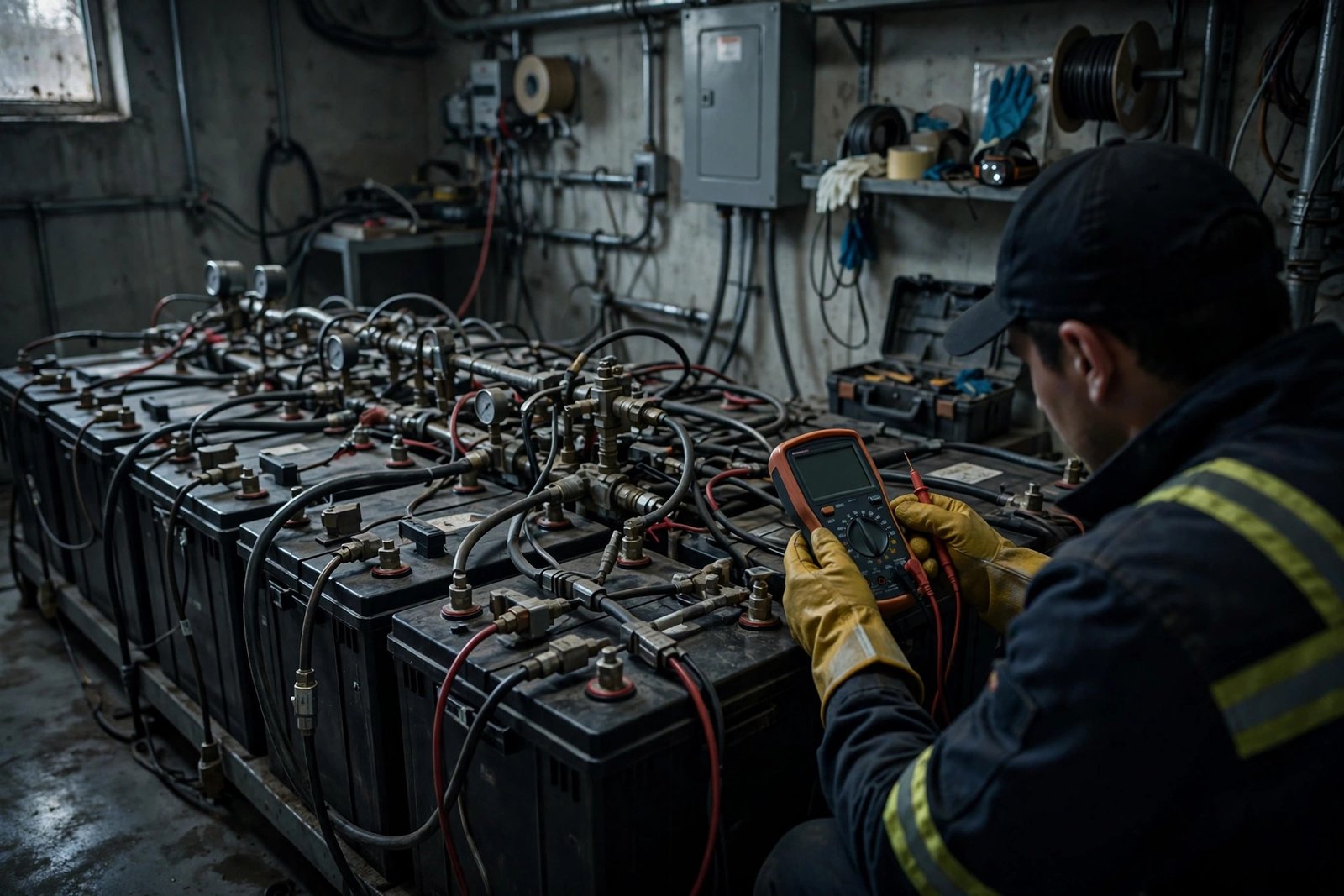
Step 6: Check Temperature and Self-Discharge
- Cold reduces usable capacity. Lead-acid batteries lose a noticeable share of their capacity in cold weather, and lithium batteries may refuse to charge below freezing. A battery that drains fast only in winter is often a temperature problem, not a fault.
- Heat accelerates ageing. Batteries kept in a hot garage or next to a warm inverter lose capacity faster over time. The battery room should stay within the temperature range in the manual.
Step 7: Look for Wiring Faults and Earth Leakage
If the loads, settings, and battery all check out, the energy may be leaking away through the wiring itself.
- Inspect terminals and cables with the system switched off. Look for corrosion, loose connections, melted insulation, burn marks, or rodent damage. A poor connection wastes energy as heat — feel for warm spots on cables and terminals, but do not touch anything while the system is live.
- Check for a tripped or faulty breaker. A DC breaker that trips repeatedly, or a fuse that keeps blowing, signals a fault. Do not keep resetting it.
- Suspect earth leakage if the numbers do not add up. A small current leaking to earth through damaged cable insulation can drain a battery steadily all night. This is not something to diagnose yourself — an electrician with the right test equipment can find it safely.
How to Prevent Overnight Drain
- Switch off standby loads at the wall each night, or use switched power strips and timer plugs.
- Run heavy appliances during the day when the panels are producing, not at night from the battery.
- Keep the battery fully charged by sunset — clean, unshaded panels and a correctly set charge controller make this possible.
- Avoid deep discharges. Do not regularly run a lead-acid battery flat, and do not leave any battery at a very low charge for weeks.
- Check the system monthly: battery level at sunset and sunrise, controller lights, terminals for corrosion, and the monitoring app for unusual overnight patterns.
- Book a yearly professional service so capacity loss, loose connections, and settings drift are caught early.
- Consider adding battery capacity only after you have fixed the real cause. Adding a bigger battery to feed wasteful loads just hides the problem and costs far more than switching the loads off.
When to Call a Professional
Call a qualified solar technician or electrician if:
- The battery is swollen, hot, leaking, or smells of chemicals.
- A breaker or fuse trips again after you reset it.
- The battery drops sharply overnight even with everything switched off.
- You find melted, burnt, or damaged cables.
- The BMS stays tripped, or the battery shuts off at a high state of charge.
- The battery is under warranty — opening it or changing settings yourself can void the warranty.
- The inverter itself will not start or shows a fault you cannot clear. You can try to safely reset your inverter first, but do not keep resetting a fault.
- You are unsure about any step in this guide. Batteries store enough energy to cause serious injury — there is no saving worth that risk.
FAQs
Why does my solar battery drain so fast overnight?
The most common causes are standby loads you have forgotten about, the inverter’s own standby consumption, a fridge or pump cycling too often, wrong depth-of-discharge or battery-type settings, or a battery that has lost capacity with age. Measure the drain over a few nights, then switch off non-essential loads for one test night to see how much the drain improves.
How much battery drain overnight is normal?
It depends on your loads, but a healthy system should still hold a useful charge at sunrise after a normal night, provided the battery was fully charged at sunset. A small steady drain from the inverter, router, and fridge is normal. A battery that is empty before midnight with almost nothing running is not normal and should be investigated.
Can an inverter drain a solar battery overnight?
Yes. Every inverter draws a small amount of power just by being switched on, to run its own electronics and monitoring. This is normal, but on a small battery bank it can be noticeable. Some inverters have a low-power or eco mode that reduces this draw. A faulty inverter that runs hot at night with no load should be checked by a technician.
Why is my lithium battery losing charge at night when nothing is on?
Check the inverter’s standby draw and any loads wired before the consumer unit first. If the drain continues with everything switched off, the battery may have lost capacity, the BMS may be misbehaving, or there may be a wiring fault such as earth leakage. A voltage check at rest and a professional capacity test will identify the cause.
Should I turn off my inverter at night to save battery?
Only if your system is designed for it and nothing essential depends on the inverter overnight — no fridge full of food, no medical equipment, no security system. For most homes, the better approach is to switch off standby loads and, if your inverter supports it, enable its low-power or eco mode. Ask your installer before changing how the inverter is used at night.
Conclusion
A solar battery that drains quickly overnight is rarely a mystery once you measure it. In most cases the energy is going to standby loads, the inverter’s own consumption, a hard-working fridge, or a setting that limits how much of the battery you can use. In other cases the battery itself has lost capacity and needs testing or replacement. Work through the steps in order and keep the safety rules in mind. If the drain continues with everything switched off, or the battery shows any sign of damage, stop and call a qualified solar technician — finding the real cause costs far less than replacing a battery that was never the problem.
Pingback: How to Reduce Your Electricity Bill with Solar: 10 Energy Saving Tips - Solar Fixing Guide